
Tretinoin Strengths Simplified: Picking Your Path to Glowing Skin
Figuring out tretinoin percentages can be confusing, but you’ve come to the right place. I help clients like you match the right strength to their skin type every day.
In this guide, you’ll walk away knowing:
- What the common tretinoin doses (like 0.025% and 0.1%) actually do to your skin.
- How strength links to potency and why a lower percentage often works better long-term.
- How to start a tretinoin routine that minimizes redness and peeling.
You’ll have the clarity to make a confident choice for your skin.
Tretinoin 101: How This Powerhouse Works on Your Skin
Think of your skin as a busy conveyor belt. Old skin cells pile up at the top, which can lead to dullness, clogged pores, and uneven texture. Tretinoin is a prescription form of vitamin A that essentially speeds up that conveyor belt.
It encourages your skin to make new, healthy cells more quickly and shed the old ones more efficiently. This process, called increased cell turnover, is why it’s so effective for both acne and signs of aging. It unclogs pores, smooths fine lines, and fades dark spots over time.
You might be familiar with over-the-counter retinol. Retinol is a gentler precursor that your skin must convert into retinoic acid (the active form) to work. Tretinoin is not retinol; it’s already retinoic acid, so it’s stronger and works directly on your skin receptors without that conversion step. This makes it more potent and results-oriented, but also increases the potential for irritation.
The two biggest factors that determine your results and comfort are the strength (the percentage of tretinoin in the formula) and the vehicle (cream or gel). A lower strength in a cream base is often the gentlest introduction, while a higher strength in a gel may be chosen for very oily, acne-prone skin.
Molecule Spec Sheet
| Property | Details |
| What it is | A topical retinoid (all-trans retinoic acid), a vitamin A derivative. |
| Common Concentrations | 0.025%, 0.05%, 0.1%. |
| Typical Vehicle Forms | Cream (more emollient), Gel (often alcohol-based, dries matte). |
| Primary Action | Binds to skin cell receptors to increase cell turnover rate. |
| Key Safety Note | Increases sun sensitivity. Daily broad-spectrum sunscreen is non-negotiable. |
Breaking Down the Numbers: A Guide to Tretinoin Strengths
Prescription tretinoin typically comes in three strengths. Higher isn’t always better, it’s about finding the highest strength your skin can tolerate comfortably for consistent, long-term use when compared to retinol.
0.025% Tretinoin: The Gentle Starter
This is the most common starting point, and yes, it is absolutely effective. For many goals like maintaining clear skin, smoothing early fine lines, and improving overall texture, 0.025% is often perfectly sufficient. I started my client Maya here for her adult hormonal acne. It was strong enough to clear congestion in her T-zone without wrecking her more sensitive cheeks. Think of 0.025% as the reliable foundation it builds your skin’s tolerance and delivers real results with a lower risk of severe redness or peeling. It’s ideal for beginners, those with sensitive skin, or anyone using tretinoin primarily for maintenance.
0.05% Tretinoin: The Middle Ground Powerhouse
This is a step up in potency, often chosen for more pronounced photoaging, deeper wrinkles, or stubborn acne that didn’t fully respond to 0.025%. My client Noah, who has drier but resilient skin in his 40s, uses 0.05% cream. He tolerated the starter strength well and wanted more aggressive support for sun spots and crow’s feet. The jump from 0.025% to 0.05% is noticeable. While more effective for pronounced concerns, 0.05% also carries a higher likelihood of irritation, making a slow introduction and excellent moisturizing crucial. It’s best for those who have acclimated to a lower strength and want to level up their results.
0.1% Tretinoin: The Highest Prescription Strength
This is the most potent concentration available. It’s typically reserved for skin that has built a significant tolerance over many months or years, or for severe, resistant acne. The results can be impressive, but so can the initial reaction. Peeling, redness, and dryness are very common when starting at this strength, even with careful use. Using 0.1% tretinoin is a commitment to a meticulous, gentle skincare routine focused on barrier repair to manage the side effects. It’s not a beginner’s strength and is usually reached after a long journey on lower percentages.
Cream, Gel, or Microsphere? Choosing Your Tretinoin Vehicle
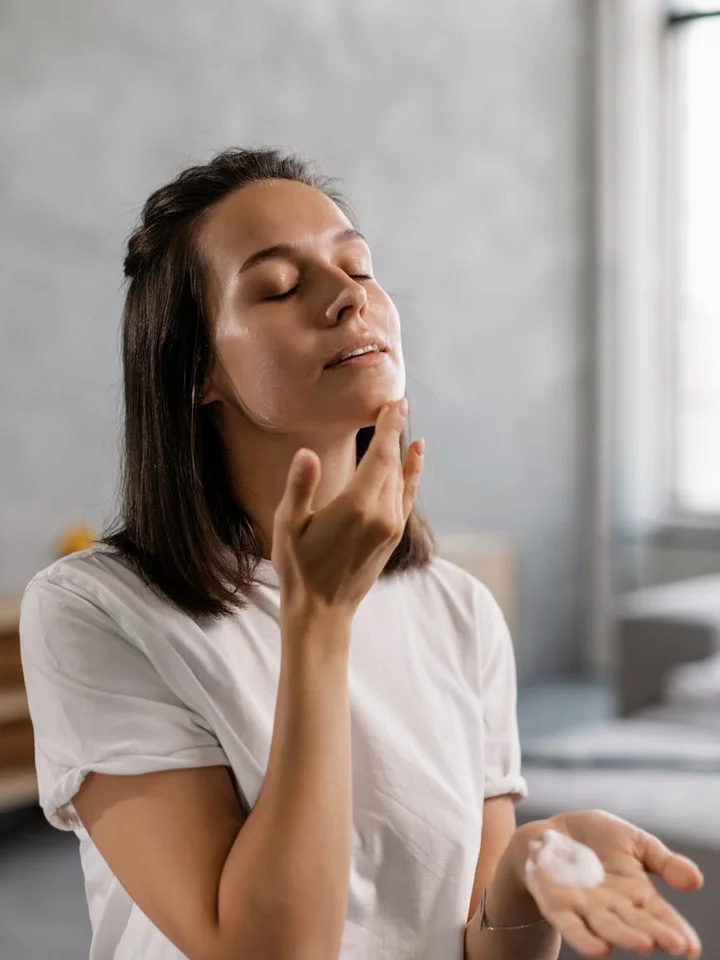
Think of tretinoin’s vehicle as the delivery truck for the active ingredient. The formula it’s in changes how it drives into your skin and how your skin reacts. You have three main options: standard cream, alcohol-based gel, and microsphere gel. This is exactly the kind of detail a tretinoin cream guide covers, explaining how the vehicle influences absorption. Knowing this helps you pick the right formulation for your skin and routine.
The vehicle you choose directly impacts how drying tretinoin feels and how well it works for your specific skin type.
Let’s break them down.
Standard Cream: This is the classic, emollient formula. It feels like a rich moisturizer and contains ingredients that soften and hydrate. The cream base creates a bit of a buffer, so the tretinoin releases slowly. This makes it less irritating upfront. My client Noah, with his dry, reactive skin, always does better with a cream. It gives his barrier the support it needs while the tretinoin works. It’s quite different from gel formulations, which tend to be more drying.
Alcohol-Based Gel: This formula is lightweight and absorbs quickly, often leaving a matte finish. The alcohol helps the tretinoin penetrate fast and deep. That can mean faster results for stubborn acne, but also a higher chance of dryness, peeling, and stinging. This is a go-to for my client Maya, who has oily, acne-prone skin. The gel doesn’t feel heavy on her skin, and she tolerates the quicker delivery well.
Microsphere Gel: This is the clever one. The tretinoin is encapsulated in tiny spheres that break down slowly over time. Imagine a slow-drip irrigation system instead of a bucket of water. This controlled release minimizes irritation while maintaining effectiveness. It’s brilliant for sensitive or combination skin types like Lina’s, who needs power on her T-zone but can’t handle sudden redness on her cheeks.
So, should you use tretinoin cream or gel? Match the vehicle to your skin’s personality.
- For dry, sensitive, or beginner skin: Start with a cream. Its buffering effect is your friend.
- For oily, acne-prone skin that isn’t easily irritated: An alcohol-based gel can be very effective.
- For sensitive, combination, or anyone who wants to minimize the “retinoid uglies”: Seek out a microsphere formula.
Your choice should always be a fragrance-free, cruelty-free formula. Irritating perfumes have no place in a tretinoin routine.
Top Formulas by Concentration
Strength and vehicle work together. Here’s what to look for in formula types at each common concentration.
For 0.025% (The Starter Strength): Look for creamy, emollient bases. These formulas are designed for gentle introduction. They often contain soothing agents like niacinamide or panthenol. The goal is comfort and consistency, not aggressive treatment.
For 0.05% (The Middle Ground): You’ll find both creams and gels here. Creams at this strength are often slightly less rich than the 0.025% versions. Gels may be formulated with added hydrators to offset potential dryness. This is where a microsphere gel really shines, balancing potency with gentleness.
For 0.1% (The Highest Strength): Formulas here are often gels or microsphere gels, designed for maximum delivery. Creams at this strength are less common and are for skin that has built a significant tolerance. At this level, extra focus on barrier repair in the rest of your routine is non-negotiable.
Regardless of strength, prioritize simple, clean ingredient lists. A quality, ethical formula won’t rely on drying alcohols or masking fragrances.
How Effective Is Tretinoin, Really? What Strength Actually Means
Here’s the big question: if you use a stronger tretinoin, do you get better results? The answer is more nuanced than a simple yes.
Potency (the percentage on the tube) is not the same as effectiveness (the long-term improvement in your skin). A higher strength is more potent-it delivers more tretinoin molecules at once. But that doesn’t automatically mean it’s more effective for you.
Why? Because effectiveness depends on your ability to use it consistently without giving up due to redness and peeling. A 0.1% gel you can only tolerate once a week is often less effective than a 0.025% cream you can use comfortably every other night. Starting low and slow builds your skin’s tolerance, which means you can use it more often. More consistent use over months always beats sporadic, aggressive use.
Let’s talk timelines, because patience is part of the process.
- For acne: You might see fewer new breakouts in 4 to 8 weeks. Clearing existing acne and post-inflammatory marks can take 3 to 6 months of steady use.
- For fine lines and texture: Commit to 6 months minimum. Significant collagen remodeling and smoothing often become clear after 9 to 12 months.
Many people ask, “Will my skin get used to tretinoin?” This confuses two things: retinization and true tolerance.
Retinization is the initial adjustment period (those first few weeks of flaking and redness) as your skin acclimates. This phase ends.
True tolerance is different. Your skin doesn’t become immune to tretinoin. After months or years, if your results plateau, it might mean your skin has benefited maximally from that strength. Moving up is a decision to make with a clinician, not a sign of failure. For most anti-aging and maintenance goals, a lower strength used indefinitely is perfectly effective.
Your Starter Kit: How Much Tretinoin to Use and When
Think of tretinoin as a powerful workout for your skin cells. You wouldn’t run a marathon on your first day at the gym. The right amount and frequency are what make this ingredient transformative instead of traumatizing. That means following proper tretinoin usage guidelines—start slow, use a pea-sized amount, and increase only as your skin tolerates.
The “Pea-Sized Amount” Demystified
This classic instruction is frustratingly vague. Is it a chickpea? A green pea? Let’s get specific. You need an amount roughly the size of a single, small dried lentil or a standard grain of rice.
- Wash your face with a gentle, non-drying cleanser and pat it completely dry. Damp skin drives the product deeper and increases irritation.
- Dispense your tiny lentil-sized amount onto a clean fingertip.
- Dot that amount onto your forehead, each cheek, your chin, and your nose.
- Gently spread and blend the dots evenly over your entire face, stopping about a half-inch away from your eyelids, the corners of your nose, and your lips.
This minuscule amount is all you need to create a thin, even layer over your entire face; using more will not work faster and will absolutely cause more redness and peeling.
Your Beginner’s Frequency Schedule
Patience is not just a virtue here, it’s a strategy for success. Your skin needs time to adapt.
- Weeks 1-4: Apply tretinoin one night per week, say every Wednesday.
- Weeks 5-8: If your skin is tolerating it well (minor dryness, no stinging or severe redness), increase to two nights per week, with at least one night off in between.
- Months 3+: Gradually work up to applying it every other night. Many people find this is their long-term “sweet spot.”
If you experience significant stinging, burning, or raw skin, take two to three nights off to let your barrier recover, then resume at a slower frequency.
The Best Tretinoin Strength for a Beginner
For nearly everyone starting out, the answer is 0.025% in a cream formulation. The cream is slightly more forgiving than the gel for dry or sensitive skin types. Starting at this lower strength allows your skin to build tolerance with minimal drama. You can always move up to 0.05% later if needed, but starting too high often leads to such bad irritation that people quit altogether. Effectiveness is built on consistency, and consistency is only possible if your skin can tolerate the routine.
Crucial “What to Avoid” Pointers
- Avoid the Eye Area: Do not apply tretinoin on your eyelids or directly under your eyes. The skin there is too thin and sensitive. It can migrate slightly, which is normal, but don’t intentionally put it there.
- Do Not Mix with Certain Actives: On the nights you use tretinoin, do not layer it with other potent actives like benzoyl peroxide, vitamin C (ascorbic acid), or other acids (AHA/BHA). This is a surefire way to overwhelm your barrier.
- Skip Physical Scrubs: Do not use scrubs, brushes, or harsh washcloths on tretinoin nights. Your skin is already turning over more quickly; manual exfoliation is overkill.
- Never Apply to Wet Skin: This bears repeating. Always ensure your skin is completely dry before application.
Building a Soothing Routine Around Your Tretinoin Dose
Tretinoin doesn’t work in a vacuum. The skincare you use around it is what allows you to harness its power without the fallout. Think of your routine as building a protective, hydrated environment for your skin to do its best work, especially when using moisturizer before and after tretinoin.
How to Combine Tretinoin with Other Skincare
The order of operations is simple and non-negotiable. Follow this sequence on your “tretinoin nights”:
- Gentle Cleanser: Use a hydrating, non-foaming formula.
- Pat Face Dry & Wait: Give your skin a full 15-20 minutes to ensure no residual dampness.
- Tretinoin: Apply your lentil-sized amount.
- Wait Again (Optional but Helpful): Let the tretinoin settle for another 5-10 minutes.
- Moisturizer: Apply a generous layer of a bland, barrier-supporting moisturizer.
On your non-tretinoin mornings, your first and most important step is a broad-spectrum SPF 30 or higher. Tretinoin makes your new skin more vulnerable to sun damage.
Emphasizing Barrier Repair and Hydration
This is where most routines fail. Tretinoin can temporarily impair your skin’s barrier, letting water out and irritants in. Your job is to reinforce it. My client Lina, with her combination, sensitive skin, learned this quickly. Her T-zone loved the tretinoin for texture, but her cheeks became red and tight. We fixed it by having her “sandwich” her tretinoin: she applied a light layer of moisturizer first, then her tretinoin to help maintain skin barrier function, then another layer of moisturizer. This buffer method reduced irritation instantly without reducing efficacy.
Look for formulas with:
- Ceramides: These are the mortar that holds your skin barrier bricks together.
- Panthenol (Provitamin B5): A superstar soother and hydrator.
- Glycerin or Hyaluronic Acid: Humectants that pull water into the skin.
- Centella Asiatica or Oat Extract: Calming ingredients for reactive skin.
Safe Product Recommendations and What to Pause
While on your starter tretinoin schedule, simplify your arsenal.
Focus On:
- A hydrating cream cleanser.
- A fragrance-free ceramide moisturizer.
- A gentle hydrating serum with the ingredients listed above.
- Your daily mineral or chemical sunscreen.
Pause or Eliminate:
- Physical scrubs and cleansing brushes.
- Toners with alcohol or witch hazel.
- Other prescription acne treatments (unless directed by your doctor).
- High-strength AHA/BHA peels and daily acid toners.
You can reintroduce some gentle actives, like a weekly lactic acid treatment or a niacinamide serum, only after your skin is fully acclimated to tretinoin (often after 3-6 months). Listen to your skin. If it stings, scale back.
Your Tretinoin Strength Questions, Answered
How do I know when it’s time to move up to a higher tretinoin strength?
Consider moving up only after using your current strength consistently for 3-6 months without irritation, and only if your initial skin goals have plateaued. This is a strategic decision best made with your clinician, as more potency isn’t always necessary for long-term maintenance.
Can the right vehicle formula help if I have sensitive skin?
Absolutely. For sensitive skin, the vehicle is as important as the strength. A cream or microsphere gel provides a slower, more controlled release of tretinoin, which can significantly reduce irritation and help you use it consistently.
Is skin “purging” normal, and how do I manage it?
An initial purge of breakouts is a common, temporary sign that cell turnover is increasing. Manage it by sticking to your gentle routine and frequency schedule; if severe irritation accompanies it, pause for a few nights to let your barrier recover.
Finding Your Tretinoin Sweet Spot
When it comes to tretinoin, the right strength for your skin is the one you can use consistently without compromising your barrier. I guide my clients to view potency as a tool for gradual change, not a race to the highest percentage, because sustainable results come from listening to your skin’s signals and understanding tretinoin’s side effects and safety usage.
- Begin with the lowest strength (like 0.025%) to let your skin adapt with minimal irritation.
- Apply tretinoin at night on dry skin, and never skip a broad-spectrum sunscreen during the day.
- Expect a full cycle of skin renewal-give it at least 12 weeks to see improvements in texture and tone.
- If redness or peeling occurs, buffer with a moisturizer or reduce application to every other night.
- Partner with a dermatologist or esthetician to tailor your dosage as your skin’s needs evolve.
Your skin journey is unique, and I’m here to support it with evidence and empathy. If you have more questions about tretinoin or your routine, I welcome you to share them-exploring real stories from readers like you helps everyone learn. For deeper dives into gentle, effective care, you’ll find a home for honest advice right here on LuciDerma.
Expert Resources and Citations
- Tretinoin Cream: The Ultimate Guide | Academic Alliance in Dermatology
- Tretinoin Strengths: Find the Right % for Your Skin Type
- Tretinoin Strengths Explained: Expert Guide for Wrinkles & Acne | RedBox Rx
- Which Tretinoin Strength is Best for Your Skin?
- Tretinoin for acne and anti-aging: Benefits and side effects
Lucy Zimmerman
Lucy is an expert author and blogger when it comes to skin care and body care. She has first hand expertise acting as skin care consultant for over 5+ years helping her clients achieve smooth blemish free skin with natural and working remedies. She also has been an avid experimenter and tried out all the natural and artificial remedies and treatments so you can learn from her first hand experience. Additionally, she has traveled to many countries around the world and incorporated the skin care routines she has learnt into this blog. So, wait no more, reach out to Lucy if you have any specific needs and follow her blog, LuciDerma for expert skin care advice.