
Combining Alpha Arbutin and Niacinamide: Your Hyperpigmentation Power Duo
Staring at stubborn dark spots and wondering if mixing these two brightening heroes is a smart move or a skin sin? You’re asking exactly the right question.
By the end of this guide, you’ll know exactly how to layer these ingredients for clearer skin. You will be empowered to:
- Understand why this combination works so well together, turning two good ingredients into one powerhouse team.
- Learn the correct order and timing to apply them in your routine for maximum results without irritation.
- Feel confident choosing supportive products that align with a gentle, effective, and ethical approach to skin care.
Let’s build a routine that makes those spots a thing of the past.
Meet Your Spot-Fighting Power Duo
Here’s the good news you’ve been waiting for: combining alpha arbutin and niacinamide is not only safe, it’s a strategy I frequently recommend in the treatment room. They work beautifully together.
Think of them as two gentle, effective players on the same team, working different angles to tackle discoloration. Alpha arbutin is a focused specialist, while niacinamide is the versatile all-rounder. Using them in tandem often leads to better, more balanced results than using either one alone.
This is a practical guide for building a smarter, brighter routine. Let’s look at how they work.
A Simple Guide to How They Fade Dark Spots
Imagine the cells that create pigment in your skin, called melanocytes, as little factories. When triggered by sun, inflammation, or hormones, these factories go into overdrive, producing and shipping out packages of pigment (melanin) to the surrounding skin cells. This is what creates a dark spot.
Alpha arbutin’s main job is to be a delivery blocker. It inhibits the key enzyme responsible for creating melanin, effectively stopping those pigment “packages” from being made and shipped out in the first place.
Niacinamide is the ultimate multi-tasker. It helps calm the inflammatory signals that can tell the pigment factory to ramp up production. It also strengthens the skin barrier by improving the “packaging” of your skin, which helps with overall tone and resilience. By supporting the skin barrier, niacinamide helps lock in moisture and defend against irritants. Plus, it can help reduce the redness that often accompanies post-acne marks, making spots less noticeable.
Together, they offer a one-two punch: prevention and correction. A client of mine, Lina, saw this with her post-acne marks. She started using a serum with both ingredients. The niacinamide helped calm the lingering redness and inflammation from her breakouts, while the alpha arbutin went to work on the brown marks left behind. Over several weeks, the spots faded more evenly and her skin tone looked calmer and more unified. Their combined action addresses both the cause and the visible result of hyperpigmentation.
Molecule Spec Sheet: Your Quick Reference
The Best Way to Layer Them in Your Routine
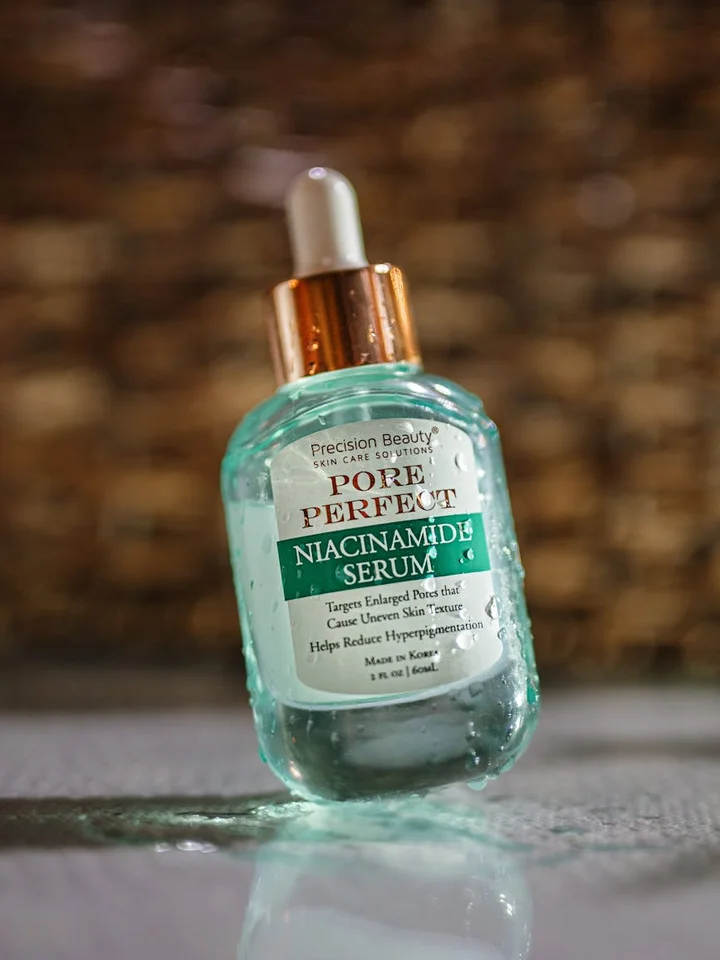
The golden rule for layering any skincare is to apply products from thinnest to thickest consistency. Think of it like getting dressed: you put on your lightest layers first. Water-based serums go on before richer creams or oils.
Alpha arbutin and niacinamide are both typically formulated as lightweight, water-based serums. This makes layering them straightforward.
Your Step-by-Step Application Guide
Here is how to fit these two ingredients into your day.
Morning Routine (Focus: Protection & Prevention)
- Cleanser: Use a gentle, pH-balanced cleanser.
- Toner (Optional): A hydrating, alcohol-free toner can prep your skin.
- Alpha Arbutin Serum: Apply a few drops to damp skin. Gently pat it over your entire face, focusing on areas with dark spots.
- Niacinamide Serum: Follow with your niacinamide serum, using the same patting motion.
- Moisturizer: Lock everything in with a light, non-comedogenic moisturizer.
- Sunscreen: This is non-negotiable. Hyperpigmentation can worsen with sun exposure.
Evening Routine (Focus: Treatment & Repair)
- Double Cleanse: Start with an oil-based cleanser to remove sunscreen and makeup, then a water-based cleanser.
- Alpha Arbutin Serum: Apply to clean, slightly damp skin.
- Niacinamide Serum: Layer it on top.
- Treatment (Optional): If you use a prescription retinoid, apply it after your serums have fully absorbed.
- Moisturizer: Use a richer night cream or moisturizing oil to support your skin barrier overnight.
One Serum or Two?
You can find products that combine both ingredients in one bottle. These are fantastic for simplicity and minimizing layers, which my client Maya appreciates for her oily skin.
Using two separate serums gives you more control. You can adjust the amount of each or even apply them to different areas. My client Lina, with her combination skin, sometimes uses just niacinamide on her oily T-zone and alpha arbutin only on her pigmented cheeks.
For most people, a well-formulated combined serum is perfectly effective and reduces routine complexity.
A Practical Note on Wait Times
You do not need to wait minutes between applying these two serums. After applying your first serum, wait just 30-60 seconds for it to feel tacky or dry before adding the next layer. This prevents pilling and ensures each product can absorb properly.
The only time I recommend a longer wait is if you’re using an acid toner (like glycolic acid) before your serums. In that case, wait 2-3 minutes after the acid to let your skin’s pH normalize.
Sample Evening Routine for Stubborn Spots
This routine is for when you want to target persistent dark spots with focused care.
- Cleanse: Use a gentle, creamy cleanser that doesn’t strip your skin.
- Apply Alpha Arbutin Serum: Use 3-4 drops of a clear, watery serum. Press it gently into your skin, paying extra attention to the dark spots.
- Apply Niacinamide Serum: Follow with a slightly more viscous, silky serum. Layer it over the entire face to calm inflammation and regulate oil.
- Moisturize: Seal it all in with a barrier-repair moisturizer containing ceramides or peptides.
If you have sensitive or reactive skin like my client Noah, introduce one new product at a time and do a patch test behind your ear for three nights. You can also start by using this powerful combo every other night, building up to nightly use as your skin tolerates it.
What to Expect: Realistic Timelines for Results
Let’s be honest about what you’re signing up for. Using alpha arbutin and niacinamide for hyperpigmentation is not a quick fix. It’s a commitment to a process. Think about alpha arbutin hyperpigmentation formulations and how they pair with niacinamide in a steady routine. A measured, consistent approach pays off over time.
Consistent, daily use is the absolute key, and you typically need to give it a solid 4 to 8 weeks before you start to see visible fading. If you’re only applying your serum every other day or skipping nights, you’re resetting the clock. Think of it like taking an antibiotic, you need to finish the full course for it to work properly.
Why Your Skin Needs That Much Time
This timeline isn’t arbitrary. It’s based on your skin’s natural renewal cycle. On average, it takes about 28 days for a new skin cell to be born at the deepest layer and travel up to the surface.
Both alpha arbutin and niacinamide work by influencing this process. They help calm down the melanin-producing cells and encourage a more even, less pigmented skin cell to come to the surface. You have to wait for a full cycle (or two) of fresh, healthier skin cells to replace the older, discolored ones. This is why patience isn’t just a virtue, it’s a requirement. Alpha arbutin’s skin brightening benefits can support this gradual improvement, while consistent use helps even out the complexion.
The One Step You Cannot Skip
Using these brightening agents without daily sunscreen is like building a beautiful house without a roof. You’re doing all the right work inside, but the second the sun hits, you’re causing new damage.
UV exposure is the primary trigger for melanin production. If you’re diligently applying alpha arbutin and niacinamide to fade dark spots but then going outside without protection, you are actively stimulating the very pigment you’re trying to reduce. Sunscreen is non-negotiable. It protects your investment and ensures the actives can do their job without interference. My client Noah, who has reactive skin, found a mineral sunscreen he could tolerate every single day, and it made all the difference in fading his sun spots.
Mixing with Other Actives: Your Ingredient Interaction Matrix
Once you see results with alpha arbutin and niacinamide, the next question is always, “What else can I add?” I hear this from clients like Lina, who’s curious about boosting her glow without causing a flare-up. Combining ingredients is an art, not a free-for-all. The goal is synergy, not sensitivity.
Think of your routine like a team. You want players that work well together on the field. Some combinations are a dream team for fading dark spots. Others need to be scheduled on different days to avoid overwhelming your skin’s defenses.
What to Mix and What to Avoid: A Simple Guide
This table cuts through the confusion. It’s based on ingredient stability, how they function, and your skin’s tolerance.
| Ingredient | Mixing Status | How to Combine Safely |
|---|---|---|
| Vitamin C (L-ascorbic acid) | Green Light | A brilliant trio. Layer vitamin C first, then alpha arbutin, then niacinamide in your morning routine. They work at different points to block pigment and boost antioxidant protection. |
| Retinol or Prescription Retinoids | Yellow Light | Proceed with caution. Both are effective but can be drying. Use them on alternate nights, or apply your retinoid first, wait 20 minutes, then apply your alpha arbutin and niacinamide to buffer potential irritation. |
| AHAs (like glycolic acid) & BHAs (like salicylic acid) | Yellow Light | Timing is everything. Using a strong exfoliant in the same routine can increase irritation. Apply your AHA or BHA on a different night, or use it in your morning wash-off cleanser to separate it from your evening treatment serum. |
| Other Direct Tyrosinase Inhibitors (like Kojic Acid) | Yellow Light | Not necessary. Using multiple ingredients that target the same enzyme doesn’t make them work faster. It can increase your risk of sensitivity. Pick one favorite and use it consistently. |
| Benzoyl Peroxide | Red Light | Avoid mixing directly. Benzoyl peroxide can oxidize and destabilize other ingredients, potentially making them less effective. Use BP in a wash-off product or at a completely different time of day. |
Building Your Brightening Powerhouse Routine
For a client like Maya who wants to tackle post-acne marks and prevent new ones, a smart morning stack is key. After cleansing, apply a vitamin C serum, followed by an alpha arbutin treatment, and then a niacinamide serum or moisturizer. Finish with sunscreen. This combination addresses discoloration from multiple angles while strengthening skin.
For my sensitive-skin clients like Noah, I recommend a slower approach. Alternating your actives by night is the gentlest way to get all the benefits without compromise. Try Alpha Arbutin + Niacinamide on Monday, Wednesday, Friday. Use your retinol or exfoliant on Tuesday, Thursday. This gives your skin a chance to recover and respond.
Listen to your skin above any rule. If you feel stinging, tightness, or see unusual redness, scale back. Your barrier health is the foundation for everything. A compromised barrier won’t let any brightening ingredient work properly.
Finding the Right Concentration for Your Skin
Think of concentration like the strength setting on a blender. You want it powerful enough to do the job, but not so high it turns your smoothie into soup. For fading dark spots, the effective ranges are well-established.
Alpha arbutin works best between 1% and 2%. Niacinamide is most effective and well-tolerated between 5% and 10%. These are the sweet spots where clinical studies show results. Understanding alpha arbutin application concentration helps you use it safely and effectively. Focusing on concentration is a practical next step when choosing or formulating products.
Start Low and Slow
My client Noah, with his dry, reactive skin, is a perfect example of why you should begin at the lower end of these ranges. His skin barrier is more vulnerable, so a 1% alpha arbutin serum and a 5% niacinamide formula allow his skin to acclimate without protest. If you have sensitive, reactive, or eczema-prone skin, starting with the minimum effective concentration gives your skin a chance to build tolerance and reduces the risk of redness or stinging.
Even if your skin isn’t typically sensitive, introducing one new active at a lower concentration lets you see how your skin responds before committing to a stronger version.
Why More Isn’t Better
Here’s a crucial point I stress to every client: with these ingredients, a higher percentage does not equal faster or better results. In fact, it often invites trouble.
Niacinamide, for instance, is rarely studied at concentrations above 10% for a reason. Going higher doesn’t boost its brightening or oil-regulating powers, but it can significantly increase the chance of irritation, flushing, and a unpleasant niacin “tingle.” Using a higher concentration than your skin needs is like turning up your oven to 500 degrees to bake cookies faster-you’re much more likely to burn them.
The goal is consistent, gentle fading that supports your skin’s health, not a harsh assault that damages your barrier and sets back your progress.
How to Find This Info on a Product
You won’t always find the concentration listed boldly on the front of the bottle. You need to become a label detective.
- Check the Ingredients List (INCI): Ingredients are listed in order of concentration, from highest to lowest. If niacinamide is listed near the top, it’s likely in that effective 5-10% range. If it’s towards the middle or end, the percentage is probably quite low.
- Visit the Brand’s Website: Reputable, transparent brands will almost always list the exact percentage of key actives in the product description or a dedicated “science” or “ingredients” page. This is the most reliable source.
- Look for Marketing Clues: Phrases like “5% Niacinamide Complex” or “2% Alpha Arbutin” are good signs. If it just says “contains niacinamide” with no number, the amount is likely minimal.
When in doubt, a quick email to the brand’s customer service can clear it up. If they won’t disclose percentages, it might be a sign to look for a more transparent formula.
Who Should Use Extra Caution?
Alpha arbutin and niacinamide are two of the gentlest powerhouses for fading dark spots. Most people tolerate them beautifully. But if your skin often feels like it’s walking on a tightrope, a more thoughtful approach is your safety net.
Skin Types That Should Slow Down
Think of your skin barrier as a brick wall. If the mortar is cracked or missing, anything you apply can seep in too quickly and cause irritation. You should introduce new products slowly if you identify with any of these:
- Very Sensitive or Reactive Skin: Your skin frequently stings, turns red, or feels tight with new products, even gentle ones.
- A Compromised Skin Barrier: This often feels raw, flaky, or burns when you apply moisturizer. It can happen after over-exfoliation, a bad reaction, or a recent professional treatment.
- Active Rosacea or Eczema Flare-ups: When these conditions are inflamed, your skin’s tolerance is much lower. It’s best to focus on calming and repair first.
My client Noah, with his dry, reactive skin, is a perfect example. He once jumped into a new routine too fast and learned the hard way. Now, he treats every new product like meeting a new neighbor-he introduces himself slowly and from a safe distance.
The “Test and Pace” Method: Your Blueprint for Success
Rushing skincare is like baking a cake at twice the temperature. It will burn on the outside and stay raw inside. Follow these steps to build tolerance safely.
- Patch Test Behind Your Ear: Apply a small amount of the product (or better, a mixture of your serum and moisturizer) to the sensitive skin behind your ear. Do this once daily for 3-4 days. No redness or itching? You have the initial green light.
- Move the Test to Your Jawline: Apply the same small amount along your jaw for another few days. This area is more representative of your facial skin’s reaction.
- Introduce One Product at a Time: This is the golden rule. Start with the niacinamide serum alone for a full week. Once your skin is clearly happy, layer the alpha arbutin underneath it. Spacing them out lets you pinpoint exactly which ingredient is the culprit if your skin does protest.
- Start with Less Frequent Application: Begin using the combination every other night, or even just twice a week, before working up to daily use.
Your Skin Holds the Final Vote
The biochemistry of alpha arbutin and niacinamide is inherently compatible and non-irritating for most. But the evidence on your face outweighs any study on paper. A slight tingle upon first application can be normal, but persistent redness, burning, or itchiness is your skin asking you to pause.
If irritation occurs, stop both actives. Return to a simple routine of a gentle cleanser, a plain moisturizer, and sunscreen. Once your skin is calm and fortified again, you can try re-introducing them, even more slowly than before. Listening to your skin isn’t being cautious; it’s being smart.
Answering Your Top Combination Questions
Let’s get straight to the questions I hear most often from clients like Lina, who are building a smarter routine.
Can I mix alpha arbutin and niacinamide together?
Yes, you absolutely can. In fact, I often recommend it. Think of them as two specialized workers on a construction site. Niacinamide is the project manager, calming inflammation and strengthening the skin’s barrier. Alpha arbutin is the meticulous painter, carefully targeting dark spots at the source. They work on different pathways, so they don’t interfere with each other. Combining them can create a more comprehensive approach to fading hyperpigmentation.
What’s the best way to layer them in my routine?
The golden rule is lightest to heaviest. Since both are typically found in serums, apply the one with the thinnest, water-like consistency first. Wait a minute for it to absorb, then follow with the second.
- Cleanse your skin.
- Apply your toner (if you use one).
- Apply your alpha arbutin serum.
- Apply your niacinamide serum.
- Follow with moisturizer and sunscreen (in the AM).
If your products feel sticky, a brief wait between layers prevents pilling and ensures each one can penetrate properly.
Are there any side effects to combining them?
This combination is generally very well tolerated, which is a big reason I like it. Niacinamide is known for being gentle and soothing. Alpha arbutin is also considered a mild active. The main risk is if you have extremely sensitive skin. Introducing two new actives at once can sometimes lead to minor redness or irritation. That said, alpha arbutin side effects can occasionally include mild irritation or redness in some individuals. If this occurs, pause use and patch test before resuming. Always patch test a new product for a few days before applying it to your whole face. Start by using them every other day to see how your skin responds.
Which type of hyperpigmentation is this combo best for?
It’s a versatile team, but it shines brightest on specific concerns. My client Maya, who deals with post acne marks, has seen great results.
- Post Inflammatory Hyperpigmentation (PIH): This is the dark spot left behind after a pimple heals. Niacinamide helps control the oil and inflammation that can lead to new breakouts, while alpha arbutin fades the existing spot. It’s a perfect one two punch.
- Sun Spots & General Uneven Tone: For the scattered, superficial discoloration from sun exposure, this combination can help create a more uniform, brighter complexion over time.
For deeper hormonal melasma, this combo can be a helpful part of a routine, but often needs to be paired with other targeted treatments and strict sun protection.
Can I use them with vitamin C or retinol?
Proceed with caution, but it’s possible. Using alpha arbutin and niacinamide with a vitamin C serum can be very effective for brightening. Apply vitamin C first, then alpha arbutin, then niacinamide. With retinol, it’s about strategy. Layering brighteners with retinoids is a common strategy, but it should be tailored to your skin’s tolerance. I suggest using your brightening combo (alpha arbutin and niacinamide) in the morning and your retinol at night. This separates the acts and minimizes potential irritation. If your skin is resilient, you can try niacinamide before retinol at night to help soothe potential sensitivity.
Your Quick-Reference Questions, Answered
Is it better to use a combined serum or two separate ones?
For simplicity and efficacy, a well-formulated combined serum is excellent for most people. Using two separate serums is ideal if you want to target specific areas or adjust concentrations for different zones of your face.
Can I use this combination if I also use exfoliating acids?
Yes, but timing is key to avoid irritation. Use your AHA or BHA exfoliant on alternate nights, or opt for a wash-off acid cleanser in the morning to separate it from your evening treatment serums.
What’s the most important thing to know before starting?
Your results are completely dependent on two factors: unwavering consistency and daily sunscreen. UV exposure will counteract the work of these ingredients, so sunscreen is non-negotiable for success.
Final Thoughts on Using Alpha Arbutin and Niacinamide Together
Combining alpha arbutin and niacinamide is a safe, effective way to target hyperpigmentation without overwhelming your skin. I recommend this pairing to clients like Noah, who need a gentle yet potent approach to fading dark spots while strengthening their skin’s barrier. For those exploring alpha arbutin in the context of hyperpigmentation, this approach can offer a gentler alternative to hydroquinone. We’ll compare how these options stack up in the next steps.
- Apply niacinamide first, then alpha arbutin, to clean, dry skin for better absorption.
- Start with lower concentrations, like 5% niacinamide and 2% alpha arbutin, to test tolerance.
- Use a broad-spectrum sunscreen every morning to prevent new dark spots from forming.
- Be patient-consistent use for 8 to 12 weeks is key for visible brightening.
- Listen to your skin; if irritation occurs, scale back to using one serum at a time.
For more tips on building a cruelty-free skincare routine, follow along on the LuciDerma blog. If you’re unsure about how these ingredients fit into your regimen, share your questions-I’m here to offer evidence-based guidance that puts your skin’s health first. Your path to even-toned skin is built on small, sustainable choices, and I’m cheering you on every step of the way.
Lucy Zimmerman
Lucy is an expert author and blogger when it comes to skin care and body care. She has first hand expertise acting as skin care consultant for over 5+ years helping her clients achieve smooth blemish free skin with natural and working remedies. She also has been an avid experimenter and tried out all the natural and artificial remedies and treatments so you can learn from her first hand experience. Additionally, she has traveled to many countries around the world and incorporated the skin care routines she has learnt into this blog. So, wait no more, reach out to Lucy if you have any specific needs and follow her blog, LuciDerma for expert skin care advice.