
Gentle Tretinoin on the Neck: How to Avoid Irritation and Protect Sensitive Skin
I hear your worry about using tretinoin on delicate areas like your neck, and it’s a smart concern to have. Let me walk you through a safer approach, just like I do for my cautious client Noah.
By the end of this guide, you will be empowered to:
- Understand why skin on your neck and décolletage is more fragile and how that changes your tretinoin strategy.
- Apply a proven “buffer and barrier” method that shields your skin while letting the ingredient work effectively.
- Spot early signs of irritation and adjust your routine to prevent damage before it starts.
You can harness tretinoin’s power for smoother skin without the fear of redness or peeling.
Why Your Neck Feels Everything First: The Science of Sensitive Skin
Think of the skin on your cheeks or forehead like a sturdy pair of denim jeans. It’s relatively thick, has good structure, and can handle some friction. Now, picture the skin on your neck, chest, and around your eyes as a delicate piece of silk. It’s finer, more delicate, and shows wear much faster.
This isn’t just a feeling, it’s anatomy. The skin in these zones is fundamentally different.
- It’s Thinner: The outer protective layer (the stratum corneum) has fewer cell layers. This means irritants and active ingredients can penetrate more easily and deeply.
- It’s Drier: There are far fewer oil glands (sebaceous glands) than on your face. Less natural oil means a weaker moisture barrier, making it prone to dehydration and reactivity.
- It’s Always Moving: Your neck turns, your chest bends, you blink thousands of times a day. This constant flexion and stretching makes the skin more susceptible to micro-tears and irritation from products that might feel fine on static facial skin.
This unique combination is why your neck often waves the first red flag (sometimes literally) when a product is too strong. My client Noah, with his dry, reactive skin, learned this quickly when a face cream he tolerated well caused a tight, itchy rash on his neck.
These ‘silk’ zones extend beyond the neck. Readers frequently ask about their chest (or décolletage), the delicate skin around the eyes, and the lips. The same principles of thinness, dryness, and movement apply. You should never apply standard tretinoin formulations to your eyelids or lips.
Tretinoin 101: How This Powerhouse Works (And Why It Can Get Feisty)
Tretinoin is a prescription retinoid, a vitamin A derivative. Its primary job is to speed up your skin’s natural renewal process. It encourages your skin to shed old, dull cells faster and promotes the production of new, healthy collagen and elastin underneath. It’s important to note that tretinoin is not the same as retinol, although they are related.
This accelerated cell turnover is why it’s so effective for acne, fine lines, and texture. But this process is also why it can cause redness, peeling, and dryness, especially in the first few weeks. Think of this initial irritation as your skin recalibrating its engine to a faster speed, not as automatic damage. It’s a predictable side effect of the very mechanism that makes it work.
On your resilient ‘denim’ areas (like the cheeks or forehead), your skin might handle this recalibration with just some flaking. But on your ‘silk’ areas (neck, chest), that same process can feel like a storm because the skin is less equipped to buffer the change. It lacks the oil and thickness to manage the increased cellular activity gracefully.
Gentler application methods aren’t about weakening tretinoin’s effects, but about managing its delivery so your delicate skin can adapt without a major revolt. The goal is to get the long-term benefits while respecting your skin’s unique architecture and avoiding potential side effects.
Your Gentle Application Blueprint: A Step-by-Step Guide
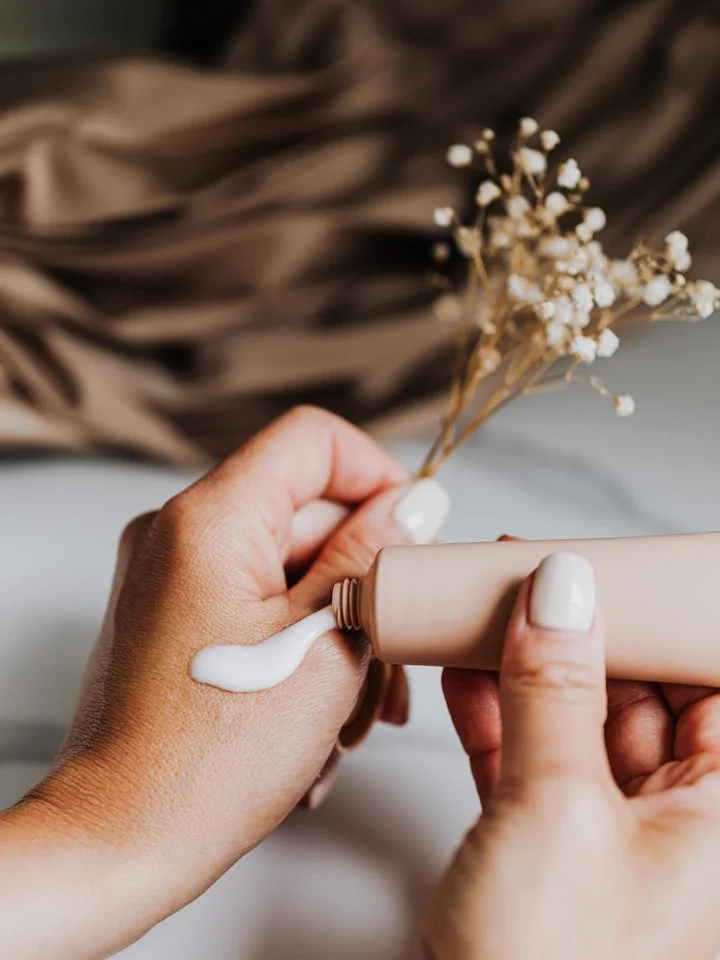
Think of your neck and chest as the more delicate cousins of your facial skin. They need the same careful attention, but with a gentler touch. This blueprint is your safe path forward.
Step 1: The Clean Slate & The Critical Dry Wait
Start with a gentle, non-stripping cleanser. Your goal is to remove the day without disrupting your skin barrier. I often recommend a simple cream or milky formula to my client Noah, whose dry, reactive skin needs that extra care.
After patting your skin completely dry with a clean towel, you must wait. This 15 to 20-minute wait for your skin to be fully dry is non-negotiable for preventing irritation. For a broader context, the tretinoin cream guide explains proper timing and application. Applying tretinoin to damp skin is like opening the gates wider; it increases penetration dramatically, which often leads to redness and stinging.
Step 2: The “Buffer” or “Sandwich” Decision Point
This step directly answers the big question: should moisturizer go before or after? For sensitive areas like the neck, the answer is usually before.
- Buffering: Apply a basic moisturizer first. This creates a protective layer that slows down tretinoin’s delivery, reducing the initial shock to your skin. This is the best strategy for everyone new to using tretinoin on the neck.
- The Sandwich Method: For extra-sensitive skin, use moisturizer, then tretinoin, then another light layer of moisturizer. It’s like putting the active ingredient between two soft cushions.
So, for your neck and chest, moisturizer typically goes first during the adjustment period. You can always apply it on top later.
Step 3: The Pea-Sized Rule for Your Whole Zone
Here is a critical detail people often miss. That classic “pea-sized amount” is for your entire treatment zone-your face, neck, and upper chest combined. Do not use a separate pea for each area.
Dispense that small amount onto a fingertip. Dot it sparingly across your forehead, cheeks, chin, neck, and décolletage. Then, gently blend it in using light, upward strokes. You are aiming for a barely-there film. If you see a white residue or feel like you’re rubbing it in, you’ve used too much. Avoid applying it directly on your lips or right up to your eyelid margins.
Step 4: Locking It In With Moisture
If you used the buffering method, you can now apply a second, light layer of moisturizer if your skin feels like it needs it. If you applied tretinoin directly to dry skin, wait a few minutes, then follow with your moisturizer.
Look for simple, reparative formulas with ingredients like ceramides, glycerin, or squalane that support your skin barrier without fragrance or irritants. This final step helps lock in hydration and soothe the skin.
Chemist’s Note: Cream vs. Gel on Delicate Terrain
Formulation matters. A cream vehicle is typically more emollient, meaning it contains more moisturizing ingredients and releases the tretinoin more slowly. A gel base is often alcohol-based, dries quickly, and can feel more potent immediately, especially when compared to cream formulations.
For the thinner, more sensitive skin of the neck and chest, a cream formulation is almost always the safer, more comfortable starting point. It provides that gentle buffer built right in.
How to Prevent Irritation and Build Tolerance Safely
Building tolerance is a marathon, not a sprint. Patience here prevents weeks of discomfort later.
Start Low and Slow: Frequency and Concentration
Begin by applying tretinoin to your neck and chest only once or twice a week, even if you use it more frequently on your face. Your face is generally more resilient. Tretinoin comes in different strengths that influence its potency and how your skin responds to dosage. In the next steps, we’ll guide you on choosing the right strength and tailoring your dosage.
For concentration, the safest answer is clear. Use the lowest available strength (0.025%) for your neck and chest, regardless of the strength you might tolerate on your face. It is effective and dramatically reduces the risk of a painful, peeling reaction in these delicate areas.
Your Sensitive-Skin Schedule: The “Listen and Pause” Method
Here’s a sample schedule for your first month. Remember, this is a template, not a rulebook.
- Week 1: Apply to face only on Monday. Apply to face AND neck/chest on Thursday.
- Week 2: Repeat the same pattern.
- Week 3 & 4: If your skin feels calm, you could try adding a third night (face only again).
Skipping a night at the first sign of stinging, tightness, or unusual redness is smart skincare, not a failure. It tells your skin you’re listening. Full adjustment for neck skin often takes 4 to 8 weeks of consistent, gentle use.
The “Do Not Mix” List: Ingredients to Avoid
While your neck is acclimating to tretinoin, pause other active ingredients in that area. Think of it as avoiding too many traffic signals on the same skin road at once. Because tretinoin can affect skin barrier function, giving your barrier time to adjust can help prevent irritation. Protecting barrier function now supports smoother use over time. Pause the following on your neck and chest:
- Other retinols or retinoids
- Potent, low-pH Vitamin C serums (L-ascorbic acid)
- Exfoliating acids like glycolic acid (AHA) or salicylic acid (BHA)
- Physical scrubs or cleansing brushes
You can often still use these on your face if it’s accustomed to them, but give your neck a simpler, gentler routine. This focused approach helps you pinpoint what your skin is reacting to and build a strong, healthy barrier.
What to Do If Your Neck Is Red, Peeling, or Burning

First, take a deep breath. Some reaction here is incredibly common, almost a rite of passage. My client Noah, who has dry, reactive skin, experienced this. He thought he’d ruined his skin barrier forever, but we simply paused and reset. This is usually just a bump in the road, not a dead end.
Recognizing the Signs: Is This Normal “Retinization” or Damage?
Your skin is adapting, a process called “retinization.” It’s like breaking in a new pair of shoes; a little discomfort is normal, but blisters mean you need a different approach.
Normal, manageable signs include mild tightness, slight dryness, or fine flaking that looks more like dry skin than a snake shedding. This often starts in the first few weeks and settles down as your skin adjusts.
Signs you need to stop and heal are different. This is what tretinoin damage on the neck typically looks like:
- A visible, persistent rash or patch of angry red skin.
- A burning or stinging sensation that lasts long after application.
- Skin that feels hot to the touch or itches intensely.
- Cracking, weeping, or raw skin that looks like a severe windburn.
If your neck feels like a mild sunburn, you can probably proceed with caution. If it feels like a bad chemical burn, you must stop.
The Immediate Soothing Protocol
If you see those damage signs, start this protocol immediately. This is how to treat tretinoin irritation on the neck.
- Stop all actives. Do not apply tretinoin or any other exfoliating acids (like AHA, BHA, or vitamin C) to the area.
- Clean gently. Use only a mild, fragrance-free cleanser with lukewarm water. Pat the skin dry; never rub.
- Apply a reparative moisturizer. Look for a bland formula with barrier-repair ingredients like ceramides, panthenol (vitamin B5), or glycerin. My client Noah finds creams with colloidal oatmeal incredibly soothing for his reactive episodes.
- Seal it in. After your moisturizer, apply a thin layer of a pure, fragrance-free ointment like petroleum jelly or a plant-based balm. This acts as a protective bandage, locking in moisture and keeping irritants out.
- Use a cool compress. For immediate heat or itching relief, soak a soft cloth in cool water, wring it out, and gently hold it against the skin for 5-10 minutes.
Stick to this simple routine–cleanser, reparative moisturizer, protective ointment–for at least three to five days, or until all signs of redness and burning are completely gone. Only then should you consider reintroducing tretinoin, and you must go back to the gentlest method (like the “sandwich” technique, once a week). Proper care can help heal tretinoin burn and redness.
When to Call Your Dermatologist
This soothing protocol works for most minor to moderate irritation. But you need professional help if you notice any of the following red flags:
- Severe pain or blistering.
- Signs of infection, like yellow crust or pus.
- Swelling that extends beyond the application area.
- Symptoms that do not start to improve after 3-4 days of stopping tretinoin and using the soothing protocol.
Your dermatologist is your partner. There is no award for suffering through severe irritation.
When Not to Try: Contraindications and Safety Warnings
Some situations are absolute no-go zones for applying tretinoin on the neck or other sensitive areas. Do not proceed if:
- You are pregnant, trying to become pregnant, or breastfeeding.
- The skin on your neck is currently sunburned.
- You have active eczema, psoriasis, or dermatitis in that area.
- The skin is broken from cuts, scratches, or recent procedures like laser treatment.
Finally, if you use tretinoin anywhere, sunscreen every single morning is non-negotiable. Tretinoin makes your newer, fresher skin cells more vulnerable to sun damage. Skipping SPF not only reverses your progress but significantly increases your risk of irritation and long-term sun damage. Think of it as the most critical step in your entire routine.
Your Quick-Reference Guide: Tretinoin on the Neck
What strength of tretinoin should I use on my neck?
Always start with the lowest available concentration, typically 0.025%, regardless of what you use on your face. This provides the benefits while minimizing the risk of severe irritation in this delicate area.
How often should I apply tretinoin to my neck when starting?
Begin with just one or two applications per week, even if you use it more frequently on your face. This gradual introduction allows your skin to build tolerance without overwhelming its thinner barrier.
How long until my neck skin adjusts to tretinoin?
Patience is key-full adjustment often takes 4 to 8 weeks of consistent, gentle use. During this period, mild dryness or flaking is normal, but persistent redness or burning means you should pause and reassess.
Your Gentle Tretinoin Journey Awaits
Your most important tool for using tretinoin on your neck is patience. When you first begin using tretinoin, start with a small amount and increase gradually as your skin tolerates it. This approach helps minimize irritation and supports consistent use. Think of it not as a race, but as a careful conversation with your skin, where you listen and adjust your approach based on what it tells you. The goal is lasting skin health, not overnight perfection.
- Always start with a low-strength formula and apply it just 1-2 nights per week.
- Apply your moisturizer first as a protective buffer on delicate areas like the neck.
- Use only a pea-sized amount for your entire face and neck combined.
- Stop using other exfoliating acids (like AHAs/BHAs) on tretinoin nights.
- Choose a simple, fragrance-free moisturizer and a mineral sunscreen as your daily partners.
I’m here to help you navigate this. For more guidance tailored to your skin’s unique story, follow along right here on the LuciDerma blog. Send your questions my way-whether you’re feeling a bit like cautious Noah with reactive skin, or you’re ready to refine your routine. With a gentle, consistent approach, you can support your skin’s renewal safely and effectively.
Lucy Zimmerman
Lucy is an expert author and blogger when it comes to skin care and body care. She has first hand expertise acting as skin care consultant for over 5+ years helping her clients achieve smooth blemish free skin with natural and working remedies. She also has been an avid experimenter and tried out all the natural and artificial remedies and treatments so you can learn from her first hand experience. Additionally, she has traveled to many countries around the world and incorporated the skin care routines she has learnt into this blog. So, wait no more, reach out to Lucy if you have any specific needs and follow her blog, LuciDerma for expert skin care advice.