
Combining Retinol and Tretinoin: Your Practical Guide to Layering Safely
You’re not alone in wondering if you can layer retinol and tretinoin-it’s a common concern I address with cautious clients like Noah, who want results without the redness.
This article will give you clear steps to navigate your routine. Here’s what you’ll know:
- The real difference between these ingredients, so you understand why strength matters.
- How to spot and avoid the risks of irritation when combining products.
- Simple, effective layering strategies that protect your skin barrier.
Let’s build a routine that works for you, not against you.
Can You Mix Retinol and Tretinoin? The Simple Answer
No, you should not combine retinol and tretinoin in the same routine.
Think of them as two versions of the same core ingredient. Using both is like accidentally taking a double dose of a strong medication. Layering them doesn’t give you extra benefits, it significantly increases your risk of severe irritation, redness, peeling, and a damaged skin barrier.
Here’s an analogy I use with my clients: if you have seasonal allergies, taking two different brands of antihistamine (like Claritin and Zyrtec) won’t make you less allergic. You’ll just get more drowsy and dehydrated from the side effects. It’s the same principle with these vitamin A derivatives.
The main idea is to choose one path. Your focus should be on using either a retinol product or a tretinoin prescription effectively and safely, not on stacking them together.
Retinol vs. Tretinoin: What’s Actually Different?
Let’s clear up the family tree. Both retinol and tretinoin are retinoids, which are compounds derived from vitamin A. Think of vitamin A as the grandparent.
- Tretinoin is the direct, active grandchild. Its chemical name is all-trans retinoic acid. This is the exact form your skin cells can use immediately to speed up cell turnover and communicate with your genes. It’s prescription-strength because it’s powerful and works directly.
- Retinol is a gentler, middle-generation precursor. When you apply retinol, your skin has to do the work of converting it first into retinaldehyde and then finally into retinoic acid (tretinoin). This extra step makes it milder and slower acting, which is why it’s available over-the-counter.
You can compare them on three key points:
- Strength & Directness: Tretinoin is a direct command. Retinol is a strong suggestion.
- Accessibility: Tretinoin requires a doctor’s visit. Retinol is on the shelf at your favorite store.
- Typical Goals: Both improve fine lines, texture, and acne. Tretinoin is often the first-line medical treatment for acne and pronounced photoaging. Retinol is fantastic for preventative aging care and mild texture issues.
Potency and Prescription Status
Tretinoin is the “active form” your skin recognizes. Because it bypasses the conversion steps, it starts working on your skin’s cellular processes right away. This potency is why a dermatologist or healthcare provider needs to oversee its use. They determine the right concentration (like 0.025%, 0.05%, or 0.1%) and can monitor your skin’s response, especially if you have conditions like rosacea or extreme sensitivity. With tretinoin usage, following a dermatologist-approved regimen is key—typically starting with a pea-sized amount at night and gradually increasing as tolerated. The plan also covers how to layer moisturizers and sunscreen to protect and soothe your skin.
Retinol is your more accessible, build-as-you-go option. Since your skin converts it gradually, the effect is delivered more slowly. This makes it an excellent choice for building tolerance if you’re new to retinoids. My client Noah, with his dry, reactive skin, started here. It allowed his barrier to adapt without the intense initial reaction he feared from a prescription.
Side Effects and the “Retinization” Process
All retinoids can cause a temporary adjustment period often called “retinization.” Your skin is acclimating to faster cell turnover. Classic side effects include dryness, flaking, redness, and a feeling of tightness, which can sometimes lead to retinol burn.
The intensity and duration differ greatly between the two.
- With tretinoin, this phase can be more pronounced. Peeling and redness are common for the first 4-8 weeks. I tell my clients it’s often a “worse before better” situation, but the results for acne and deep wrinkles can be faster and more dramatic once you get through it.
- With retinol, the side effects are typically much milder. You might experience slight dryness or a few extra flakes for a week or two. For someone like Lina, who has combination, sensitive skin, starting with a low-dose retinol twice a week let her manage oiliness in her T-zone without shocking her cheeks.
Whichever you use, supporting your skin barrier with a gentle cleanser, a soothing moisturizer, and a dedicated sunscreen every morning is non-negotiable. This is how you get the rewards with minimal distress.
Why Combining Them Is a Recipe for Irritation
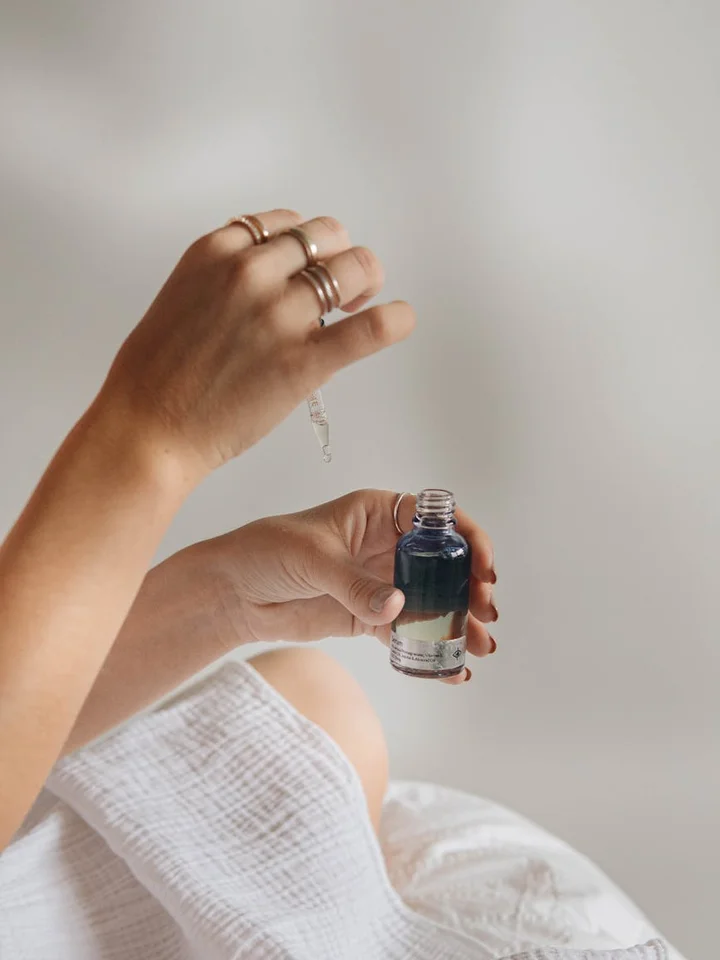
Think of your skin cells as having a specific set of locks, and retinoids are the master key. Both retinol and the stronger tretinoin fit into that same lock. Using both doesn’t open the door twice as fast. It jams the mechanism.
You are sending the same, powerful signal to your skin from two different sources, overstimulating those cell receptors. This biological overload doesn’t speed up results. It almost guarantees a reaction.
The specific risks of combining them include:
- A severely compromised skin barrier, leaving your skin vulnerable.
- Intense dryness, peeling, and flaking beyond typical “retinization.”
- Heightened sensitivity, making your skin sting with products it normally tolerates.
- Significant redness and inflammation, which can worsen hyperpigmentation.
- In extreme cases, painful irritation resembling a chemical burn.
I saw this firsthand with a client, Noah. Frustrated with slow progress, he layered his retinol serum under his prescription tretinoin cream for a week. His normally dry skin became tight, raw, and reacted to even his gentle moisturizer. We had to press pause on all actives for two full weeks while his barrier healed, which set his goals back further than if he had just been patient.
Using retinol and tretinoin together doesn’t give you a supercharged result. It gives you a supercharged problem. The risks of damage and setback far, far outweigh any theoretical benefit.
Smart Layering: Your Ingredient Mix-and-Match Guide
Instead of piling retinoids on top of each other, the real skill is building a supportive routine around your chosen one. Let’s talk about what to mix and what to avoid for a calm, effective experience.
The Safe Support Squad: Ingredients That Play Nice
These ingredients are like the best friends your retinoid could have. They help soothe, hydrate, and fortify your skin, making the adjustment period smoother.
- Ceramides: These are the lipids that act as mortar between your skin bricks. They actively repair and strengthen your barrier, which is exactly what you need when using a retinoid.
- Niacinamide: A superstar for calming redness and regulating oil. It helps improve skin resilience and can reduce the appearance of retinoid-related irritation.
- Hyaluronic Acid: A hydration magnet. Applying it to damp skin before or after your retinoid helps plump and counteract dryness without interfering.
- Centella Asiatica (Cica): A gentle, plant-derived ingredient renowned for its soothing and anti-inflammatory properties. It’s perfect for calming any tingles or redness.
Think of your routine as building layers of comfort. After applying your retinoid, follow up with a hydrating serum rich in these ingredients, then seal it all in with a ceramide-packed moisturizer. If you have oily or dry skin, check out our guide for using retinoids specifically tailored for your skin type.
For those seeking a gentler or natural alternative, a common question is: can i use bakuchiol with retinol? Yes, bakuchiol can be a gentler partner. You might use it on your “off” nights from retinol or tretinoin for a break, or some find they can layer them since bakuchiol works through different pathways. Always patch test first.
The Caution Zone: Ingredients That Require Careful Timing
Some powerful ingredients can work alongside your retinoid, but you need a strategy to avoid overwhelming your skin. The golden rule is separation. When layering brighteners with retinoids, timing and concentration matter. We’ll outline how to do this safely in the next steps.
Acids (AHA like glycolic, and BHA like salicylic) and potent Vitamin C (L-ascorbic acid) can be irritating when used simultaneously with your retinoid. They also prefer different pH levels to work best.
A simple schedule is your best friend. Use your Vitamin C serum in the morning and your retinoid at night. Or, dedicate certain nights to acids and others to your retinoid, never both on the same night.
Questions like can i use panoxyl and retinol or can i use panoxyl with tretinoin point to a common mix. Panoxyl contains benzoyl peroxide (BPO), which can degrade and deactivate some forms of retinol, making both less effective. More critically, using a strong BPO wash right before a retinoid is a one-two punch of dryness and irritation. On retinoid nights, swap the acne wash for a gentle, non-foaming cleanser to avoid sabotaging your skin’s comfort.
Stop and Ask Your Doctor: The Do-Not-Mix List
This is the non-negotiable category. Combining certain prescription topicals without direct medical supervision can lead to severe reactions or counteractive effects.
You must consult your dermatologist before combining your retinoid with other prescription treatments like:
- Other topical antibiotics (e.g., Clindamycin). Your doctor will often prescribe these together, but in a specific formulation or routine.
- Topical treatments like Amzeeq (minocycline foam). Can i use amzeeq and tretinoin together? Only under a doctor’s specific guidance, as they will advise on timing and application to treat acne effectively without excessive irritation.
- Strong lightening agents like Hydroquinone. Can i use hydroquinone and tretinoin together? This is a classic prescription combo for hyperpigmentation, but the concentration and frequency (like can i use hydroquinone with tretinoin everyday) must be meticulously directed by your dermatologist to prevent damage.
When you’re using prescription-strength ingredients, your dermatologist is your co-pilot. More active ingredients are not better. A targeted, well-supported routine with one retinoid is the most reliable path to healthy, clear skin.
Who Should Absolutely Avoid This Combo? (Contraindications & Safety)
Think of your skin barrier like a sturdy brick wall. Retinoids are powerful tools that help rebuild that wall stronger over time, but if the wall is already cracked or under construction, using those tools can cause more damage. Combining two potent retinoids amplifies this risk significantly.
Here is a clear checklist of situations where using even one retinoid requires a hard stop or extreme medical supervision.
1. If You Are Pregnant, Breastfeeding, or Trying to Conceive
This is the most critical non-negotiable. High-dose vitamin A derivatives, including prescription tretinoin and high-strength retinols, are contraindicated during pregnancy and breastfeeding due to potential risks.
My firmest advice is to avoid all retinoids during this time and consult your OB-GYN or dermatologist for pregnancy-safe alternatives like azelaic acid or glycolic acid. The potential benefit does not outweigh the risk, and your skin can absolutely thrive with other ingredients.
2. If Your Skin Is Sensitive, Rosacea-Prone, or Currently Irritated
Retinoids work by accelerating skin cell turnover, which initially can cause redness, peeling, and a flare-up of inflammation. If your skin is already in a reactive state, adding one retinoid-let alone two-is like fanning a flame.
I think of my client Noah, who has dry, reactive skin. Introducing a new active when his barrier was compromised from over-cleansing led to weeks of discomfort we had to repair with ceramides and colloidal oatmeal. If your skin stings with gentle moisturizers or looks red and feels tight, your only job is barrier repair, not adding potent actives. Pause all retinoids, focus on calming ingredients, and only reconsider once your skin has been calm for at least a full month.
3. If You Have Broken or Compromised Skin
Apply retinoids only to intact, healthy skin. Broken skin means your protective barrier is gone, leaving nerve endings and live tissue exposed. This can be particularly problematic when layering retinoids on fragile skin.
- Right after waxing, threading, or dermaplaning
- On active eczema, psoriasis, or severe sunburn
- On open cuts, scratches, or popped acne wounds
- Immediately before or after professional procedures (chemical peels, laser, microneedling)
Applying a retinoid to broken skin is a direct ticket to severe irritation, pain, and potential scarring. Always allow your skin to heal completely before resuming any retinoid product, and follow your clinician’s post-procedure timeline precisely.
4. If You Are Not Committed to Daily Sunscreen
Retinoids make your skin more photosensitive. Using them without rigorous sun protection is counterproductive and harmful, undoing the benefits and increasing damage. If you are not applying a broad-spectrum SPF 30 or higher every single morning-rain or shine, indoors or out-you are not ready for a retinoid routine. Don’t fall for the retinol sunscreen myth—sunscreen is still essential and can be highly effective when paired with retinoids. The next steps will explain how to pair retinoids with SPF for best results.
5. If A Dermatologist Has Advised You Against It
This overrides everything you read here, including my advice. Your dermatologist has access to your full health history, can diagnose specific conditions, and prescribes with that knowledge. Their personalized guidance for your skin always takes precedence over general information from any blog, including this one. If they have told you to avoid retinoids, especially for rosacea-prone skin, there is an important, individualized reason.
Your Retinol and Tretinoin Questions, Answered
Why would anyone think to combine retinol and tretinoin?
It often stems from a “more must be better” mindset or wanting to use up a retinol product after getting a prescription. They are different strengths of the same core ingredient, so combining them only overloads your skin with the same signal, which causes irritation without providing extra anti-aging or acne-fighting benefits.
If I have a tretinoin prescription, should I stop using my retinol?
Yes, completely. Transitioning to tretinoin means your retinol has served its purpose as a stepping stone. Discontinue your over-the-counter retinol and follow your dermatologist’s instructions for applying the prescription tretinoin, starting slowly to allow your skin to adjust to its direct potency.
Is a higher strength retinol always more irritating than a low-dose tretinoin?
Not necessarily. While tretinoin is inherently more potent, a high-concentration retinol serum can sometimes feel more irritating due to other ingredients in its formulation, like penetration enhancers or alcohol. The prescription status of tretinoin ensures its purity and your doctor’s oversight, which is why we recommend it for targeted concerns.
Final Thoughts on Building a Smart Retinoid Routine
Your most effective retinoid routine is the one your skin can tolerate consistently. Choosing one retinoid and mastering its use is far more beneficial than combining them and risking damage. Think of it as building a house: a stable foundation of barrier health supports everything else you want to achieve. For sensitive skin beginners, start with a low, well-tolerated retinol percentage to gauge tolerance. In the next steps, we’ll look at the best retinol percentage for beginners with sensitive skin.
- Select one retinoid product-either a cosmetic retinol or a prescription tretinoin-and commit to it.
- Always prioritize your skin barrier with a gentle cleanser and a rich, soothing moisturizer.
- Progress is measured in months, not days. Patience is your most important skincare ingredient.
- Sunscreen every single morning is non-negotiable when using any retinoid.
- When in doubt, consult a dermatologist or licensed esthetician for personalized guidance.
I hope this guide helps you navigate your retinoid journey with more confidence. If you have more questions, we’re here to help. You can follow LuciDerma for more evidence based, practical skincare advice, including men’s skincare routines with retinoids. Remember, your skin’s story is unique, and caring for it is a personal practice of patience and observation.
Relevant Resources for Further Exploration
- How to layer tretinoin with other skincare ingredients safely
- How to Apply Tretinoin Cream: A Guide to Demystifying Its Use – Dr. Bailey Skin Care
- Which skin care ingredients are good to layer/mix with retinol products? Which ingredients to avoid? : r/AsianBeauty
- Layering Retinol: Can You Use Lactic Acid and Retinol | Biossance
- Tretinoin (topical route) – Side effects & dosage – Mayo Clinic
Lucy Zimmerman
Lucy is an expert author and blogger when it comes to skin care and body care. She has first hand expertise acting as skin care consultant for over 5+ years helping her clients achieve smooth blemish free skin with natural and working remedies. She also has been an avid experimenter and tried out all the natural and artificial remedies and treatments so you can learn from her first hand experience. Additionally, she has traveled to many countries around the world and incorporated the skin care routines she has learnt into this blog. So, wait no more, reach out to Lucy if you have any specific needs and follow her blog, LuciDerma for expert skin care advice.