
Retinol Compatibility: What Not to Mix for Healthy, Glowing Skin
If you’ve ever hesitated before blending retinol with another serum, worried about redness or peeling, I hear you. Getting your layers right is the difference between a transformative routine and a tender, reactive mess.
By the end of this article, you will have a practical plan for safe layering:
- You will know the exact ingredients to keep separate from your retinol to prevent irritation.
- You will understand the skin science behind these clashes, so your choices feel informed, not fearful.
- You will be empowered with a straightforward method to sequence your products for clear, resilient skin.
Think of this as your quick-reference guide to a smoother, more confident retinol journey.
The Golden Rules of Retinol Companionship
Think of retinol as a skilled night-shift worker. Its primary job is to encourage faster, healthier skin cell turnover while you sleep. This is how it tackles fine lines, acne, and uneven texture. Because it’s working at a cellular level, it can make your skin more sensitive, especially when you first start using it. Understanding retinol’s key properties and how they affect the skin can help you use it safely. This awareness can guide how you layer it with other products and protect your skin.
The core principle for layering is simple: some ingredients compete for attention, neutralize each other, or simply create too much traffic for your skin to handle at once. Mixing the wrong ingredients with retinol can lead to irritation, redness, and a compromised skin barrier, setting your progress back.
I like to compare your skin barrier to a busy single-lane highway at night. Retinol needs a clear lane to do its repair work efficiently. If we try to send a convoy of other powerful actives down that same lane at the same time, everything grinds to a halt and the road gets damaged. My client Noah, who has dry, reactive skin, taught me the value of this principle. He now approaches any new product combination with a “one new thing at a time” rule, which has saved his skin from countless potential flare-ups.
What Ingredients Should You Not Mix with Retinol?
This list is your go-to guide for what to avoid applying in the same part of your routine, typically your evening regimen. Separating these ingredients is a non-negotiable for comfort and effectiveness.
Direct Acids (AHAs, BHAs, and Vitamin C)
Glycolic acid (an AHA), salicylic acid (a BHA), and pure L-ascorbic acid (Vitamin C) are all potent ingredients that work best at a low pH. Applying them directly before or with your retinol creates a problem. The low pH environment they create can destabilize the retinol, reducing its efficacy and, more importantly, drastically increasing the risk of stinging, peeling, and irritation. If you’re considering an aha/bha retinol combination, approach it with caution and a clear plan. The next steps will outline safe timing and layering for this combination.
It’s like using a heavy-duty acid cleaner and a powerful paint stripper on the same surface simultaneously. One job is plenty for your skin to handle. A common question I get is, “Can you use retinol with AHAs or BHAs?” Absolutely, but not together. The key is separation. Use your acid-based toner or treatment in the morning, and your retinol at night. Alternatively, you can use them on alternating nights. This gives each ingredient its own time to work without conflict.
Benzoyl Peroxide
If you’re using retinol for acne, you might be tempted to pair it with benzoyl peroxide for a double attack. Please don’t mix them in the same routine. Benzoyl peroxide is an oxidizing agent, and it can actually oxidize and deactivate retinol molecules on contact. This chemical conflict means both ingredients become less effective, which is often why people find their acne routine isn’t delivering results.
Just like with acids, the solution is to use them at different times. Many find success using benzoyl peroxide as a morning spot treatment and retinol as an all-over evening treatment.
Other Potent Actives
While the interactions above are primarily chemical, some physical and botanical ingredients create a problem through sheer intensity. On nights you use retinol, skip harsh physical scrubs with large, jagged particles. The combined exfoliation can cause micro-tears. I also advise avoiding layering retinol with undiluted, high-concentration essential oils (like peppermint or lemon oil), which can be sensitizing on their own and may further irritate retinol-treated skin.
The safest path is to let retinol have its moment alone on your skin, followed only by a simple, soothing moisturizer to support your barrier.
What Ingredients Are Safe to Mix with Retinol?
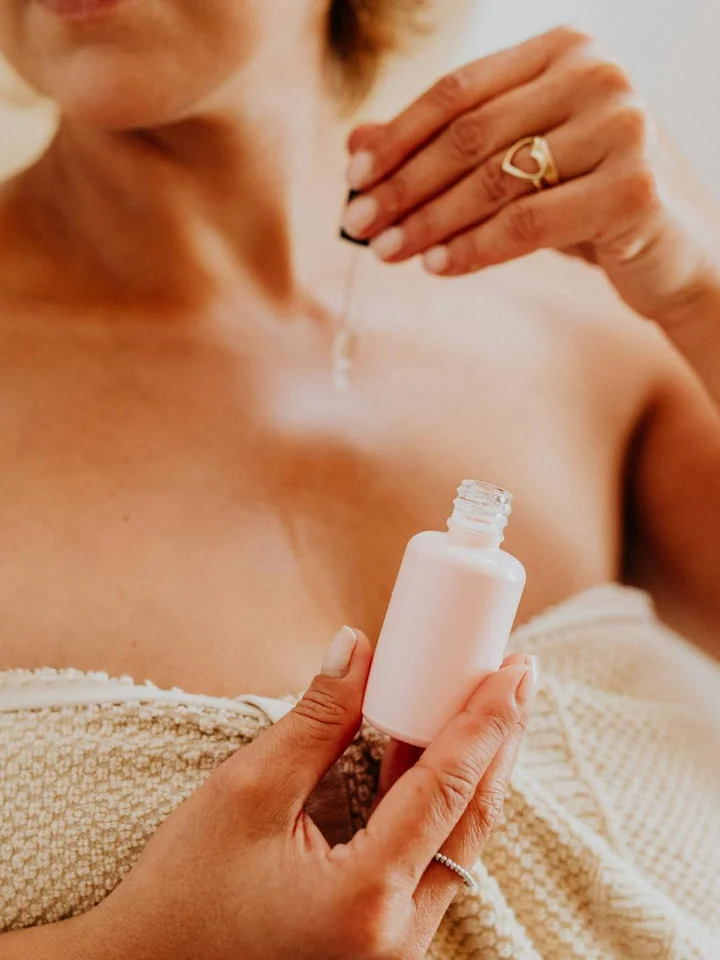
Let’s shift from what to avoid to what to embrace. Many ingredients are fantastic partners for retinol. They help soothe your skin, support its barrier, and can even make your retinol work more comfortably and effectively. Think of this as answering your real questions: what can you use with retinol, and what can retinol be used with for better results.
Soothing Hydrators: Hyaluronic Acid & Ceramides
Consider hyaluronic acid and ceramides retinol’s best friends. Retinol can sometimes feel a bit demanding on your skin, like a rigorous workout. These hydrators are the cool-down and recovery.
Hyaluronic acid acts like a giant drink of water, pulling moisture into the skin’s surface to prevent the tight, dry feeling retinol can sometimes cause. Ceramides are different. They are the essential lipids that form your skin’s protective barrier. Using them with retinol is like sending in a repair crew to reinforce your skin’s walls while retinol does its renovation work inside.
The best way to layer them is to apply your hyaluronic acid serum to slightly damp skin, let it settle for a minute, then follow with your retinol. This gives your skin a cushion of hydration first. You can find ceramides in moisturizers, which should always be your final step after retinol to seal everything in.
Barrier Support: Niacinamide and Peptides
This is where we bust a big myth. You may have heard that niacinamide and retinol cancel each other out. That’s simply not true from a chemistry perspective. They work on completely different pathways in the skin and, when used together, can be a powerhouse duo.
Niacinamide helps strengthen your skin’s barrier, improves its ability to retain moisture, and helps calm redness. That illustrates niacinamide skin barrier benefits in action. When the barrier is fortified, hydration lasts longer and sensitivity can ease. It’s like giving your skin a resilience training session. Peptides are gentle signaling molecules. They act like coaches, encouraging your skin to produce more collagen and behave in a more youthful way, without causing any conflict with retinol’s cell-communicating action.
My client Lina, who has combination skin, found her perfect balance by using a niacinamide serum in her morning routine and her retinol at night. This gave her skin the daytime calming and barrier support it needed to handle the retinol’s renewal process beautifully at night, without any irritation.
Your Retinol Compatibility Matrix: What to Mix & What to Avoid
Here’s a simple, at-a-glance guide to keep on hand. It summarizes the conflicts, the safe pairings, and the superstar teams we’ve discussed.
| What You CAN Mix With Retinol (The Support Team) | What You CANNOT Use With Retinol (The Conflict Team) |
|---|---|
|
Hyaluronic Acid: Provides immediate hydration to counter dryness. Apply before retinol on damp skin. Ceramides: Repairs and strengthens the skin barrier. Use in your moisturizer after retinol. Niacinamide: Strengthens barrier, calms redness. Can be used together or at separate times. Peptides: Supports collagen production gently. A safe and effective partner. Gentle, Fragrance-Free Moisturizers: Essential for locking in moisture and minimizing irritation. |
Benzoyl Peroxide & AHAs/BHAs (like Glycolic/Salicylic Acid): Can deactivate retinol and cause severe irritation. Use on alternate nights. If you’re exploring the use of salicylic acid with retinol, space their use to minimize irritation. We’ll guide you on how to use salicylic acid and retinol safely in the next steps. Vitamin C (L-ascorbic acid): Optimal at a different pH, can be destabilizing and irritating together. Use Vitamin C in the AM, retinol in the PM. Other Prescription Retinoids: Do not layer with over-the-counter retinol. This is a recipe for damage. Physical Scrubs or Harsh Cleansers: Compromise your barrier, making retinol irritation much more likely. |
You might wonder, “Do Koreans use retinol?” The philosophy in Korean skincare, and indeed in thoughtful skincare everywhere, prioritizes gentle, effective layering and barrier health above all. Retinol is used, but it’s carefully integrated into a routine bursting with hydrating and soothing ingredients like the ones in the “safe” column. The goal is always strong, resilient skin, not just a strong ingredient.
How to Layer Retinol with Other Products: A Step-by-Step Guide
Think of your evening routine like getting dressed for bed. You start with the lightest layers closest to your skin. Your retinol is like a cozy set of thermals-it needs direct contact to work best. Here is a simple, safe template for your PM routine.
- Cleanser. Use a gentle, non-exfoliating formula. Pat your face dry with a clean towel.
- Toner or Essence (Optional). If you use one, choose a hydrating, alcohol-free option. Wait 30-60 seconds for it to dry.
- Treatment Serum (Your Retinol). Apply a pea-sized amount to your entire face, avoiding the eye area. This is the most important step-let it absorb fully for 10-15 minutes before moving on. This waiting period minimizes irritation and ensures the retinol isn’t diluted or pushed around.
- Moisturizer. Lock everything in with a nourishing cream. This step soothes skin and reinforces your moisture barrier.
- Face Oil (Optional). If your skin is dry like Noah’s, a few drops of a calming oil like squalane can be the final protective layer.
The “thin-to-thick” rule is your friend. Watery textures go on first, followed by lotions, then creams, then oils. This allows each layer to penetrate properly.
Let’s contrast a safe routine with a common mistake. A safe routine uses a gentle cleanser, waits for the skin to dry, applies retinol, waits again, and finishes with moisturizer.
A risky routine might use an exfoliating cleanser with salicylic acid, immediately apply retinol on damp skin, and then layer on a treatment serum with AHAs. This stacks too many active ingredients at once, almost guaranteeing redness, peeling, and a compromised skin barrier. It’s like throwing three different cleaning chemicals into a bucket-the reaction is harsh and counterproductive.
When Is the Best Time to Use Retinol?
Nighttime is non-negotiable for retinol. Sunlight breaks down retinol, making it less effective. More importantly, your skin’s natural repair processes kick into high gear while you sleep, and retinol supports that renewal work.
This nightly schedule also makes it easy to plan your other actives. Vitamin C, a powerful antioxidant, is perfect for your morning routine under sunscreen to fight daytime pollution and UV damage. Chemical exfoliants (like glycolic or lactic acid) should be used on completely separate nights from your retinol. I often suggest my client Lina uses them just 2-3 nights a week, on her “off” nights from retinol, to manage her T-zone without over-sensitizing her cheeks.
Consistency with your timing matters far more than the exact hour on the clock. Applying retinol most nights of the week, as part of your wind-down ritual, builds better results than sporadic use. If you have very sensitive skin, you can even apply your moisturizer first, wait 20 minutes, then apply retinol. This “buffering” method is a gentle way to build tolerance.
Contraindications & Safety Warnings: When Not to Try
Mixing ingredients is one thing, but your personal skin situation is another. Some moments call for pressing pause, not because an ingredient is bad, but because your skin needs a different kind of attention first.
Do not start a new retinol product if you are pregnant, breastfeeding, or trying to conceive. While topical retinoids are generally considered low-risk, most healthcare providers recommend erring on the side of caution and avoiding them during this time. There are many other wonderful, pregnancy-safe actives to explore instead. If you’re considering starting retinol at a specific age, there are safety precautions worth noting before you begin. These age-appropriate guidelines help ensure safe, effective use and minimize irritation.
Put retinol on hold if you have a fresh sunburn or any open wounds or broken skin. Your skin is in an active state of repair and adding a stimulant like retinol will only amplify inflammation and discomfort. Think of it like adding spice to an already burning wound.
Hold off if your skin barrier is visibly compromised. This means if your skin is consistently stinging with gentle products, feels tight and rough like parchment paper, or is flaky and red, your priority is repair, not renewal. Retinol can wait.
If you have sensitive skin, you can often use retinol successfully, but the “low and slow” mantra is your bible. This means starting with the lowest concentration you can find, using it only once or twice a week, and always pairing it with the gentle, soothing “safe mixers” like ceramides and hyaluronic acid. My client Noah, with his dry, reactive skin, built tolerance over months by applying his retinol serum over a layer of barrier cream, acting as a gentle buffer.
What to Do If You Experience Irritation from Mixing Retinol
If your skin feels hot, tight, itchy, or looks red and flaky after trying a new combination, don’t panic. This is your skin asking for a simpler conversation. Here is your immediate protocol.
First, stop all active ingredients immediately. This means retinol, acids, vitamin C, and even physical exfoliants. Give your skin a complete break from anything that asks it to change its behavior.
Switch to a bland, repair-focused routine for at least one week. Your only goals are to soothe, hydrate, and protect.
- Cleanse: Use a gentle, non-foaming, fragrance-free cleanser.
- Treat: Apply products with calming ingredients like centella asiatica, panthenol, colloidal oatmeal, or aloe.
- Moisturize: Use a simple, rich moisturizer with barrier-repair ingredients like ceramides, fatty acids, and cholesterol.
- Protect: Apply a gentle, mineral-based sunscreen every morning without fail. Sun exposure on compromised skin worsens irritation and hyperpigmentation.
Once your skin feels completely normal-no tingling, no tightness, no redness-for a full week, you can begin reintroduction. Start with retinol alone, once a week, on perfectly dry skin after cleansing. Use your gentle, repairing moisturizer afterward. Do this for two to three weeks.
Only after your skin tolerates retinol alone consistently should you consider slowly adding one “safe” partner back in, weeks later.
I once worked with Maya, who was eager to tackle acne and signs of aging. She mixed a retinol serum with a salicylic acid treatment, aiming for faster results. Within days, her oily, acne-prone skin was red, flaky, and more inflamed. She recovered by stripping her routine down to a gentle cleanser, a ceramide moisturizer, and sunscreen for ten full days. When she reintroduced her retinol alone, once a week, her skin welcomed it without complaint. She learned that with actives, slow, steady consistency beats aggressive mixing every time.
Your Retinol Pairing Questions, Answered
What’s the golden rule for mixing ingredients with retinol?
The safest principle is to let retinol work solo on clean, dry skin, then follow with a gentle moisturizer. Think of it as giving this powerful ingredient a clear lane to do its renewal work without traffic from other actives that could cause irritation or reduce its effectiveness. That approach fits into a retinoids oily dry skin routine, where you adapt moisturizer choice and timing to your skin’s needs. This keeps retinol effective while supporting comfort across skin types.
I have sensitive skin. How can I time my actives safely?
Use a “night off” strategy. Apply your retinol every other evening, and on the nights between, you can use a hydrating or soothing treatment instead. This gives your skin a rest day to recover and maintain a strong barrier, which is key for long-term tolerance.
My skin reacted. What’s the first step to recovery?
Immediately pause all active ingredients, including retinol. Focus solely on a gentle, reparative routine with a fragrance-free cleanser and a moisturizer rich in ceramides and soothing agents for at least one full week, until all signs of irritation have completely subsided.
Final Thoughts on Smart Retinol Layering
Using retinol successfully comes down to respecting its strength and protecting your skin barrier. The simplest routine, built on gentle cleansing and diligent sun protection, is often the most effective one for seeing results without irritation. You can even debunk the myth that sunscreen alone is enough when using retinol.
- Always apply retinol to clean, dry skin at night.
- Separate use from direct acids (like AHA/BHA) and vitamin C to avoid sensitivity.
- Your morning sunscreen is non-negotiable and your retinol’s best partner.
- When adding a new product, patch test first and introduce it slowly.
- If your skin feels tight or stings, scale back and focus on hydration.
For more guidance tailored to your skin type, explore other articles here on the LuciDerma blog. If you have a specific question about your routine, I’m here to help you navigate it-safely and effectively. Your skin’s health is a journey, and taking it one thoughtful step at a time is the most sustainable choice you can make.
Relevant Resources for Further Exploration
- Best Ingredients to Pair and Avoid with Retinol
- What Not to Mix with Retinol: Your Complete Guide to Safe Retinol Combinations
- What Not to Mix with Retinol for Flawless Skin – [ comfort zone ]
- Your Comprehensive Guide to Using Retinoids | The Ordinary
- Ingredients You Can and Can’t Use with Retinol | Exclusive Beauty
- 8 Products That Go Well With Retinol – Reviva Labs
- The Dos & Don’ts of Mixing Skincare Ingredients | Software
- 6 Skin-Care Ingredient Combinations That Don’t Mix
- Ultimate Guide to Mixing Retinol with Other Skincare Ingredients – Eight Saints
- 3 Skincare Ingredients You Should Never Mix With Retinol
Lucy Zimmerman
Lucy is an expert author and blogger when it comes to skin care and body care. She has first hand expertise acting as skin care consultant for over 5+ years helping her clients achieve smooth blemish free skin with natural and working remedies. She also has been an avid experimenter and tried out all the natural and artificial remedies and treatments so you can learn from her first hand experience. Additionally, she has traveled to many countries around the world and incorporated the skin care routines she has learnt into this blog. So, wait no more, reach out to Lucy if you have any specific needs and follow her blog, LuciDerma for expert skin care advice.