
Your Practical Guide to Using Collagen Peptides for Firmer, Hydrated Skin
You’re probably wondering if collagen peptides are just another hype, or if they really work to improve skin’s bounce and moisture.
By the end of this article, you’ll know exactly what they do for your skin and how to fit them into your life. Here’s what we’ll cover:
- What collagen peptides actually do-and how they differ from topical products to improve hydration and elasticity from the inside.
- How to choose the right product, from trustworthy brands to types of formulas, so you can spend your money wisely.
- A simple, effective routine that shows you exactly when and how to use them for the best results.
Let’s get your skin feeling plumper and more resilient.
First Things First: What Even Are Collagen Peptides?
Let’s start with the basics. Collagen is the most abundant protein in your skin. Think of it as the scaffolding or the support beams in a building. It’s what gives your skin its structure, plumpness, and bounce.
But here’s the catch: the collagen molecule itself is too large to just sink into your skin from a cream or serum. This is where peptides come in.
Collagen peptides are simply collagen that’s been broken down into much smaller chains of amino acids. If whole collagen is a long, thick rope, collagen peptides are the short, manageable strands you can actually work with. These smaller pieces are bioavailable, meaning your skin cells can recognize and use them. Unlike ceramides and peptides for barrier repair, collagen peptides primarily support skin elasticity and structure from within.
They’re commonly derived from marine (fish) or bovine (cow) sources. But the most important thing to understand is how they work. Applying collagen peptides topically isn’t like pumping filler directly into your skin. They don’t physically rebuild collagen on contact. Collagen is broken down into smaller peptides, which have a range of uses in skincare and wellness. These collagen-derived peptides tie into topics like peptide formation and practical uses in products.
Instead, they work as clever messengers. When your skin absorbs them, they can signal to your fibroblast cells (your skin’s collagen factories) to get to work. It’s like handing a blueprint to a construction crew instead of trying to build the wall yourself.
The Molecule Spec Sheet: A Chemist’s Quick Look
For those who love the details, here’s a quick breakdown of what makes collagen peptides a practical skincare ingredient. In the broader anti-aging skincare landscape, retinoids and peptides are often highlighted as powerful partners in supporting collagen and skin renewal.
| Property | The Details |
| Typical pH | Neutral (skin-friendly, usually between 5.5-7) |
| Common Concentration | 1% to 5% in serums and creams |
| Solubility | Highly water-soluble, so they blend easily into lightweight, non-greasy formulas. |
| Safety & Tolerance | Generally very well-tolerated, even by sensitive skin types like my client Noah. They are non-comedogenic and rarely cause irritation. |
A key factor is their low molecular weight. This small size is precisely what allows them to penetrate the skin’s surface barrier and deliver their message to the deeper layers where collagen is made. Heavier molecules just sit on top.
This spec sheet is why I often recommend peptide serums to clients like Lina, who wants effective anti-aging without heavy creams that might upset her combination skin. It’s a smart, targeted approach, especially when considering peptides for daily skincare.
How Collagen Peptides Specifically Target Skin Elasticity

Think of skin elasticity as your skin’s bounce-back factor. Pinch the skin on the back of your hand and let go. Young, healthy skin snaps right back. As we age, that return trip gets slower and less complete.
Collagen peptides are short chains of amino acids, the building blocks of protein. When you apply them topically or take them orally, they act as precise messengers. These peptides deliver a clear signal to your fibroblasts, your skin’s internal construction crew, to ramp up production of new collagen and elastin.
This is fundamentally different from surface-level plumping with a hyaluronic acid serum. That’s like spritzing a plant’s leaves for temporary hydration. Using collagen peptides is more like feeding the roots to encourage stronger, healthier growth from within. It’s a long-term investment in your skin’s structural reinforcement.
So, what are the specific benefits of collagen peptides for skin elasticity? Direct and consistent use can help your skin’s foundation become more robust. This means a tangible improvement in your skin’s ability to resist sagging and maintain a lifted, supported appearance. For my client Maya, who is focused on prevention, this supportive action is a key part of her routine, especially when combined with anti-aging acids that enhance collagen production.
Why Your Skin’s “Support Beams” Weaken Over Time
Your skin’s collagen and elastin are like the support beams in a house. Over decades, it’s natural for them to need maintenance. A few key factors accelerate the wear and tear.
- UV Exposure (Photoaging): Sunlight is the primary culprit. It breaks down collagen fibers faster than your body can repair them, leading to wrinkles and loss of firmness.
- Natural Slowdown (Chronological Aging): Starting in our mid-20s, our bodies simply produce about 1% less collagen each year. This is normal biology, not a failure.
- Lifestyle Factors: Smoking constricts blood vessels, starving skin of nutrients. A diet high in refined sugar can cause glycation, a process where sugar molecules stiffen collagen proteins.
Framing this as natural biology helps us approach care without panic. It’s not about reversing time, but about giving your skin the best tools to cope with it.
The Real-World Result: Firmer, Fuller-Looking Skin
The changes from supporting your skin’s collagen are subtle but meaningful. You notice them first by touch, then by sight.
Skin begins to feel less crepey, particularly on delicate areas like the décolletage or under the eyes. There’s a improved firmness when you gently press your cheeks. Fine lines, especially those from expression, may appear softened because the skin beneath them has more support. This is the real payoff: skin that looks and feels more resilient, like a well-hydrated grape versus a raisin.
It’s vital to manage expectations. This is a gradual improvement, not an instant filler. You’re encouraging your skin’s own renewal processes, which takes consistent effort over weeks and months. My client Noah, with his dry and reactive skin, saw the best results when he paired peptides with a simple, soothing routine for three months straight. Patience is part of the protocol.
How Collagen Peptides Specifically Boost Skin Hydration
Most people connect collagen with firmness and wrinkles. The link to hydration is less obvious, but just as important. Think of your skin’s deeper layers as a mattress.
The collagen network is the internal spring system. Hyaluronic acid and other moisture molecules are the plush filling. If the springs are weak or broken, the whole structure sags and compresses. It can’t properly hold the filling in place.
By reinforcing your skin’s foundational support, collagen peptides help create a stable environment that can better retain vital moisture. These benefits also tie into the broader discussion of peptide skincare and how FDA-approved claims are established. We’ll delve into what FDA approval means for peptide products and what to look for on labels.
The Specific Hydration Benefits of Collagen Peptides
So, what does this look and feel like in practice? The benefits are subtle but significant for skin health.
- Reduced Trans-Epidermal Water Loss (TEWL): A robust dermal matrix acts as a supportive barrier, helping to prevent water from passively evaporating from your skin into the air.
- Improved Skin Plumpness: Hydrated skin is plump skin. When water is held more effectively within a supported structure, it can reduce the appearance of fine, dehydrated lines.
- Enhanced Skin Texture: Well-hydrated skin supported from within often feels smoother and looks more supple, less like parchment paper.
My client Noah, with his dry, reactive skin, noticed this. After consistently using a collagen peptide supplement, he said his moisturizer seemed to “work better and last longer.” His skin felt less taut by midday. The peptides were fortifying the structure so his topical products could be more effective.
Collagen Peptides vs. Hyaluronic Acid: The Crucial Difference
This is a common point of confusion. It’s not an “either/or” situation; they are a powerful team with different jobs.
Hyaluronic acid is a superstar humectant. It’s like a moisture magnet, actively drawing water to itself. You apply it topically or take it orally to pull hydration into the skin.
Collagen peptides are not humectants. They are the supportive partner that helps ensure the moisture drawn in by humectants has a strong, resilient place to stay.
For the best results, use them together. Apply a hyaluronic acid serum to damp skin, then follow with a moisturizer. Your internal collagen peptide supplement works in the background to strengthen the foundation that keeps everything in place. This one-two punch is ideal for anyone seeking lasting hydration, not just a temporary surface dewy feel.
The Formulation Pro-Tip: How to Spot a Good One

Not all peptide serums are created equal. In my clinic, I see bottles that promise the world but deliver very little. Choosing a good one comes down to a few key details on the label and how it feels on your skin.
What Makes a Peptide Serum Effective
Think of peptides as messengers. To deliver their message effectively, they need to be formulated correctly.
- Look for specific peptides. Generic “peptide complex” listings are less helpful. You want to see names like Palmitoyl Tripeptide-1, Acetyl Hexapeptide-8, or Copper Tripeptide-1. These are well-researched signal peptides that tell your skin to make more collagen.
- Molecular weight matters. Peptides are small, but they need to be small enough to penetrate the skin’s surface. A good formulation ensures this bioavailability.
- Check for supporting ingredients. Peptides work best in a supportive base. Look for complementary hydrators like hyaluronic acid or glycerin. This creates a “base camp” of moisture from which the peptides can do their repair work more effectively.
My client Noah, with his dry, reactive skin, does best with a peptide serum that lists a simple peptide high in the ingredients, paired with ceramides for barrier support.
The Ideal Texture for Your Routine
If a serum pills up or leaves a sticky film, you won’t use it consistently. The texture is a practical deal-breaker.
An ideal collagen peptide serum should have a thin, watery, or slightly silky consistency. It should absorb quickly without any tacky residue. This allows you to layer it seamlessly under your moisturizer and sunscreen every single morning or night.
A lightweight, fluid texture means the active ingredients are delivered effectively without clogging pores or disrupting other products in your routine. My client Lina, with her combination skin, avoids anything heavy in her T-zone. A watery peptide serum gives her the benefits without the worry of congestion.
Stability and Teamwork: The Antioxidant Factor
Peptides are delicate. Environmental stressors like pollution and UV radiation can break them down before they even get a chance to work.
This is why pairing is everything. The most stable and effective peptide formulas often include antioxidants like Vitamin C (ascorbic acid or a stable derivative), Vitamin E (tocopherol), or ferulic acid. Think of these antioxidants as bodyguards. They neutralize free radicals that would otherwise interrupt the peptide’s collagen-building signals.
Applying a peptide serum in the morning under your sunscreen is a powerful one-two punch for protection and repair.
A Quick Note on Powders and Pills
The pure collagen peptide powders you mix into drinks are a completely different category. That conversation is about internal bioavailability and supporting your body’s overall collagen production from within.
Topical peptides and ingestible collagen supplements can be part of a holistic approach, but they work through different mechanisms and are not interchangeable. For the goal of improving skin elasticity and hydration directly at the surface, a well-formulated topical serum is your most direct tool.
Your Practical Guide: Adding Collagen Peptides to Your Routine
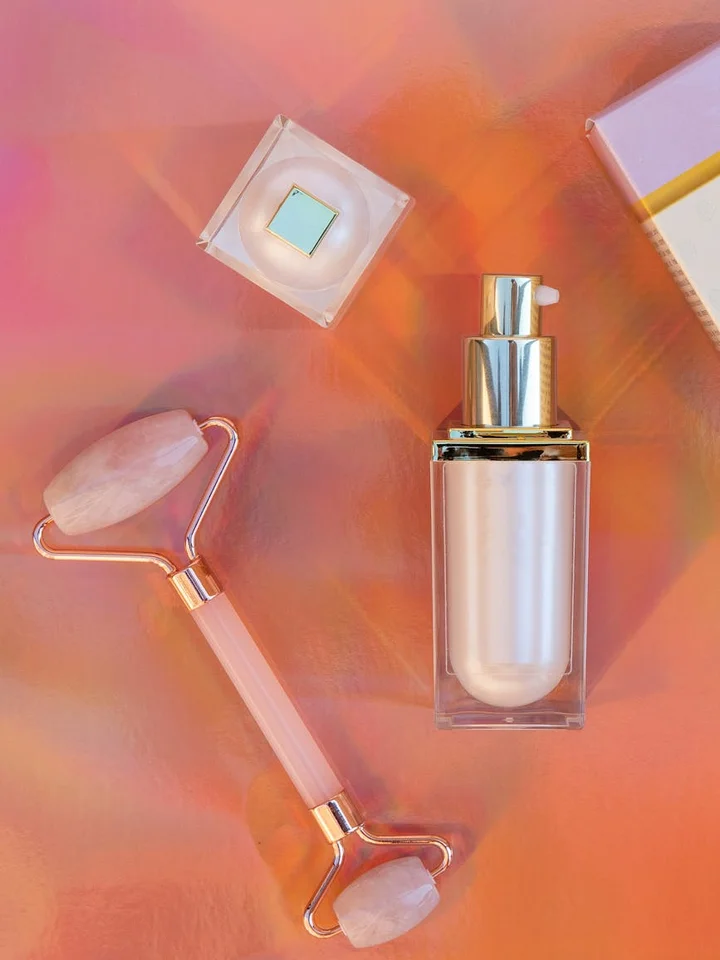
Most people ask one question: where does this go in my lineup? The good news is collagen peptides are some of the easiest, most agreeable ingredients to add to any routine. Think of them as a supportive friend who gets along with almost everyone.
Your collagen peptide serum belongs right after cleansing and toning, but before your thicker moisturizer or face oil. This allows the small peptides to absorb directly into the skin without a heavy barrier blocking them. If your peptide serum has a watery texture, apply it before a thicker serum. If it’s a creamier formula, it can go after your light serums.
They play very well with other key ingredients. Using them alongside a Vitamin C serum in the morning can be a powerful one-two punch for supporting collagen. Niacinamide is another fantastic partner, helping to soothe skin while peptides work on structure. In the evening, you can layer them before a gentle retinoid. Just apply your peptide serum first, wait a minute for it to dry, then apply your retinoid.
The only timing note is to avoid applying them at the exact same moment as very low-pH acids, like a strong AHA or BHA toner. The extreme acidity can temporarily alter the peptide’s structure. You can use them in the same routine, just separate them by a few minutes or use acids in the AM and peptides in the PM.
You can use a collagen peptide serum daily, both morning and night. They are remarkably gentle and suitable for all skin types. My client Noah, with his dry, reactive skin, uses one to help reinforce his skin barrier without irritation. They are particularly beneficial if your main concerns are early signs of aging, persistent dryness that moisturizer alone doesn’t fix, or a feeling of skin losing its firmness.
Step-by-Step: Morning and Evening Application
Here is exactly how to slot a liquid peptide serum into your day. Remember, consistency is more important than perfection.
Morning Routine
- Cleanse your face with a gentle, water-based cleanser.
- Pat your skin until it’s slightly damp (not dripping wet).
- Dispense 3-4 drops of collagen peptide serum into your palms.
- Gently press and pat the serum all over your face and neck.
- Allow it to absorb for 60 seconds.
- Apply your favorite Vitamin C serum or antioxidant treatment if you use one.
- Follow with your daily moisturizer.
- Apply a broad-spectrum sunscreen. This is non-negotiable to protect your skin and the new collagen you’re working to support.
Evening Routine
- Double cleanse to remove sunscreen and makeup.
- Pat your skin until it’s slightly damp.
- Apply your collagen peptide serum using the same pressing and patting method.
- Let it absorb fully.
- This is your moment to apply any targeted treatments, like a prescription retinoid or a spot treatment, avoiding the eye area.
- Seal everything in with a nourishing night cream or face oil. For my client Lina, this step helps lock hydration into her cheeks while the peptides work overnight.
Navigating the Hype: Your Honest Ingredient Reality Check
You’ve heard the promises, but you’re smart. You want the real story before adding another step to your routine. Let’s tackle your biggest questions head on, just like I would with a client in my treatment room.
Are all collagen peptides the same?
No, they are not. Think of collagen as a long, sturdy rope. A collagen peptide is what you get when you cut that rope into tiny, manageable pieces. Where that rope comes from (its source) and how it’s cut (the processing) makes all the difference in how your skin can use it.
Most skincare peptides are sourced from bovine (cow), marine (fish), or porcine (pig) collagen. Marine-derived peptides are often smaller and may be more readily absorbed, making them a frequent star in topicals. The key is the hydrolysis process, which breaks the collagen down into those small, bioavailable fragments. A high-quality product will use a specific, controlled process to ensure the peptides are the right size to signal your skin.
Are collagen peptides vegan?
This is a crucial distinction. True collagen peptides are almost always derived from animal sources. They cannot be plant-based because collagen itself is an animal protein.
What you’ll see marketed as “vegan collagen” are actually blends of vitamins, minerals, and amino acids (like proline and glycine) that act as building blocks. They support your body’s own collagen production but are not collagen peptides. If you follow a vegan lifestyle, look for products honestly labeled as “collagen boosters” or “collagen builders” that contain ingredients like amino acid complexes, antioxidant-rich botanicals, and peptides derived from yeast or fungi. It’s about supporting the factory, not importing the finished product.
Are collagen peptides worth it?
Let’s weigh it. For your skin, a well-formulated peptide serum is a brilliant supportive player. It’s not a solo miracle that will erase deep wrinkles overnight. Its worth comes from its role as a dependable teammate in a broader strategy.
Think of your skincare routine like a balanced diet for your skin. Vitamin A (retinol) is your protein, building new, healthy cells. Vitamin C is your antioxidant-rich vegetable, protecting and brightening. Peptides? They’re like the helpful nutrients that ensure everything gets absorbed and used efficiently. For someone like Noah, with dry, reactive skin, peptides offer a gentle way to support firmness without the irritation stronger actives can cause. For Maya, they can help maintain skin’s bounce while she manages oiliness.
Consider your budget and goals. If you want a gentle, hydrating ingredient that supports long-term skin health and works well with other actives, they are absolutely worth considering. If you’re looking for a single product to completely transform severe photoaging, your expectations need adjusting.
Topical vs. Internal: A Quick Skin-Focused Note
The debate between supplements and serums is big. From a skincare perspective, topical peptides work locally, right where you apply them. They send signals directly to your skin cells to encourage better performance. A supplement works systemically, impacting skin, hair, nails, and joints from within.
They are not mutually exclusive, but for targeted skin concerns like elasticity and hydration in a specific area (like your face or neck), a topical serum is your most direct route. Using a peptide serum is like giving your skin a clear, specific set of instructions, right on the spot where you need them carried out. For overall health and whole-body support, a high-quality supplement can be a great complement. In your skincare routine, focus on the topical power first.
How They Play With Others: Collagen Peptides vs. Popular Actives
Think of your skincare routine as a team. Every player has a position. Collagen peptides are your star defenders, reinforcing your skin’s structure. But they work best when you have other players handling offense and support. Here’s how to build your winning lineup.
Peptides and Hyaluronic Acid: The Hydration Dream Team
If your skin feels tight or looks dull, this combo is for you. My client Noah, with his dry skin, saw a real difference when he started using them together. Here’s why they’re perfect partners.
Hyaluronic acid (HA) is a humectant. It acts like a super-sponge, drawing water from the air and your deeper skin layers to the surface. It gives you that immediate, plumped-up feeling.
Collagen peptides are the builders. They send signals to your skin to shore up its support structure, the collagen and elastin network. Imagine HA as the water in a sponge, and peptides as the sturdy scaffolding that keeps the sponge from collapsing. Some peptides act as signals that help regulate growth factors to boost skin repair and collagen production. This peptide–growth factor synergy is a key aspect of anti-aging skincare.
Layer them by applying your peptide serum first, followed by your HA serum or moisturizer. This lets the peptides communicate with your skin directly, then seals everything in with a surge of hydration.
Peptides and Retinol: The Repair Alliance
This is a power duo for targeting fine lines and improving texture. Retinol speeds up cell turnover and boosts collagen production itself, but it can be irritating. Peptides are the calm, supportive friend that helps manage the renovation.
Think of retinol as the demolition and rebuilding crew. It’s highly effective but can cause some disruption (redness, peeling). Peptides are the architects and construction managers, providing the blueprints and materials for stronger, healthier skin to be built.
Using peptides alongside retinol can help support your skin barrier, potentially minimizing irritation from the retinol itself. If you have reactive skin like Noah, this supportive layer is key.
If you use them in the same routine, apply your peptide product first. Wait a minute or two for it to absorb, then apply your retinol. You can also split them up: peptides in the morning, retinol at night.
Peptides and Vitamin C: The Morning Power Couple
This is my go-to morning recommendation for clients like Lina, who want to tackle dullness and prevention. Vitamin C is a potent antioxidant that protects your skin from free radicals caused by pollution and UV exposure.
Free radicals don’t just cause immediate damage; they break down collagen over time, undoing the good work your peptides are trying to do. Vitamin C neutralizes these attackers right at the gate.
Using vitamin C and peptides together in the morning creates a powerful shield-and-build strategy: Vitamin C protects your existing collagen, while peptides encourage the production of new, healthy collagen.
Apply your vitamin C serum first, as it’s most effective on clean, bare skin. Follow with your peptide serum, then moisturizer and sunscreen. This combination sets your skin up for a resilient, bright day.
Your Collagen Peptide Questions, Answered
How quickly can I expect to see results from using collagen peptides?
Think of peptides as a long-term investment in your skin’s health, not a quick fix. You may notice improved hydration and a smoother texture within a few weeks, but significant improvements in firmness and elasticity typically become apparent after 2-3 months of consistent, daily use.
Can all skin types use collagen peptide serums?
Yes, absolutely. Their gentle, non-comedogenic nature makes them suitable for even sensitive, dry, or acne-prone skin. They are a fantastic way to support skin strength and hydration without the risk of irritation common with stronger actives.
What’s the most important step to pair with a collagen peptide serum?
Applying a broad-spectrum sunscreen every morning is non-negotiable. Sun exposure is the primary cause of collagen breakdown, so protecting your skin safeguards the new collagen you’re working so hard to support.
Your Collagen Peptide Game Plan
Think of collagen peptides as a loyal support team for your skin, working from the inside to reinforce its bounce and moisture. For the best results, choose a high-quality hydrolyzed collagen and weave it seamlessly into your daily life, because the real magic happens with steady, patient use. These tiny peptides help signal skin cells to repair and stay hydrated, supporting skin health and a more youthful look. In the realm of anti-aging, peptide science is a key focus for skincare.
- Pick hydrolyzed collagen peptides (often called collagen hydrolysate) for the best absorption.
- Incorporate them consistently, whether you stir a powder into your morning coffee or use a peptide-infused serum.
- Pair your peptides with vitamin C and daily sunscreen to protect and boost new collagen production.
- Give your skin at least 6 to 8 weeks of consistent use to show noticeable improvements.
I’m always exploring how ingredients like these work for different skin types, from my client Noah’s dry skin to Maya’s oily complexion. If you have questions on your journey, I’m here to help. You can find more straightforward advice right here on the blog.
Lucy Zimmerman
Lucy is an expert author and blogger when it comes to skin care and body care. She has first hand expertise acting as skin care consultant for over 5+ years helping her clients achieve smooth blemish free skin with natural and working remedies. She also has been an avid experimenter and tried out all the natural and artificial remedies and treatments so you can learn from her first hand experience. Additionally, she has traveled to many countries around the world and incorporated the skin care routines she has learnt into this blog. So, wait no more, reach out to Lucy if you have any specific needs and follow her blog, LuciDerma for expert skin care advice.