
Hyaluronic Acid vs. Glycerin: Which Humectant Actually Locks in Moisture?
Choosing between hyaluronic acid and glycerin for hydration can feel like picking a favorite water glass-they both hold liquid, but which one truly keeps your skin from feeling parched? As an esthetician, I help clients like you move past the marketing buzz to find what works.
By the end of this guide, you will know:
- How each humectant pulls water into your skin and why that prevents a tight, flaky barrier.
- The specific skin types and concerns that respond best to hyaluronic acid versus glycerin, so you can stop experimenting.
- How to layer either ingredient with your current products for a visible, dewy glow that lasts all day.
You’re about to make your hydration routine effortless and effective.
The Humectant Lowdown: Your Skin’s Thirst Quenchers
Think of a humectant like a tiny, skin-loving sponge. Its main job is to attract water molecules and hold them close to your skin’s surface. This water can come from the air around you, or it can be pulled from the deeper layers of your skin itself.
Attracting water is only the first step; if you don’t trap it there, that moisture will simply evaporate back into the air. This is why using a humectant alone, especially in dry conditions, can sometimes backfire. You need to seal the deal.
That’s where your next step comes in: always follow a humectant like hyaluronic acid or glycerin with a moisturizer or face oil. This creates a protective seal, locking all that borrowed water into place where your skin can actually use it.
While there are many humectant ingredients, two reign supreme for good reason: Hyaluronic Acid and Glycerin. They’re the reliable, effective workhorses you’ll find in countless formulas, from serums to creams.
Meet the Molecules: A Quick Spec Sheet
Before we get into their personalities, here’s a basic side-by-side look at our two hydration heroes.
| Hyaluronic Acid (HA) | Glycerin | |
|---|---|---|
| What it is | A sugar molecule (glycosaminoglycan) naturally produced by your body. | A simple sugar alcohol molecule, often plant-derived. |
| pH Range | Works well in a wide range, typically stable in slightly acidic to neutral formulas (pH 4.0-7.5). | Very stable across almost all pH levels found in skincare. |
| Typical Concentration | Serums often use 1-2%. It’s effective at low percentages. | Commonly used at 5-10% in moisturizers. It’s gentle and effective at higher levels. |
| Solubility | Water-soluble. | Highly water-soluble and also miscible with alcohol. |
| Safety Profile | Excellent. Generally non-irritating and safe for all skin types, including sensitive. | Excellent. One of the most gentle, well-tolerated ingredients known. Rarely causes irritation. |
Both glycerin and hyaluronic acid are considered cornerstones of gentle, effective hydration, compatible with virtually every skin type when formulated properly. In serum formulations, hyaluronic acid is optimized with precise molecular weights and concentrations to maximize hydration without heaviness, making it a go-to for lasting moisture. My client Noah, with his reactive skin, tolerates both without a hint of redness, which tells you a lot about their soothing nature.
Hyaluronic Acid: The Surface-Plumping Super Sponge
Hyaluronic acid is a sugar your own skin cells produce to stay cushiony and hydrated. One of its remarkable traits is capacity: a single gram can hold up to six liters of water. In skincare, we use versions that mimic this natural hydrator, such as sodium hyaluronate.
Not all HA is the same size. This is where molecular weight matters. High-molecular-weight HA is a larger molecule. It sits on the very top layers of your skin, creating an instantly smoothing, plumping film of hydration. Low-molecular-weight HA is smaller. The theory is that these smaller molecules may penetrate a bit deeper into the skin’s surface, offering hydration from within, though the research on how deep they truly go is still evolving. Many good serums now use a combination of weights for a multi-depth effect.
The main benefit you’ll see and feel is that immediate plumping. Fine lines, especially those dehydration lines around your eyes and mouth, can look softened almost upon application because the skin is suddenly holding more water. It gives that “bouncy” feel.
Now, let’s tackle the big myth: that HA can dry you out in a desert-dry room or climate. The logic isn’t wrong-if the air is bone-dry, the HA might pull moisture from the deeper layers of your skin instead of the atmosphere. But the problem isn’t the HA; it’s the missing final step. The fix is simple. Apply your HA serum to damp skin right after cleansing, then immediately lock it in with your moisturizer. This gives the HA plenty of water from your skin’s surface to grab onto and ensures it can’t escape. My client Lina lives in a dry, heated apartment all winter and uses this “damp skin, then seal” method with her HA serum. She gets the plump without any tightness.
Glycerin: The Steady, Reliable Hydration Workhorse
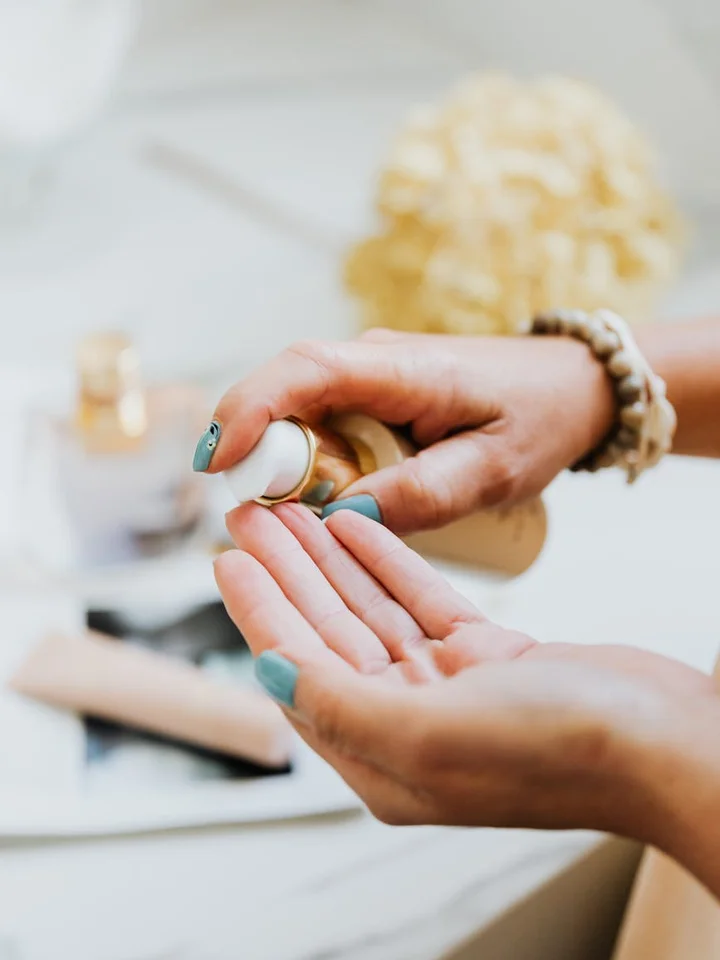
While hyaluronic acid gets the spotlight, glycerin is the humble backstage hero. It started as a byproduct of soap-making, but today, the glycerin in your skincare is usually derived from plants like soy or palm (look for sustainable sources). Its job is beautifully simple.
Glycerin is a small, powerful molecule that acts like a magnet for water. It binds water tightly to itself, creating a reservoir of hydration right on the skin’s surface. Its key strength is long-term moisture retention and barrier support, working steadily to keep your skin from losing water throughout the day.
This reliability and its simple structure make it exceptionally gentle. For clients like Noah with dry, reactive skin, glycerin is a star. It delivers deep hydration without fuss or fragrance, which is exactly what a compromised barrier needs to heal without irritation.
Formulation Pro-Tip: Why Texture and Feel Matter
Ever wonder why products feel the way they do? The humectant plays a big role. Glycerin’s small size often gives products a slightly viscous, silky-smooth texture. It feels substantial but never heavy.
Compare that to a hyaluronic acid serum, which can range from a slick, gelatinous gel to an almost watery liquid, depending on the molecular weights used. This difference is your guide for layering. A good rule is to apply your thinnest, most watery textures first, and follow with slightly thicker, silkier formulas. So, a watery HA serum typically goes on before a glycerin-rich moisturizer, allowing each layer to penetrate properly.
Side-by-Side: Choosing Your Skin’s Best Hydration Partner
Let’s put them head-to-head. Think of it as choosing between a quick, absorbing splash of water and a slow-sipping drink that lasts for hours.
So, can glycerin replace hyaluronic acid? Not exactly. They complement each other. Glycerin is a fantastic, simple hydrator, but it doesn’t offer the same instant, visible plumping that HA is famous for. Can you use them together? Absolutely. In fact, they’re a powerhouse duo. Many effective moisturizers already combine them. However, if you’re looking to formulate your own hyaluronic acid serum, understanding their complementary roles becomes even more crucial.
If you want to mix them at home, try adding one drop of pure glycerin to every two drops of your HA serum in your palm. Blend and apply to damp skin. This creates a custom, potent hydration cocktail.
For Oily or Acne-Prone Skin (Maya’s Dilemma)
For Maya, who worries about adding anything heavy, a lightweight, low-molecular-weight HA serum is a great first choice. It feels like nothing on the skin but delivers hydration right where it’s needed.
But don’t count glycerin out. Glycerin is non-comedogenic, meaning it hydrates without clogging pores, making it a safe bet for oily and acne-prone skin types. It can help balance oil production by ensuring your skin isn’t dehydrated and overcompensating.
You might see urea paired with HA and glycerin in products for acne-prone skin. Urea is a gentle exfoliant that helps break up dead skin cells, allowing the hydrators to work better and preventing pore blockages. It’s a smart, multi-tasking addition.
For Dry or Mature Skin (Noah’s Needs)
Noah’s dry skin needs a multi-pronged approach. Here, using both humectants is a game-changer. HA provides that initial surge of plumpness, while glycerin works behind the scenes to hold that moisture in place for the long haul.
The most critical step for dry skin is always sealing these humectants in with an occlusive, like shea butter, squalane, or even dimethicone. Apply your humectants to damp skin, then lock them in with your cream or face oil. Without this seal, the hydration can evaporate, leaving skin drier.
Formulas that combine HA, glycerin, and ceramides are particularly effective for mature or dry skin. The humectants draw in water, and the ceramides (the lipids that hold your skin cells together) repair the barrier to keep it there. This trio addresses both the symptom and the cause of dryness.
For Sensitive or Combination Skin (Lina’s Balancing Act)
Lina’s combination, sensitive skin needs a stabilizing approach. Glycerin is your best friend here. Its gentle, non-irritating nature makes it a perfect base layer of hydration for your entire face, calming any reactivity, unlike some active acids for sensitive skin which can be harsh.
You can then get targeted. Apply a HA serum only to areas that feel tight or look deflated, like drier cheeks. This gives extra plumpness where you need it without overwhelming your oilier T-zone.
Always patch-test a pure HA serum if you have sensitive skin. Some minimalist, high-concentration formulas can feel temporarily tight or even cause a mild tingling as they pull water. If that happens, try applying it over a layer of a glycerin-based toner or moisturizer to buffer it slightly.
Building Your Hydration Routine: A Practical Guide

Think of humectants as the first step in a two-part sealing process. They bring the water in, but they need a partner to lock it there. Here is how to build that routine correctly.
Start with clean, slightly damp skin. Pat your face with a towel so it’s still moist, not dripping. This gives the humectant immediate water to bind to.
- Apply your humectant serum or toner. Use a pea-sized amount for your face and neck.
- Gently press and pat it into your damp skin. Do not rub.
- Wait about 60 seconds for it to feel tacky or dry.
- Immediately follow with your moisturizer.
The final step is non-negotiable: you must seal the hydration with a moisturizer containing occlusives. Ingredients like ceramides, shea butter, or squalane act like a protective lid, preventing all that gathered water from evaporating into the air. For my client Noah, with his dry, reactive skin, skipping this step after applying hyaluronic acid serum actually made his skin feel tighter by midday.
You can pair humectants with active ingredients like Vitamin C or retinoids. Apply your Vitamin C serum to dry skin first, let it absorb, then apply your humectant to damp skin and follow with moisturizer. The humectant layer helps buffer potential irritation and delivers extra hydration, which can make actives more comfortable to use.
How to Read a Label: Finding the Right Product for You
Ingredients are listed in order of concentration. This tells you a lot about what you’re really buying.
For glycerin, look for it in the top five ingredients. If it’s listed after fragrance or preservatives near the end, there isn’t enough in the bottle to do the heavy lifting your skin needs.
Hyaluronic acid often appears under different, more stable names. Sodium hyaluronate and hydrolyzed hyaluronic acid are smaller molecules that can penetrate a bit deeper. If you see “hyaluronic acid” further down the list, it’s often a higher molecular weight form that works on the surface. A product containing multiple types can hydrate on different levels.
The most effective hydrating product often combines humectants with emollients and occlusives. A moisturizer listing glycerin, hyaluronic acid, dimethicone (a silicone emollient), and ceramides is a powerhouse. The humectants pull in water, the emollients smooth skin, and the ceramides seal the barrier. It’s a complete hydration cocktail. Ceramides hydrate and repair the skin barrier, helping lock in moisture and shield against irritants. That’s why formulations featuring ceramides are central to a true hydration-and-repair strategy.
When you evaluate a brand, check their ethos. Look for Leaping Bunny certification for cruelty-free status and transparent sourcing policies. Sustainable skincare is effective skincare that doesn’t compromise your values.
What to Avoid: Common Humectant Mistakes
The biggest error I see is applying a pure humectant, like a basic hyaluronic acid serum, to completely dry skin, especially in a dry climate. Without water to bind to on the surface, the humectant can pull moisture from deeper layers of your skin, leaving you more dehydrated. Always apply to damp skin.
Similarly, using these ingredients in very arid air without a good occlusive sealant can let the moisture get pulled from your skin into the dry atmosphere. Your moisturizer is your essential shield.
More is not better. High concentrations of humectants can feel sticky, tacky, and cause your next product to pill (roll up into little balls). A few drops of serum are enough. If you feel a persistent sticky residue, you’re likely using too much.
Remember that topical hydration supports the barrier, but it doesn’t replace internal hydration. No serum or cream is a substitute for drinking water throughout the day. Think of your routine as supporting your skin’s health from the outside, while water and a balanced diet work from the inside. These external products often contain natural moisturizing factors to keep your skin hydrated.
Your Quick Hydration Questions, Answered
Why are HA, glycerin, and ceramides often found together in products?
This combination is a complete hydration strategy. The humectants (HA and glycerin) draw in moisture, while the ceramides reinforce your skin’s natural barrier to lock it in, addressing both the cause and symptom of dryness.
Can hyaluronic acid and glycerin help with acne-prone skin?
Yes, both are non-comedogenic and provide essential, lightweight hydration. When formulated with urea, it adds gentle exfoliation to clear dead cells, allowing these humectants to hydrate more effectively without clogging pores.
What’s the best way to use a serum that mixes hyaluronic acid and glycerin?
Apply it to clean, damp skin as your first treatment step. Its dual-action formula will deliver immediate plumping and long-term binding, but you must still follow with your moisturizer to seal everything in.
Final Thoughts on Choosing Your Humectant
You don’t need to choose a winner between hyaluronic acid and glycerin. The most effective hydration strategy combines both, layering them under a good moisturizer to seal everything in. Think of them as a reliable team, each bringing unique strengths to your skin’s daily routine.
- Use glycerin if your skin is sensitive, reactive, or you live in very dry air; it’s a steadfast hydrator.
- Choose hyaluronic acid when you want that instant plumping effect and are able to apply it to damp skin.
- For maximum benefit, apply a serum with one or both humectants to slightly damp skin, then immediately follow with your moisturizer or face oil.
- Always pair humectants with an occlusive ingredient, like squalane or shea butter, to prevent moisture loss.
- Remember, hydration is a daily practice, not a one-time fix.
I love helping you navigate these choices. For more guidance tailored to your skin type, keep exploring our blog right here on LuciDerma. If you have questions about building your skincare routine, I’m always here to help you figure it out with clear, evidence-minded advice you can trust. Our commitment is to providing safe, effective, and cruelty-free ways to care for your skin.
Further Reading & Sources
- Hyaluronic Acid vs. Glycerin, Urea, and Panthenol for Skin Hydration – AccuFix Cosmetics
- Hyaluronic Acid vs. Glycerin vs. Tamarind – Sachi Skin
- Glycerin vs. Hyaluronic Acid: Which Should You Use?
- Glycerin vs. Hyaluronic Acid – Which Should You Use | Rodan + Fields®
- r/IndianSkincareAddicts on Reddit: Glycerin vs Hyaluronic Acid? What are your thoughts?
- Which is the better hydrator? Glycerin vs. hyaluronic acid | Curology
- Upkeep | Glycerin vs Hyaluronic Acid: Battle of the Hydrators
- Glycerin Vs. Hyaluronic Acid – Which Is Right For Your Skin? – Prequel
- Hyaluronic acid vs. glycerin: Which is better for your skin? – Satthwa
Lucy Zimmerman
Lucy is an expert author and blogger when it comes to skin care and body care. She has first hand expertise acting as skin care consultant for over 5+ years helping her clients achieve smooth blemish free skin with natural and working remedies. She also has been an avid experimenter and tried out all the natural and artificial remedies and treatments so you can learn from her first hand experience. Additionally, she has traveled to many countries around the world and incorporated the skin care routines she has learnt into this blog. So, wait no more, reach out to Lucy if you have any specific needs and follow her blog, LuciDerma for expert skin care advice.