
AHAs and BHAs Decoded: How They Work to Smooth and Clear Your Skin
If terms like glycolic and salicylic acid make your head spin, you’re in good company. I’ll walk you through the straightforward chemistry so you can use these exfoliants without guesswork.
By the end of this article, you will be able to:
- Explain the fundamental chemical difference between AHAs and BHAs in plain language.
- Understand exactly how each acid penetrates your skin to lift away dull, dead cells.
- Confidently choose the right acid for your specific skin goals, whether it’s tackling texture or calming breakouts.
Let’s make sense of the science together for your clearest skin yet.
What Exactly Are AHAs and BHAs?
Let’s clear up the alphabet soup. AHAs (alpha hydroxy acids) and BHAs (beta hydroxy acids) are types of chemical exfoliants. They do the job of sloughing off dead skin cells, but they get there in different ways because of their fundamental chemistry.
AHAs are water-soluble. They’re typically derived from sugary fruits and plants. Think of glycolic acid from sugar cane, lactic acid from milk, or mandelic acid from bitter almonds. Because they love water, they work primarily on the skin’s surface. An AHA acts like a gentle, surface-level polisher, sweeping away the top layer of dull, dead cells.
BHAs, on the other hand, are oil-soluble. The most common one is salicylic acid, originally derived from willow bark. Its oil-loving nature is its superpower. A BHA functions like a deep-pore cleanser; it can dive into oily pores to dissolve the mix of sebum and dead skin that can lead to clogs.
Despite their different routes, both families share a core mission: they break down the “glue” (called corneodesmosomes) that holds dead skin cells together on the surface. This is the gentle chemical exfoliation process in a nutshell.
The Fruit Enzyme vs. The Oil Hunter
To make it stick, I sometimes give them personalities for my clients. Lina, who gets shiny in her T-zone but has sensitive cheeks, finds this framing helpful.
Imagine the AHA as the “Fruit Enzyme.” It’s a surface-level worker happiest in a watery environment. It can’t penetrate oil, so it focuses its efforts on the stratum corneum-the very top layer of your skin. It’s fantastic for addressing textural issues like flakiness, rough patches, and surface-level dullness that makeup can cling to.
Now, meet the BHA, the “Oil Hunter.” This specialist is not afraid of grease. When it encounters the oily lining of your pores, it gets to work, dissolving the sticky debris inside. This makes it the go-to for visibly clearing pores, calming blackheads, and managing oiliness. This is why I often recommend a BHA for Maya’s acne-prone routine.
The Gentle Chemical Exfoliation Process Explained
So, how does this “glue” breakdown actually happen? Without getting too deep into a textbook, those corneodesmosomes are like tiny biological staples holding your outermost skin cells in place. As skin cells naturally reach the end of their life cycle, these “staples” need to be released so the dead cells can shed.
AHAs and BHAs are like a precise solvent for those staples. They weaken the bonds, allowing the dead cells to detach individually and evenly. This process of chemical dissolution is fundamentally different from the abrasive, dragging motion of a physical scrub.
Using a scrub is like using sandpaper; it can cause micro-tears and uneven exfoliation, especially if you’re overzealous. Chemical exfoliation, when formulated correctly, works at a molecular level to encourage a more uniform, controlled shedding. The result is skin that not only feels smoother but looks clearer and reflects light more evenly. With the barrier of dead cells diminished, your serums and moisturizers can also absorb more effectively.
Why This Beats Scrub Apologies Later
Remember Noah, with his dry, reactive skin? Physical scrubs were a nightmare for him, often leading to redness and irritation that took days to calm down. That’s the “scrub apology” cycle I see too often.
A well-chosen, low-concentration chemical exfoliant offers a predictable, gentle alternative. You’re not dragging granules across delicate skin. You’re applying a formulated solution that works with your skin’s biology. For skin types prone to reactivity or sensitivity, this controlled method is far less likely to provoke a dramatic inflammatory response than physical scrubbing – especially when using mandelic acid chemical exfoliants designed for sensitive skin. It’s about working smarter, not harder, and letting chemistry do the precise work for you.
How AHAs and BHAs Penetrate Your Skin
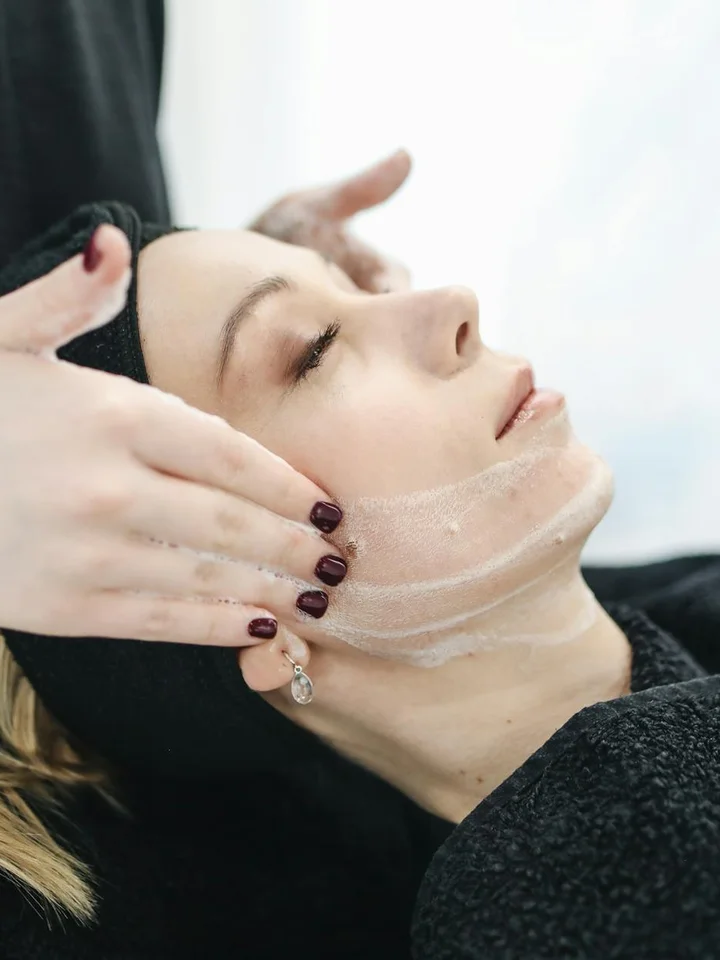
Think of your skin’s surface like a brick wall, with skin cells as the bricks and lipids (fats) as the mortar. Chemical exfoliants are like clever little messengers that can get between those bricks to deliver their instructions. Like all active agents, their potency can fade after the expiration date or with improper storage. Tracking expiration helps ensure those messages stay strong.
Their ability to do this job comes down to two main things: their size and what they can dissolve in.
The Size Matters
AHAs, or alpha hydroxy acids, are a family of acids that includes glycolic and lactic. Some members are smaller than others. Glycolic acid has the smallest molecule, so it can slip between your skin cells more easily and reach a bit deeper into the upper layers of your epidermis. Lactic acid has a slightly larger molecule, so its work is often more concentrated on the very top layer of dead cells.
The smaller the acid molecule, the more deeply it can penetrate to encourage exfoliation from within.
Then there’s the one common BHA, salicylic acid. Its molecule is larger than glycolic acid’s. If size were the only factor, you’d think it couldn’t do much. But it has a special power: oil-solubility.
The Oil-Seeking Missile
AHAs are water-soluble. They work brilliantly on the surface and between skin cells, but they can’t dissolve in oil. Your pores, however, are lined with sebum (your skin’s natural oil). This is where BHA shines.
Because salicylic acid is oil-soluble, it can dissolve into and travel through the oily plug of a clogged pore, exfoliating from the inside out. It’s like a targeted cleanup crew for the exact place where blackheads and pimples form. An AHA simply can’t go there. So, if you’re wondering about the difference between salicylic acid and glycolic acid, that’s one key distinction.
The Surface Smoothie vs. The Pore Purge
This difference in how they work tells you exactly what each acid is best for.
AHAs are your go-to for surface-level concerns. They excel at breaking apart the “glue” holding dead, dull cells together. This leads to smoother texture, a more even tone, and a radiant glow. They’re ideal for addressing sun damage, fine lines, and overall dullness.
BHAs are your pore specialists. By diving into the oil-filled follicle, they help clear out the debris that leads to blackheads and whiteheads. They also have inherent anti-inflammatory properties, which makes them a star for calming red, angry acne.
Let’s make it real. My client Maya, with her oily, acne-prone skin, uses a BHA toner on her T-zone. It helps keep her pores clear and reduces the frequency of breakouts without overdrying her. For Lina, who has combination skin with dry cheeks, an AHA serum on those drier areas a few nights a week gently buffs away flakiness and reveals softer, more hydrated skin underneath.
Choosing Your Acid: A Practical Guide
Knowing whether you need an AHA or a BHA is the first step. The next is understanding the details that make a product effective and safe. Two factors are non-negotiable: pH and concentration.
For these acids to work as exfoliants, they need to be in a formulation with a low pH, typically between 3 and 4. A pH that’s too high (more neutral) renders the acid inactive for exfoliation; a pH that’s too low can be harsh and irritating. The right pH allows it to work effectively without being overly aggressive, especially with AHAs, BHAs, and PHAs.
Concentration matters, too. Over-the-counter products usually range from 5-10% for AHAs and 0.5-2% for salicylic acid. Starting at the lower end is always wise.
Your At-a-Glance Molecule Spec Sheet
| Acid Type | Ideal pH Range | Common OTC Concentration | Solubility | Key Safety Note |
| AHA (e.g., Glycolic, Lactic) | 3 – 4 | 5% – 10% | Water-soluble | Increases sun sensitivity. Daily SPF is mandatory. |
| BHA (Salicylic Acid) | 3 – 4 | 0.5% – 2% | Oil-soluble | Can be drying. Best for oily to normal, acne-prone skin. |
Formulation Pro-Tip
You might feel a slight tingling with a well-formulated, effective acid product-that’s often the low pH at work. A product that feels like nothing might have a less optimal pH, making it gentler but also less potent.
Also, consider the product type. A rinse-off BHA cleanser is a gentle way to introduce the ingredient. For more focused results, a leave-on serum or toner allows for longer contact with your skin. Lightweight, leave-on formulations give you more control and direct benefits than rinse-off versions.
My client Noah, with his dry, reactive skin, started with a 5% lactic acid serum used just once a week. The low concentration and his cautious approach allowed his skin to adapt without triggering irritation.
Using AHAs and BHAs Safely in Your Routine

Think of chemical exfoliants like a skilled esthetician for your skin at home. They’re powerful, but using them wrong is like booking a professional peel every single night. Your skin barrier would wave a white flag. The goal is a gentle, consistent nudge, not a shove.
Let’s talk about the potential side effects first, so you know what’s normal and what’s a red flag.
- Redness & Stinging: A slight tingle for a minute or two is common. A hot, persistent sting that makes you want to rinse it off immediately is not.
- Flaking or Peeling: Some light, barely-there flaking can happen as dead skin cells shed. Severe peeling, cracking, or a feeling of tightness means you’ve gone too far.
- Increased Sun Sensitivity: This is non-negotiable. AHAs, in particular, make your new skin more vulnerable to UV damage. Sunscreen isn’t optional on exfoliation days, it’s your skin’s mandatory shield.
Over-exfoliation makes your skin look and feel like a raw scrape. It might feel rough, look shiny but tight, be reactive to products that never bothered you before, or show more redness and breakouts. If you see this, stop all actives and focus only on gentle cleansers, ceramides, and soothing moisturizers for at least a week.
Your Step-by-Step Integration Plan
We never run before we walk. Here’s how to introduce acids without the drama.
- Patch Test First. Apply a small amount behind your ear or on your inner arm for three nights. No reaction? You’re likely clear for your face.
- Start Low and Slow. Begin with the lowest concentration available (like a 5% AHA or 1% BHA). Use it once a week, at night, for two weeks.
- Listen to Your Skin. If your skin tolerates it well, you can gradually increase to twice a week. More is not better. For most people, 2-3 times a week is the effective ceiling.
- Always Use Sunscreen the Next Morning. I say this to every client, from Maya to Noah: apply a broad-spectrum SPF 30 or higher every single morning, but it’s absolutely critical the day after exfoliating.
The “Don’t Do This” List
Mixing the wrong ingredients is like a bad chemical reaction in your bathroom. Here’s how to avoid it.
- Don’t layer AHAs/BHAs with prescription retinoids (like tretinoin) or strong retinols on the same night. This is a classic recipe for irritation. Use them on alternating nights.
- Don’t combine them with Vitamin C (ascorbic acid) in the same routine. While some advanced formulas are stabilized, it’s generally safer to use Vitamin C in your morning routine and acids at night to avoid potential irritation or pH conflicts.
- Don’t use physical exfoliants (scrubs, brushes) on the same night. Choose one method of exfoliation per day.
- Don’t apply to wet skin. Pat your face dry first. Water can increase penetration and lead to more irritation.
Sample Routines for Different Skin Types
Let’s apply this to our client personas. Think about which one sounds most like your skin.
For Maya (Oily, Acne-Prone):
Maya’s focus is clearing congestion. A BHA (salicylic acid) is her best friend. Her exfoliation night would look like this:
1. Gentle gel cleanser.
2. A 2% BHA toner or liquid, applied with a cotton pad just on her T-zone and chin where she clogs.
3. Wait 5 minutes for it to dry.
4. A lightweight, oil-free moisturizer.
She might use this every other night, but she started with just Sunday nights for a month.
For Noah (Dry, Reactive):
Noah needs surface renewal without stripping. A gentle, moisturizing AHA like lactic acid is a better fit.
1. Gentle cream cleanser.
2. A 5% lactic acid serum, applied to dry skin.
3. Wait 10 minutes.
4. A thick barrier-repair moisturizer with ceramides.
He uses this only on Wednesday nights, and his “off” nights are all about that replenishing moisturizer.
For Lina (Combination, Sensitive):
Lina needs a strategic approach. She might use a mild AHA (mandelic acid is great for sensitive skin) all over once a week for brightness. For her oily T-zone, she could use a gentle BHA cleanser 2-3 mornings a week, letting it sit for 60 seconds before rinsing. This gives her targeted exfoliation without overwhelming her sensitive cheeks.
Building Your Acid Schedule
Consistency beats intensity. Here’s a sample weekly schedule that prevents overkill.
- Monday: Rest night. Focus on hydration and barrier support.
- Tuesday: BHA night (ideal for mid-week pore cleansing).
- Wednesday: Rest night with a calming, ceramide-rich moisturizer.
- Thursday: Rest or hydration night.
- Friday: BHA night again, if your skin tolerates twice weekly.
- Saturday: Rest night.
- Sunday: AHA night (a gentle surface refresh before the week starts).
Your “off” nights are just as important as your exfoliation nights. This is when you feed your skin barrier with soothing ingredients like niacinamide, peptides, centella asiatica, and ceramides. Think of it as recovery time for your skin to rebuild, so it’s stronger and more resilient for your next exfoliation session.
Your Quick Questions on Acids, Answered
Can I use AHAs and BHAs together?
Yes, but with strategy, not by layering them simultaneously. Use them on alternating nights or seek a professionally formulated blend that balances both, as combining them haphazardly can overwhelm your skin’s barrier.
How do I choose between an AHA and a BHA for my specific concern?
Focus on the location of your concern. Choose an AHA for surface-level texture, dullness, or dryness; select a BHA for concerns within the pore, like blackheads, oiliness, or inflamed acne. Remember that AHAs and BHAs are distinct from alpha arbutin, which is used for skin brightening.
What should I do if my skin reacts to an acid?
Immediately pause use and switch to a gentle, reparative routine with a simple cleanser and moisturizer. A brief, mild tingle can be normal, but persistent stinging, redness, or peeling signals you need to reset and may have used too high a concentration or frequency.
Final Thoughts on Gentle Exfoliation
Remember, the most important step with AHAs and BHAs is to respect your skin’s unique rhythm. I guide my clients to think of these ingredients as precise tools, not one-size-fits-all solutions, so you can exfoliate with confidence and clarity.
- Match the acid to your concern: BHAs dive into pores for oily and acne-prone skin, while AHAs work on the surface for dryness and texture.
- Apply your AHA or BHA serum to clean, dry skin and always follow with a moisturizer to support your barrier.
- Start using any new exfoliant just one or two nights a week to see how your skin reacts before increasing frequency.
- Sun protection is non-negotiable every morning, as exfoliants can make your skin more sensitive to UV rays.
I’m always here to help you navigate your skin care journey. For more personalized tips or to share your own story like Maya or Noah, join the conversation on the LuciDerma blog. Together, we can build routines that are both effective and kind to your skin-and the planet.
Related Guides and Information
- Understanding the Differences Between AHAs and BHAs | CeraVe
- Beta Hydroxy Acids in Cosmetics
- AHA and BHA for Skin: What to Know
- AHA vs BHA: The difference and how to use both
- What’s the Difference Between AHAs and BHAs? | The Strategist
- AHAs vs. BHAs – How They Differ | Columbia Skin Clinic
- Skin Care – Key Ingredients – AHAs / BHAs – Skin Elite
- Facial Acids: Everything You Need To Know
Lucy is an expert author and blogger when it comes to skin care and body care. She has first hand expertise acting as skin care consultant for over 5+ years helping her clients achieve smooth blemish free skin with natural and working remedies. She also has been an avid experimenter and tried out all the natural and artificial remedies and treatments so you can learn from her first hand experience. Additionally, she has traveled to many countries around the world and incorporated the skin care routines she has learnt into this blog. So, wait no more, reach out to Lucy if you have any specific needs and follow her blog, LuciDerma for expert skin care advice.