
Natural vs. Synthetic Preservatives: A Clear Guide for Your Skin Care
When you scan a skincare label, spotting a preservative can spark instant doubt about safety or natural appeal. Let’s tackle those concerns head-on with evidence, not hype, from my years in the treatment room.
This article will equip you to make informed decisions. Here is what you will learn:
- How preservatives function: They prevent harmful bacterial growth, ensuring your products remain effective and safe from the first use to the last.
- The proven safety of synthetic preservatives: Many are extensively studied and tolerated well, helping you move past common misconceptions.
- The realistic pros and cons of natural alternatives: Some offer gentler options but may require specific formulations, guiding you toward what truly works for your skin type.
- Practical label reading skills: You will identify key preservatives and understand their roles, empowering you to choose products aligned with your values and skin needs.
I promise, by the end, you will feel reassured and ready to curate a smarter, safer skincare routine.
Why Your Cream Needs a Guardian (The Role of Preservatives)
Think of your favorite moisturizer as a cozy, nutrient-rich apartment. It’s a welcoming space, but not just for your skin. Without protection, it’s open to unwanted guests: bacteria, mold, and yeast. These microorganisms thrive in the water and botanical extracts found in most products.
A preservative system acts like a dedicated security guard for that jar. Its sole job is to keep the beneficial, active ingredients safe and effective from the moment you open it until you use the last drop.
An unpreserved product is a risk. You might see visible spoilage, like a change in color, separation, or fuzzy mold. More concerning is the invisible growth you can’t see. Applying a contaminated product can lead to infections, rashes, or worsened acne. Using a properly preserved formula is a non-negotiable part of safe skincare, whether it uses natural synthetic preservatives or traditional ones.
Natural vs. Synthetic: A Simple Breakdown
When we talk about “natural” preservatives here, we mean ingredients derived from plants, minerals, or produced through fermentation. Examples include rosemary extract, certain food-grade acids (like levulinic acid), and fermented radish root. Their sourcing aligns with a botanical-focused philosophy, but their strength can vary.
“Synthetic” or “manufactured” preservatives are created in a lab. This allows for precise, consistent, and potent action against a broad spectrum of microbes. Common examples are phenoxyethanol and potassium sorbate. They are the workhorses of preservation, often requiring lower concentrations to be effective.
This quick table breaks down some common examples you’ll see on labels. It’s your cheat sheet for the natural vs synthetic preservatives list in your products.
| Preservative | Type | Commonly Found In | A Quick Note |
| Phenoxyethanol | Synthetic | Many serums, lotions | A widely used, broad-spectrum option. Some sensitive skin types monitor it. |
| Potassium Sorbate | Synthetic | Often paired with other preservatives | Effective against mold and yeast. Frequently part of a “preservative system.” |
| Rosemary Extract (ROE) | Natural | Oil-based products, “clean” beauty formulas | A natural antioxidant that helps stabilize oils. Often needs a partner to preserve water content. |
| Leuconostoc/Radish Root Ferment | Natural | Water-based toners, mists | A fermented alternative. Its efficacy can depend heavily on the specific formulation. |
Choosing between natural vs synthetic preservatives isn’t about good versus evil. The goal is always a safe, stable product that doesn’t harm your skin barrier with contamination. A well-formulated product, like the ones we create at LuciDerma, uses a preservation system proven to be effective and suitable for sensitive skin, so you never have to worry about what’s growing in your cream, especially when preserving natural botanical extracts.
Do Natural Preservatives Work as Well?
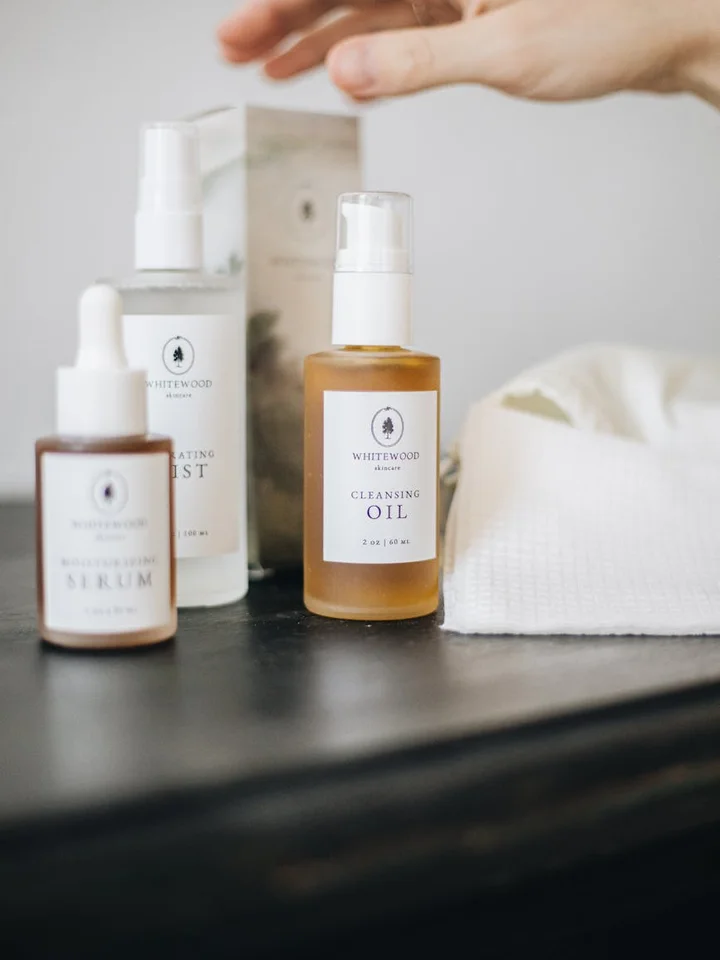
Let’s get straight to it. The honest answer is: they can, but not always in the same way or as easily as their synthetic counterparts. A preservative’s job isn’t about being “natural” or “synthetic”-it’s about being a reliable guardian against bacteria, mold, and yeast.
Think of it like building a fence. Whether you use wood or metal, the fence needs to be the right height, properly secured, and suited to the terrain. For a preservative, the “terrain” is your skincare formula.
Three main factors dictate any preservative’s strength: the product’s pH, how much water it contains, and even the packaging it lives in. A lotion in a jar you dip fingers into needs a more robust system than an oil in an airless pump bottle. Many natural preservatives, like certain botanicals or fermentation products, work best within a narrow pH window or in products with very low water content.
Because of this, natural options often need a helping hand. Formulators create “boosting systems,” blending ingredients like glycerin and caprylyl glycol with natural antimicrobials such as radish root ferment or leucidal liquid. This layered approach builds a stronger, broader defense.
In my practice, I see how this plays out on real skin. Clients like Lina with combination skin often do well with these fortified natural systems, especially in lighter lotions and serums. The formulas are effective and align with her preference for plant-derived ingredients. Meanwhile, Noah’s reactive, dry skin sometimes needs the predictability and proven track record of a synthetic preservative in his barrier-repair cream, as it minimizes his risk of reacting to a complex blend of botanicals.
The Safety Conversation: What’s Actually Risky?
This is where we need to clear the air. First, let’s retire the term “chemical-free.” It’s a marketing myth. Water is a chemical. Aloe vera juice is a complex cocktail of chemicals. Everything in your skincare, from the soil to the bottle, is made of chemicals. The real question is about the safety and suitability of specific ingredients for you.
Safety always comes down to two things: dose and formulation. Salt is essential for life, but a cup of it is dangerous. The same principle applies here. A preservative used at 0.5% in a rinsed-off cleanser presents a different exposure than one at the same level in a leave-on cream worn 24/7.
Let’s address two common concerns with an evidence-minded lens. Parabens have been extensively studied for decades. While certain long-chain parabens are rarely used now, the commonly used methylparaben and ethylparaben are considered safe at low concentrations by major regulatory bodies worldwide. The fear largely stemmed from misinterpreted studies. Similarly, “formaldehyde-releasers” don’t contain pure formaldehyde; they release tiny, controlled amounts over time to preserve the product, well below levels considered risky. In skincare, myths about parabens and formaldehyde persist. Understanding the science helps separate myth from fact in everyday product choices.
Conversely, “natural” doesn’t grant a free pass on safety. Some of the most potent allergens I see in the clinic come from plants-think essential oils like lavender or citrus extracts. When evaluating natural vs synthetic preservatives for cosmetics, the key is to look past the source and focus on the complete formula and your skin’s known triggers.
Molecule Spec Sheet: Phenoxyethanol
| pH Stability | Typical Use Concentration | Solubility | Safety Profile |
|---|---|---|---|
| Effective across a wide pH range (3-10) | Up to 1% in final formulation | Soluble in water and oil | Well-tolerated by most; maximum concentration is regulated for safety. |
Let’s use phenoxyethanol as a case study. This data sheet isn’t just chemistry trivia. It tells us this synthetic preservative is a versatile workhorse. Its wide pH stability means it can protect your vitamin C serum (acidic) and your gentle cleanser (neutral). Being soluble in both water and oil helps it distribute evenly through a complex emulsion. The strict 1% maximum use limit is a safety regulation, not a suggestion. This specific, technical data is what allows brands to create stable, safe products that last on your shelf. It’s the precision behind the promise.
Chemistry Made Practical: How to Read Your Labels
Think of your ingredient list like a recipe. The first ingredient is the most abundant, and it goes down from there. Preservatives are like the pinch of salt that keeps everything from spoiling. You’ll usually find them near the end of the list, but not always. Some formulas use multiple preservatives at different points for broad-spectrum protection.
To spot them, look for ingredients you’ve heard debated, like parabens (e.g., methylparaben), or familiar names like phenoxyethanol. Natural preservative systems might list combinations like “Leuconostoc/Radish Root Ferment Filtrate” or “Potassium Sorbate” alongside “Glycerin” and “Citric Acid.” They rely on acidity and fermentation by-products to create an unfriendly environment for microbes.
Here’s a quick comparison of what you might see:
- A “Natural Preservative System” Label: Water, Aloe Barbadensis Leaf Juice, Glycerin, Squalane, Leuconostoc/Radish Root Ferment Filtrate, Xanthan Gum, Citric Acid.
- A “Synthetic Preservative” Label: Water, Glycerin, Niacinamide, Phenoxyethanol, Ethylhexylglycerin.
Both are doing the same job: keeping your product safe from mold and bacteria. My client Noah, with his dry, reactive skin, often prefers the former list as it tends to have fewer ingredients that can trigger his sensitivity, but efficacy is key for both types.
You might search terms like natural synthetic preservatives for glue or natural synthetic preservatives food health and get confused. This is a vital point: an ingredient’s safety and function depend entirely on its context. A preservative effective in glue is formulated for glue, not for skin absorption or tolerance. Similarly, a food-grade preservative is tested for ingestion, not for how it interacts with your skin’s microbiome or barrier. Always look for preservatives within tested, cosmetic-grade formulations.
Shelf Life & Oxidation Signs: Protecting Your Products
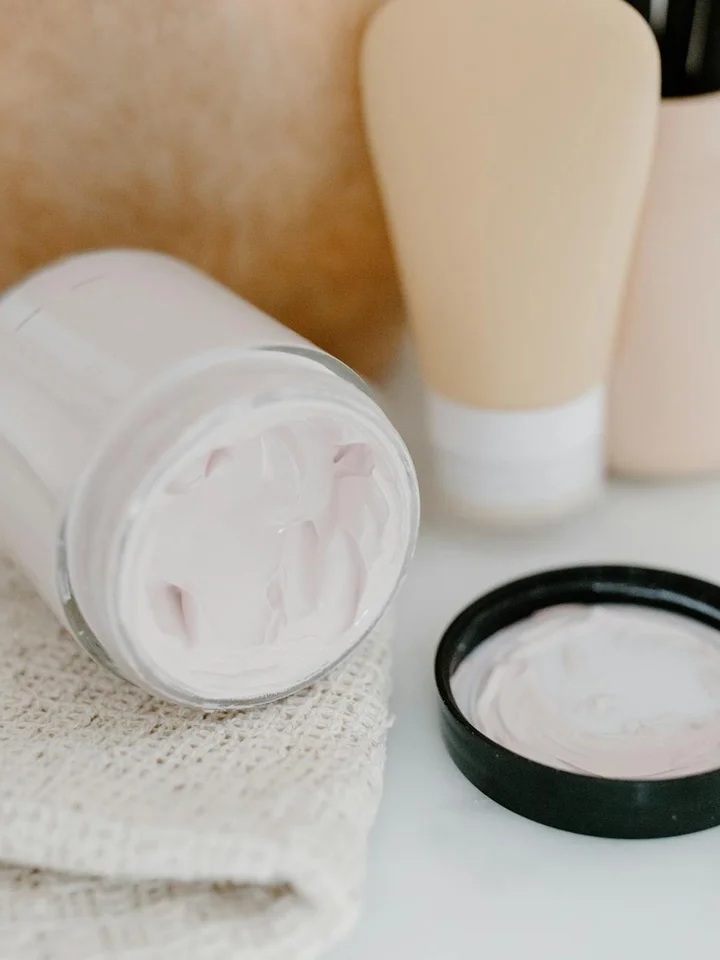
No preservative, natural or synthetic, lasts forever. They are degraded by the same enemies: heat, light, and air. Leaving your vitamin C serum on a sunny windowsill or your moisturizer in a steamy bathroom weakens the preservative system over time, letting oxidation and microbial growth sneak in.
Your products will tell you when they’re past their prime. Here are the clear signs:
- Color Change: That clear serum now looks yellowish or brownish.
- Separation: The formula splits into layers that won’t remix with shaking.
- Funky Smell: It develops a sour, rancid, or “off” odor it didn’t have before.
If you see any of these signs, it’s time to retire the product, as it can irritate skin or simply won’t work as intended.
You can greatly extend the life and safety of your skincare with a few simple habits. My rule is to treat products like fresh food, especially when using peptides in your daily skincare routine.
- Always use clean, dry hands or a spatula to scoop from jars.
- Store products in a cool, dark drawer, not on a countertop exposed to light.
- Close lids and pumps tightly immediately after use.
- Respect the PAO (Period After Opening) symbol-that little jar icon with a number like “6M” or “12M” tells you how many months it’s safe to use after opening.
Lina, who loves trying new serums, sets a reminder on her phone when she opens a new product, so she knows when its optimal shelf life is up. It’s a simple step that protects her skin and her investment.
Making Your Choice: A Gentle Framework
Think of choosing a product with a preservative system like trying on shoes. You need to know your size, your arch, and what you’ll be walking on. Instead of getting lost in chemical names, start with these three questions.
- Is your skin sensitive or reactive?
- Do you have a strong texture preference?
- Is environmental impact a primary concern for you?
For Sensitive or Reactive Skin
If you’re like my client Noah, with skin that flushes or stings easily, your first filter should be irritation potential. Some botanicals used as natural preservatives, like certain citrus extracts or essential oils, can be sensitizing.
Your safest path is often a formula preserved with a well-tested synthetic like phenoxyethanol or potassium sorbate, specifically in a fragrance-free base. These ingredients have a long, well-documented history of being non-irritating at low concentrations. A “preservative-free” claim in a water-based product is a red flag for your skin type, as instability can lead to microbial growth and more irritation. In some formulations, preservative boosters like EDTA are used to enhance the effectiveness of the base preservatives. This approach helps maintain stability and safety in fragrance-free skincare without relying on irritants.
For Texture and Feel Enthusiasts
This matters more than you think. Natural preservative systems, like radish root ferment or leucidal liquid, often work best in specific pH ranges or formula types. This can limit the textures chemists can create.
If you, like Maya, adore feather-light gels or silky serums, a synthetic preservative might be the invisible guardian that allows that texture to exist. It gives the formulator more freedom to perfect the feel you love without compromising safety.
For the Sustainability-Minded
If environmental impact is a core part of your values, dig deeper into the source and biodegradability of the preservative. Some synthetic options are derived from green chemistry principles and break down readily. Conversely, some “natural” preservatives might have a larger agricultural footprint.
Look for brands that disclose their sourcing and choose preservatives aligned with a full lifecycle approach, not just a natural origin story. This is where Lina’s curious nature shines-she always checks a brand’s sustainability report before falling for a catchy ingredient list.
The Non-Negotiable: Safety First
Let’s be perfectly clear. A well-preserved product is a safe product, full stop. Contamination with bacteria or mold is a real risk in water-based creams and serums. The preservative is there to protect you, not just the product on the shelf.
I’ve seen clients bring in jars of homemade creams growing fuzzy friends. The inflammation and infection that can cause sets your skin back months. A tested, effective preservative system, whether synthetic or natural, is a sign of a responsible formulation.
Zooming Out: The Bigger Picture
For most people, the preservative is a tiny part of a formula designed to be gentle and effective. We’re talking about 1% or less of the total bottle. The active ingredients, the emollients, and the overall base are doing the heavy lifting for your skin concerns. Even if that preservative is sodium benzoate.
Getting overly fixated on this one component is like rejecting a lifesaving medicine because you don’t like the color of the capsule. The goal is the benefit inside.
The Esthetician’s Chair Perspective
In my treatment room, I don’t pick sides in a synthetic vs. natural debate. My job is to find what keeps your skin safe, calm, and progressing toward its goals.
Sometimes that’s a clever, food-grade natural blend for a client wanting extreme purity. Other times, it’s a precise, synthetic system for someone with reactive skin who needs guaranteed stability. The tool doesn’t matter as much as the result. The goal is always a happy, balanced complexion that feels as healthy as it looks.
Your Preservative Questions, Answered
Is a “preservative-free” claim on a water-based product a red flag?
For any product containing water, yes, it is a major safety concern. An effective preservative system is non-negotiable to prevent microbial growth that can harm your skin.
How does packaging affect a preservative’s effectiveness?
Packaging is a crucial partner to the preservative. Airless pumps and tubes minimize contamination from fingers and air, giving any preservative system a much easier job to do.
Are natural preservatives automatically better for sensitive skin?
Not necessarily. Some botanical preservatives, like certain citrus extracts, can be sensitizing, while well-tested synthetic options like phenoxyethanol are often chosen specifically for their non-irritating profile in sensitive skin formulations.
Your Preservative Questions, Answered
The most important thing is that a preservative system, whether natural or synthetic, is non-negotiable for your safety in a water-based product. Your choice should be guided by the formula’s compatibility with your skin, not by fear-based marketing that pits one category against the other. Solubility matters for skincare actives—whether water-soluble or oil-soluble—in water-based formulas. This helps ensure actives stay effective and well-distributed as the product interfaces with your skin.
- Look at the ingredient list, not just the front label claiming “natural.”
- Understand that “preservative-free” often means a very short shelf life or an anhydrous formula like a pure oil.
- Patch test any new product, especially if you have reactive skin like my client Noah.
- Trust that reputable brands invest heavily in stability testing to ensure both safety and efficacy before a product ever reaches you.
Skincare is personal, and what works for one person’s skin story might differ for another. If you have more questions after reading this, I welcome you to follow the LuciDerma blog where we tackle topics just like this, such as how to test for comedogenicity in skincare products. My goal is to help you read labels with confidence and choose products that align with your skin’s needs and your values.
Expert Resources and Citations
- Natural vs. Synthetic Preservatives | Microchem Laboratory
- Natural Preservatives: Are They Better Than Artificial Preservatives?
- The Difference Between Natural and Synthetic Preservatives | Healthy Starts at Home
- Potentials of Natural Preservatives to Enhance Food Safety and Shelf Life: A Review – PMC
- Types of Natural Food Preservatives Used in Food Processing | Sugars
- What Are Food Preservatives? Natural Vs. Artificial
- A few things to consider between natural and synthetic cosmetic preservatives
- Decoding Preservatives: Natural vs. Synthetic – www.farmdidi.com
- Activity and safety evaluation of natural preservatives – ScienceDirect
- A comparison between artificial and natural preservatives in food