Combining Retinoids and LED Light Therapy: Your Safe Skincare Guide
You’re eyeing both retinoids and LED light for your routine, and you’re smart to ask if they can work together. I see this in my practice all the time, and I’m happy to share the straightforward facts.
By the end of this read, you’ll be equipped with:
- The science behind how retinoids and red or blue light can support each other.
- Clear steps to use them safely, avoiding irritation or wasted effort.
- A practical plan to layer these treatments for healthier, clearer skin.
You can absolutely use these tools in harmony with the right approach.
The Short Answer for Your Routine
Yes, you absolutely can use retinoids and LED light therapy together. This is one of the more supportive combinations in skincare.
The key is smart timing: use your retinoid at night and your LED device in the morning or on alternate evenings. This approach lets each treatment do its best work without overwhelming your skin. It’s not like mixing certain acids and vitamin C, which can cancel each other out or cause irritation. This pairing is complementary. If you want to understand where vitamin C fits into this layering, a vitamin C retinol layering guide can help you navigate safe sequencing.
Think of it this way: your retinoid is like a personal trainer for your skin cells, encouraging them to renew and behave youthfully. LED light therapy is like a soothing massage and energy session for those same cells, helping them recover and function better. Using both is a strategic one-two punch for skin health—especially when you understand the differences between retinol and retinaldehyde in your skin care routine.
How Retinoids and LED Lights Work on Your Skin
To understand why they work well together, let’s look at what each one does. Retinoids are vitamin A derivatives. They are cell-communicating ingredients, meaning they send signals to your skin cells to speed up turnover, smooth texture, and ramp up collagen production.
LED Light Therapy uses specific wavelengths of low-level light energy. Unlike harsh lasers, it doesn’t damage the skin. Instead, it delivers gentle energy that your skin cells absorb to fuel their natural processes. The color of the light determines the primary benefit.
My client Noah, who uses a retinoid for his dry skin and fine lines, was curious about adding a device. He was worried it might be too much. I explained how their actions differ and can actually support each other. Here’s a simple breakdown: Peptides and retinoids can often be safely combined to enhance skin benefits.
For someone like Noah, using his retinoid at night and a red LED light in the morning can be perfect. The retinoid does its renewal work overnight, and the red light in the morning can help soothe any mild sensitivity and reinforce the collagen-building message. If you are acne-prone like my client Maya, combining a retinoid with blue light sessions can attack acne from two angles: inside the pore and on the skin’s surface.
The main caution is sensitivity. If your skin is new to retinoids or is feeling particularly reactive, focus on establishing that routine first. You can always add the LED device later. Listening to your skin’s tolerance is the most important step.
Red Light & Retinoids: The Anti-Aging Power Pair
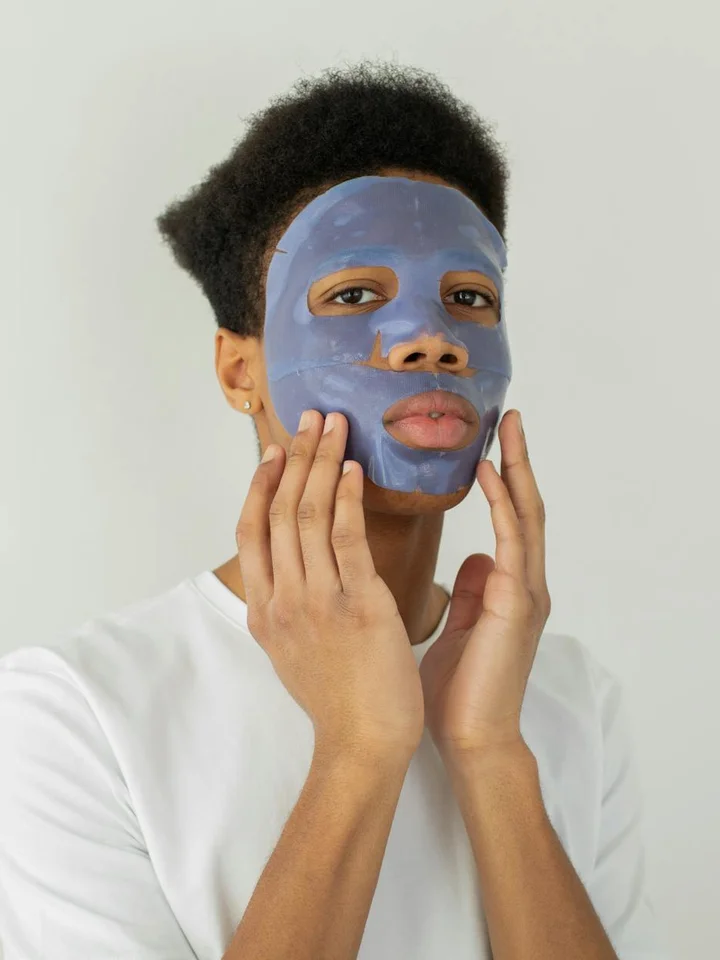
Do retinoids enhance the anti-aging effects of red LED light? Absolutely. They’re not just compatible, they’re a brilliant team. Think of them as two project managers working on the same goal: firmer, smoother, more resilient skin. When combined with retinol’s properties and effects, red LED light can truly boost your skincare results.
Retinoids, like retinol, send a clear signal to your skin cells to ramp up collagen production and speed up cell turnover. Red LED light acts like a cellular energy drink. It gives your skin’s fibroblasts (the little factories that make collagen) the fuel they need to work efficiently. Retinoids provide the instructions, and red light provides the energy, creating a powerful synergy for fighting fine lines and loss of firmness. That’s how retinol affects wrinkles and collagen: it signals smoother skin over time. With continued use, this can soften lines and boost firmness.
This partnership has another beautiful benefit. Retinoids can sometimes cause temporary redness or irritation, especially when you’re new to them. Red LED light is known for its calming, anti-inflammatory properties. Using them together can mean your skin gets the renewing power of a retinoid with a side of soothing support from the light.
My client Noah, who has dry and reactive skin, found this combination transformative. He started with red light therapy three times a week to strengthen his skin barrier. After a month, he introduced a gentle retinoid serum twice weekly. The red light helped his skin tolerate the retinoid better, minimizing the initial “retinization” flare-up. His routine became a perfect example of building tolerance smartly.
Blue Light & Retinoids: Clearing Acne Together
Do retinoids interfere with the acne-fighting effects of blue LED light? Not at all. In fact, they tackle acne from different angles, making them a strategic one-two punch against breakouts.
Blue LED light works on the surface. Its specific wavelength targets and reduces the acne-causing bacteria (C. acnes) that live in your pores. Retinoids work deeper. They help normalize skin cell turnover, preventing dead cells from clumping together and clogging pores in the first place. Blue light addresses the bacterial infection of existing pimples, while retinoids help stop new ones from forming.
You can think of it as a targeted defense system. Use the blue light to calm active, inflamed blemishes, and use the retinoid as part of your overall routine to keep pores clear and prevent future congestion.
I often recall Maya’s routine when explaining this. She has oily, acne-prone skin. In the evening, after cleansing, she applies her retinoid cream all over her face to manage texture and prevent clogs. Then, she uses her handheld blue light device, holding it directly over any angry, red pimples for a few minutes. This direct spot treatment helps reduce the bacteria and inflammation quickly, while the retinoid does its long-term work everywhere else. It’s a practical, efficient combination.
If you use both, remember that both can be drying. Listen to your skin. You might not need to use a blue light device every night if you’re using a retinoid regularly. Start with the blue light 2-3 times a week on active spots, and always follow up with a good, non-comedogenic moisturizer to support your skin barrier.
Your Game Plan: Timing, Order, and Waiting Periods
Let’s get practical. The most common questions I get are: “Is it safe before or after?” and “Should I wait between them?” The answers are simpler than you might think.
The safest and most effective order is to use your LED device first, on clean, dry skin, and then apply your retinoid. Doing it the other way around is asking for trouble. Applying a retinoid before the light can increase sensitivity and irritation. Some creamier retinoid formulas might even create a barrier that blocks the light from penetrating properly.
Think of it like preparing a canvas. You want the light to reach your bare skin directly. After the light therapy session, your skin is primed and ready to receive the next steps in your routine.
Here is a clear, step-by-step routine for using both in one evening:
- Cleanse. Use a gentle, non-drying cleanser to remove makeup, sunscreen, and the day’s grime. Pat your face completely dry with a clean towel.
- Use your LED device. Follow your device’s instructions for treatment time. Your skin should be bare-no serums, toners, or moisturizers.
- Wait 5-10 minutes. This brief pause lets your skin cool down and any residual heat dissipate. It’s a good moment to brush your teeth or pick out tomorrow’s outfit.
- Apply your treatment serum or moisturizer. This is where you can add supportive ingredients like a hydrating serum with hyaluronic acid or a calming moisturizer with ceramides. Let it sink in for a minute or two.
- Apply your retinoid. Use your prescribed amount-a pea-sized dose for the whole face is usually plenty. Gently smooth it over your skin, avoiding the immediate eye area.
What if your skin is like my client Noah’s-dry and reactive? Combining two active steps in one night might be too much, especially when you’re new to retinoids. If you experience stinging, significant redness, or extra dryness, separate them onto different nights. Try LED therapy on Monday, Wednesday, and Friday, and use your retinoid on Tuesday and Thursday. This gives your skin time to recover and still lets you benefit from both treatments.
What to Mix & What to Avoid: Your Interaction Matrix
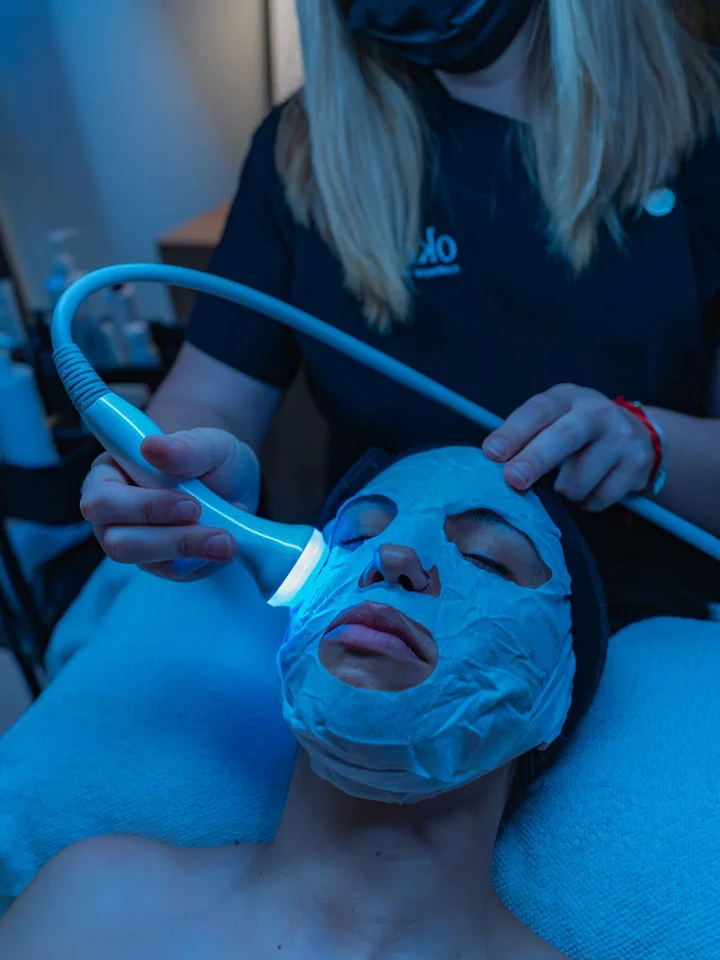
Not everything plays nice together. Here’s a simple guide to what works in harmony with your retinoid and LED combo and what you should schedule for another time.
Synergies to Embrace:
- Red Light + Retinoids for Collagen: This is a powerhouse duo for aging concerns. Red light supports cellular energy and collagen production, while retinoids speed up skin renewal and boost collagen at a deeper level. Using them together can amplify firmer, smoother results.
- Blue Light + Retinoids for Acne: Think of this as a one-two punch. Blue light targets acne-causing bacteria on the skin’s surface, while retinoids work inside the pore to prevent clogs. This combo can be fantastic for someone like Maya, who deals with persistent breakouts.
- LED Light to Soothe Retinoid Redness: An interesting benefit of red light is its anti-inflammatory property. Some find that using it before their retinoid can actually help calm the initial redness or irritation that retinoids sometimes cause.
Conflicts to Avoid:
- Do not use other exfoliating acids (AHA/BHA) in the same routine. This is the golden rule. Your retinoid is already doing the job of accelerating exfoliation. Adding a glycolic, lactic, or salicylic acid serum on the same night as your retinoid and LED is a guaranteed path to a compromised, angry skin barrier. Save your acid treatments for mornings or nights when you aren’t using your retinoid.
- Avoid any other “active” treatments like high-percentage vitamin C or benzoyl peroxide in this specific routine. Keep this evening session focused and gentle.
Excellent Supportive Ingredients:
- Gentle, barrier-repairing ingredients are your best friends. Look for moisturizers with ceramides, fatty acids, and niacinamide. Niacinamide is particularly brilliant, as it helps strengthen the barrier and can reduce retinoid-related irritation. A simple hyaluronic acid serum applied to damp skin after LED is also a safe and hydrating bet.
Contraindications & Safety Warnings
Combining tools is powerful, but you need to know when to keep them in the box. This combo is not for every skin scenario.
When to Press Pause
Do not use retinoids and LED therapy together if your skin barrier is compromised. This is non-negotiable for safety. That means you should avoid layering retinoids on damaged skin.
- On broken skin (from picking, wounds, or recent procedures).
- On sunburned skin (your skin is inflamed and needs to heal).
- On skin that’s severely irritated, stinging, or raw from other treatments.
- If you have a diagnosed photo-sensitive condition (like lupus).
In these cases, adding light energy or a potent active like a retinoid can worsen inflammation and delay healing. Let your skin calm down completely first.
Precautions for Specific Situations
If you are pregnant, trying to conceive, or breastfeeding, the standard caution around topical retinoids applies. Many clinicians recommend pausing retinoid use during this time as a precaution. LED light therapy, however, is generally considered safe because it doesn’t use UV light. Always check with your obstetrician or dermatologist for personal guidance.
For those with highly reactive or sensitive skin, the key is slow, separate introductions. Start by incorporating your retinoid into your routine two or three nights a week, allowing your skin to adjust over a few weeks. Once your skin tolerates the retinoid without redness or peeling, you can gently reintroduce your LED device. This staggered approach helps you identify what’s causing any irritation if it arises.
The Sunscreen Imperative
This point cannot be overstated: LED light therapy does not replace sunscreen. Red and blue light do not protect you from ultraviolet (UV) damage. Using retinoids makes your skin more susceptible to sunburn and photoaging. Daily broad-spectrum SPF 30 or higher is a non-negotiable part of this routine, rain or shine, indoors or out. It protects your skin barrier and ensures your efforts with retinoids and LED aren’t undone by UV exposure.
A Note on Patch-Testing
When introducing any new product, a patch test is your best friend. My client Lina, who has combination, sensitive skin, recently switched to a new retinoid formula. She was eager to use her LED mask but decided to be cautious. She applied the retinoid to a small area on her jawline for three nights before using it on her full face. Only after confirming no adverse reaction did she feel confident adding her blue light sessions back in for her T-zone. It’s a simple step that builds confidence and prevents a full-face setback.
Your Quick-Reference FAQ
Is a waiting period needed between my LED session and retinoid application?
A brief 5-10 minute pause after your LED treatment is ideal. This lets your skin cool down and ensures you apply your retinoid to a perfectly dry, receptive surface.
Can LED light therapy help reduce retinoid-related irritation?
Yes, particularly red LED light. Its anti-inflammatory properties can help soothe skin and support barrier repair, which may ease the initial sensitivity that sometimes comes with retinoid use.
Does the type of retinoid (retinol vs. prescription) change how I use it with LED?
The core guidance remains the same: LED first, then retinoid. However, if you’re using a potent prescription retinoid like tretinoin, consider using your LED device on alternate nights initially to better manage tolerance.
Your Skin’s Path Forward with Retinoids and Light
You can absolutely pair retinoids with LED light therapy for powerful results, but timing is everything to keep your skin happy and healthy. Think of it like this: retinoids do their best repair work at night, while LED light gives your skin a gentle, energizing boost that’s perfect for daytime. Make sure to use retinoids properly in your routine to maximize their benefits.
- Apply your retinoid product in the evening, on clean, completely dry skin to minimize irritation.
- Use your red or blue LED light device in the morning, or on evenings when you are not using a retinoid.
- Never skip sunscreen during the day, as both retinoids and light therapy make sun protection non-negotiable.
- If your skin feels sensitive, like Noah’s often does, take a break from retinoids for a night or two and focus on calming hydration.
- Stick with gentle, fragrance-free moisturizers to support your skin barrier through this combined approach.
I love helping you build a routine that feels both effective and manageable. If you’re trying this combo, tell me how it goes-share your story like Lina might, and send any questions my way. We’re all in this together, learning what makes our unique skin thrive.
Sources and Additional Information
- Can You Use Retinol and Red Light Therapy Together?
- Is It Ok to Use Retinoids and LED Light Therapy Together?
- How to Safely Use Red Light Therapy with Retinol | LED Esthetics
- The Ultimate Guide to Combining Retinol and Red Light Therapy
- Can You Use Retinol with Red Light Therapy LED Devices and Treatments? | PLEIJ Salon + Spa
- Should I Use Vitamin C or Retinol with LED Light Therapy? | Project E Beauty
- Five Tips for Successful Red Light Therapy and Tretinoin Treatments – Rouge Care
- Retinol and Red Light Therapy: Are They Safe Together? – Mito Red Light
- r/30PlusSkinCare on Reddit: Tret and Red Light Therapy Combination
- r/redlighttherapy on Reddit: Any advice for doing red light therapy and retinoid / retinol use at the same time?