
Retinoids on Your Neck and Chest: A Gentle Anti-Aging Guide
I hear this question often from clients like Noah, who has dry, reactive skin and worries retinoids might be too harsh for his neck and chest. You can absolutely use them there, but the skin in these areas needs a more thoughtful approach.
By the end of this article, you’ll know exactly how to:
- Pick a retinoid formula that respects your skin’s delicate nature.
- Apply it correctly to avoid common pitfalls like redness or peeling.
- Integrate this step into your routine for smoother, firmer-looking skin.
Extending your anti-aging care to your neck and chest is simpler than you think.
The Short Answer: Yes, But With Care
You can absolutely use retinoids on your neck and chest. I do, and I recommend it to clients looking to address signs of aging in these often-overlooked areas. The approach, however, needs to be gentler and more patient than the one you might use for your face.
The skin on your neck and décolletage is structurally different. It’s thinner, has fewer oil glands to keep it naturally lubricated, and is frequently exposed to the sun without the same level of protection we give our faces. This combination makes it more vulnerable to dryness and irritation.
When introduced carefully, retinoids offer fantastic benefits for this delicate skin. They can smooth out fine lines and wrinkles that form from years of movement and sun exposure. They help fade sun spots and even out skin tone by accelerating cell turnover. The result is skin that looks firmer and more radiant, as retinol stimulates collagen production.
My client Noah, who has dry and reactive skin, was very hesitant to try any active ingredient on his neck. We started with the tiniest amount of a low-concentration retinol, applied just once a week over his moisturizer. His methodical, cautious approach allowed his skin to adapt without a single flare-up of redness or peeling, proving that slow and steady wins the race with retinoids.
Why Your Neck and Chest Skin Plays by Different Rules
Think of the skin on your face as a durable cotton shirt-it’s resilient and can handle regular washing with stronger detergents. The skin on your neck and chest is more like a delicate silk blouse; it requires a gentler touch and milder cleansers to maintain its integrity.
This fundamental difference in strength is why you might experience stinging, redness, or peeling on your neck even when your face tolerates a product just fine. The retinoid is working just as effectively, but the thinner skin barrier there can’t buffer its effects as well. Starting slow isn’t just a suggestion for this area; it’s a non-negotiable rule for preventing a painful setback. Retinol accelerates cell turnover and collagen remodeling, which can heighten sensitivity on thin skin. That’s why starting slow matters even more on the neck.
Choosing Your Champion: The Best Retinoid for Neck and Chest
Not all retinoids are created equal, especially for delicate zones. Prescription-strength options like tretinoin are potent and effective, but they can be unnecessarily harsh for the neck and chest when you’re starting out. For most people, gentler over-the-counter options are the smarter first choice.
I recommend beginning with a low-concentration retinol, between 0.1% and 0.3%, formulated in a creamy base. Look for fragrance-free products to minimize the risk of a reaction. As a rule in my practice, I also advocate for formulas that are cruelty-free and housed in sustainable packaging-your skin care shouldn’t come at the expense of ethics or the planet. Note that higher retinol percentages can boost efficacy, but they also raise the risk of irritation. Gradual increases help you find the right balance between results and tolerance.
There’s also a practical difference in product type. The lightweight, fast-absorbing serum you love for your face might be too drying for your décolletage. A richer body cream or a dedicated neck cream often provides the extra emollience this drier skin craves to stay comfortable during the retinoid adjustment period.
Formulation Pro-Tip: The Buffer Zone
You can build extra safety into your routine by choosing a retinoid product with built-in soothing companions. Look for formulas that also contain ingredients like ceramides to reinforce your skin barrier or niacinamide to calm inflammation and redness.
The texture of the product itself acts as a buffer. A thick, creamy vehicle doesn’t just moisturize; it slows down the absorption of the active ingredient. This slower delivery gives your skin more time to process the retinoid gently, significantly reducing the likelihood of irritation compared to a fast-penetrating serum. It’s like having a built-in training wheel system for your skin.
Your Gentle Application Blueprint: How to Apply Safely

Think of this routine as a soft launch for your skin. The goal is to introduce the active ingredient without declaring war on your barrier.
- Start with a clean, completely dry canvas. Pat your neck and chest dry after cleansing and wait 5-10 minutes. Applying retinoid to damp skin can drive it deeper and increase irritation.
- Apply a generous layer of a simple, fragrance-free moisturizer to the entire area. This is your protective base layer.
- Take a pea-sized amount of retinoid. Yes, just one pea for your entire neck and chest. Dot it sparingly across the area.
- Gently smooth and pat it in until it disappears. Avoid rubbing or tugging the delicate skin.
- Seal everything in with another light layer of your moisturizer. This “sandwich method” buffers the retinoid, making it gentler as your skin adapts.
Frequency is your most important control. Begin using this routine just one night a week for the first two weeks. Only consider moving to twice a week if you experience zero redness, stinging, or tightness.
On your retinoid nights, keep other potent ingredients like AHAs, BHAs, or vitamin C serums strictly off your neck and chest. Let the retinoid work solo to avoid a chemical traffic jam that leads straight to irritation.
How Often Should You Apply? Reading Your Skin’s Feedback
Your skin will tell you everything you need to know. Listen to it. Signs you need to pause or pull back your frequency include:
- Persistent redness or a feeling of warmth that lasts into the next day.
- Stinging when applying your gentle moisturizer or cleanser.
- Significant peeling or flaking that feels rough, not just a few dry patches.
Your face and your décolletage play by different rules. My client Maya can use a retinoid on her oily, tolerant face three times a week with ease. But when she tried that same frequency on her neck, it resulted in a week of angry redness. Treat these areas as the more sensitive skin they are.
Navigating the “Retinoid Uglies”: Side Effects and Soothing Solutions
Some level of adjustment is normal. You can expect temporary dryness, slight flakiness, and maybe some redness. There’s also a chance of a “purge,” where deep congestion comes to the surface as small bumps. This happens because retinoids speed up skin cell turnover, pushing everything out faster.
The skin on your neck and chest has fewer oil glands and a thinner outer layer than your face. This means it’s less equipped to handle irritation, so side effects can look and feel more dramatic here.
When irritation strikes, have this plan ready:
- Immediately skip your next scheduled retinoid application. Give your skin a few nights off.
- Switch to a super simple routine: a gentle cleanser and a thick, bland barrier repair ointment or cream.
- Avoid long, hot showers directly hitting the area, as heat can worsen inflammation.
Moisturizer is not optional, it’s your best friend. Layering it before and after your retinoid, as in the sandwich method, is the most effective way to hydrate and protect your barrier while still getting the benefits.
Contraindications & Safety Warnings: When to Press Pause
There are non-negotiable times to avoid retinoids completely. Do not use them if you are pregnant, breastfeeding, or trying to conceive. Also avoid application on broken skin, sunburned skin, or areas with active eczema, rosacea flare-ups, or dermatitis. Even when considered safe, retinol should be used with caution and following proper guidelines.
Before you start smearing it on, commit to a patch test. Apply a small amount behind your ear for five to seven consecutive nights. This spot has similar sensitivity to your neck. If you see no redness, itching, or rash, you can proceed cautiously.
My client Lina, with her combination, sensitive skin, uses this exact method. She patch tests every new product, especially actives, behind her ear for a full week. It saved her from a full-face reaction to a vitamin C serum once, and it’s a habit I recommend for everyone.
Realistic Timelines and Sun Sense: When to Expect Results
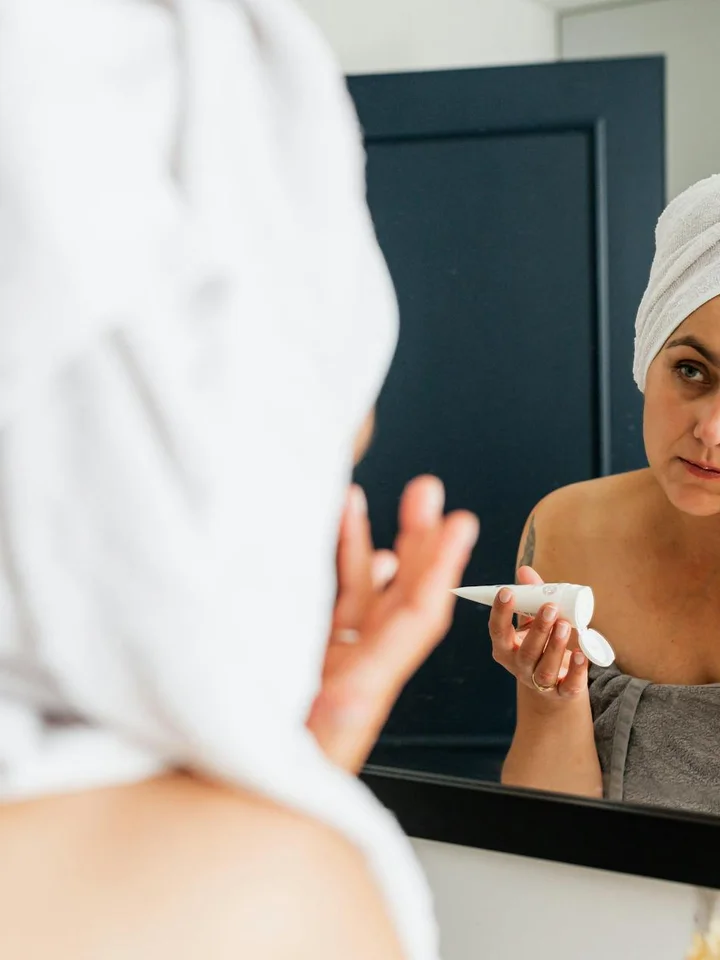
Let’s talk about patience. Retinoids work beautifully, but they are not a quick polish. They are a long-term renovation. Setting the right expectation from the start helps you stick with it and not get discouraged during the initial adjustment, especially when you’re looking for retinoids for mature skin.
The Timeline for Smoother Skin
Think of your skin’s renewal cycle. It takes about 28 days for a new skin cell to travel from the bottom layer to the surface. Retinoids speed this up. Your first noticeable change will likely be texture.
In about 4 to 8 weeks of consistent use, you may feel a new smoothness, as if you’ve lightly buffed the surface of your skin. This is your skin turning over more efficiently, helping to unclog pores and soften fine lines.
For more significant anti-aging results-like visibly improved firmness and a reduction in the depth of wrinkles-you’re looking at a longer game. My client Noah, who is meticulous about his routine, started to see this deeper change around the 3-month mark. For many, the 4 to 6-month point is where you can really step back and see a difference in your before-and-after photos.
Nighttime Only: A Non-Negotiable Rule
Can you use retinoids during the day? Simply put, no. There are two compelling science-backed reasons for this strict rule.
- Retinoids degrade and become ineffective when exposed to sunlight.
- They increase your skin’s photosensitivity, making you more vulnerable to sun damage.
Using a retinoid in the morning is like applying a brilliant anti-aging treatment and then immediately pouring a bottle of bleach over it. You waste the product and harm your skin. Retinoids belong in your evening routine, period. Apply them on clean, dry skin and let them work their magic while you sleep.
Your Daily Morning Essential: Sunscreen
If retinoids are your nighttime repair crew, sunscreen is your all-day, every-day security detail. This is the most critical step in your entire routine, especially for the delicate skin on your neck and chest.
Sun exposure is the primary driver of visible aging (photoaging). When you use a retinoid, you are essentially telling your skin to renew itself faster. Without protection, those new, fresh cells are immediately exposed to damaging UV rays. This can lead to more irritation, hyperpigmentation, and it completely undermines your anti-aging efforts.
You must apply a broad-spectrum SPF 30 or higher to your neck and chest every single morning, rain or shine, 365 days a year. I treat it as the final step of getting dressed. For my client Lina, she keeps a separate sunscreen bottle right next to her jewelry box as a visual reminder.
The Gentle, Consistent Path Wins
I see many people get excited and try to accelerate results by using a retinoid in their routine for men every night right away or applying too much. This almost always backfires, leading to a red, flaky, uncomfortable barrier compromise.
The skin on your neck and chest is thinner and has fewer oil glands than your face. It needs more gentleness, not more aggression. Start slowly, maybe twice a week. Listen to your skin. If it’s stinging or tight, take a night off and focus on a soothing moisturizer.
Long-term, gentle consistency will give you better, more sustainable results than any aggressive shortcut. Think of it as a lifelong partnership with your skin, not a sprint to a finish line. Building strength and health slowly is how you achieve lasting clarity and resilience.
Your Neck & Chest Retinoid Questions, Answered
What type of retinoid is best for delicate neck and chest skin?
Start with a low-concentration over-the-counter retinol (0.1%-0.3%) in a creamy, fragrance-free formula. The richer texture provides a gentle buffer that helps prevent irritation compared to fast-absorbing serums, making it ideal for beginners and sensitive skin.
How can I tell if my skin is tolerating it or if it’s irritated?
Tolerance feels like mild, temporary tightness or flaking that resolves with moisturizer. True irritation is persistent redness, stinging, or warm discomfort the next day, which is your signal to pause and soothe your barrier.
Can I ever use retinoids there during the day?
No, retinoids should only be applied at night. Sunlight degrades the ingredient, making it ineffective, and it increases photosensitivity, raising the risk of sun damage to this vulnerable area. You can tailor how often you apply retinol at night to your skin’s tolerance. Start with a lower frequency and adjust as needed to minimize irritation.
Your Retinoid Routine for Neck and Chest
Your neck and chest skin deserves the same thoughtful care as your face, just with a lighter touch. I always remind my clients that consistency and gentleness turn retinoids into a powerful ally against aging in these delicate areas.
- Begin with a pea-sized amount of a low-concentration retinoid, spreading it thinly over damp skin to reduce potential irritation.
- Apply your moisturizer immediately after to lock in hydration and fortify your skin barrier, especially if you have dryness like Noah.
- Make broad-spectrum sunscreen a non-negotiable daily step, as retinoids increase sun sensitivity.
- Listen to your skin: if you notice persistent redness or flaking, take two nights off and soothe with a fragrance-free cream.
- Opt for retinoid formulas from brands that are certified cruelty-free and use sustainable packaging.
Your skin journey is unique, and I’m here to help you navigate it with confidence. For more personalized advice, keep exploring the LuciDerma blog. I welcome your questions and stories-much like the insights I gather from Maya, Lina, and Noah in my practice.
Expert Resources and Citations
- r/SkincareAddiction on Reddit: [Skin Concerns] Does anyone use a retinol on their neck and chest?
- Ask Dr. Bailey: How to Treat Deep Vertical Chest Wrinkles – Dr. Bailey Skin Care
- Retinol Neck Cream with 0.10% pure retinol and peptides – 50ml | Riversol
- Amazon.com: Retinol Cream For Neck
- 5 Ways to Get a Firmer, Younger-Looking Neck and Chest | Allure
- Can Retin A or Renova Be Used on the Chest and Neck?
- Retinoid Treatment for Skin Problems: Acne, Wrinkles, & More
- Can you use retinol on the neck? Yes! I recommend bringing …
- Can you use SkinCeuticals retinol on your neck? | LovelySkin