
Tretinoin vs. Retinol: Your Guide to Retinoid Classifications and Strengths
If you’re wondering whether tretinoin is just a fancy name for retinol, I hear you-this confusion pops up constantly with my clients, and getting it right matters for your skin’s health.
Think of this article as your friendly roadmap. Here’s exactly what you’ll be able to do after reading:
- Spot the real difference between tretinoin and retinol, beyond the label.
- Decode retinoid strengths so you can match a product to your skin’s tolerance.
- Build a plan to introduce a retinoid safely, whether your skin is like Maya’s, Noah’s, or Lina’s.
You’re about to turn a common point of confusion into clear, actionable knowledge for your routine.
The Short, Sweet, and Scientifically Accurate Answer
Let’s settle this. Tretinoin is not retinol.
They are, however, part of the same very influential family. Think of Vitamin A as the family name. Retinoid is the official surname for all these related ingredients. In this family, retinol is like a talented middle sibling. Your skin needs to have a conversation with it, asking it to change into its active form before it gets to work.
Tretinoin is the direct, powerful eldest sibling. It walks in, and your skin cells listen immediately. No conversion needed. The key difference is that tretinoin is the active form of Vitamin A (retinoic acid) your skin uses, while retinol needs your skin to convert it first.
If you mix them up, you’re in good company. The names are confusing. My client Noah once asked if his retinol serum was “weak tretinoin.” Let’s map out the whole family tree so you can see exactly where everyone fits.
Retinoids Explained: Your Vitamin A Family Tree
A “retinoid” is simply any ingredient that comes from or relates to Vitamin A. They all share a core mission: to encourage your skin to behave like younger, healthier skin.
They do this in two main ways. First, they speed up skin cell turnover. This helps clear clogged pores, fade dark marks, and smooth texture. Second, they boost collagen production, which improves firmness and fine lines.
Your skin has a natural, multi-step process to make its own retinoic acid (tretinoin). It looks like this:
- Retinyl Esters (like Retinyl Palmitate)
- Convert to Retinol
- Convert to Retinaldehyde (often called Retinal)
- Convert to Retinoic Acid (Tretinoin)
The number of conversion steps is the secret to understanding a retinoid’s strength and its potential for irritation. Fewer steps mean more direct, potent action. More steps mean a gentler, slower journey to results.
Prescription-Strength Family Members (Direct Line)
These are the powerful siblings that skip the conversion line entirely. They are forms of retinoic acid or closely related molecules that bind directly to your skin’s receptors.
- Tretinoin: The gold standard for treating acne and photoaging. It’s the exact retinoic acid your skin recognizes.
- Tazarotene: Often prescribed for psoriasis and severe acne. It’s very potent and acts quickly.
- Adapalene: Designed to target acne with less irritation. It’s now available in both prescription and over-the-counter strengths.
These are FDA-approved medications for specific conditions like acne and sun-induced wrinkles. You might know them by brand names like Retin-A (tretinoin) or Differin (adapalene). Because they work immediately, they come with a higher risk of side effects like redness, peeling, and dryness, often called the “retinization” period. Using a prescription retinoid is a medical decision best made with a dermatologist who can supervise your skin’s adjustment.
Over-the-Counter Family Members (The Converters)
These retinoids are available without a prescription because your skin must convert them into active retinoic acid. This process makes them gentler and the results more gradual.
- Retinaldehyde (Retinal): This is one conversion step away from retinoic acid. It’s the strongest OTC option, often called “next-generation retinol.” I find it’s a great step up for someone like my client Lina, whose skin has adjusted to retinol but wants more noticeable results.
- Retinol: The most common OTC retinoid. It requires two conversion steps in the skin. It’s effective for maintenance, mild acne, and early signs of aging when used consistently over months.
- Retinyl Esters (e.g., Retinyl Palmitate): These are the gentlest options, requiring two or more conversion steps. They are a good starting point for very reactive skin, like Noah’s, but offer the mildest results.
Choosing an OTC retinoid is about matching the conversion steps to your skin’s tolerance and your patience level for seeing changes.
| Property | Tretinoin | Retinol |
| Chemical Name | All-trans retinoic acid | Vitamin A1 alcohol |
| pH Stability | Acidic (formula-dependent) | Neutral to slightly acidic |
| Typical Concentration | 0.025% to 0.1% (Rx) | 0.1% to 1% (OTC) |
| Solubility | Lipid-soluble | Lipid-soluble |
| Conversion Steps Needed | 0 (Directly active) | 2 (to Retinaldehyde, then to Retinoic Acid) |
| Primary Safety Consideration | High irritation potential (“retinization”), requires medical supervision | Lower irritation, but can still cause dryness and sensitivity |
Side-by-Side: A Practical Comparison for Your Skin
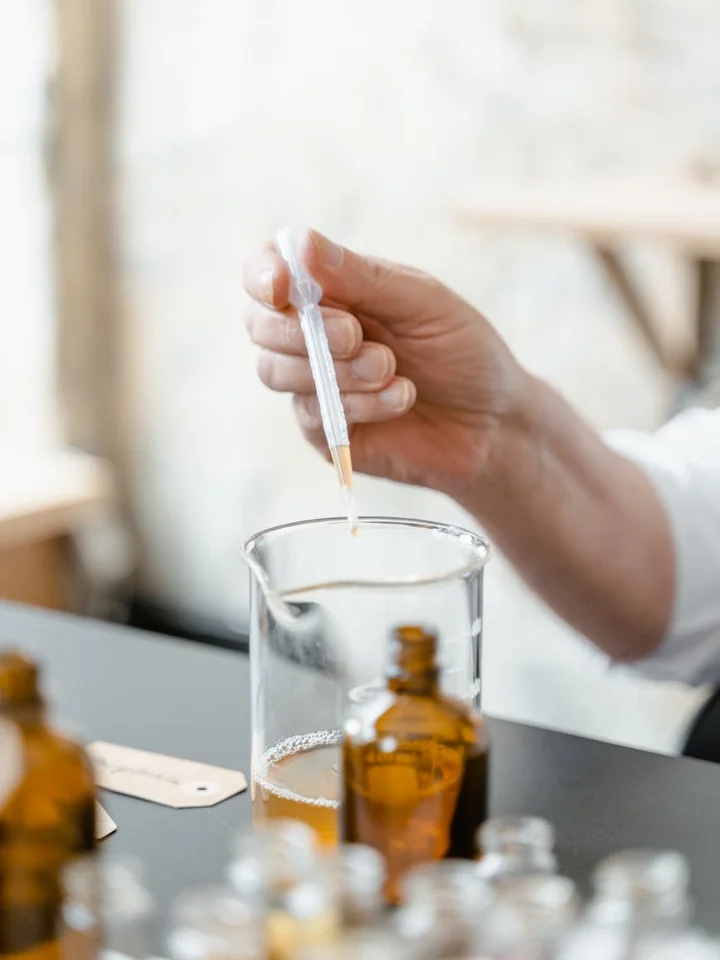
Think of your skin cells as a busy factory. Retinoids are the managers who come in to speed up production and improve quality control. Tretinoin and retinol are two different managers with the same goal, but they have very different ways of getting the job done.
How They Work and What to Expect
Retinol is a precursor. Your skin must convert it into retinoic acid (the active form) before it can get to work. This is a two-step process, like a delivery that needs to be unpacked and assembled. It’s effective, but gentler and slower.
Tretinoin is pure, prescription-strength retinoic acid. It’s the finished, active product ready to go. It binds directly to your skin’s receptors, giving immediate and potent instructions to increase cell turnover, unclog pores, and boost collagen. Many people pair tretinoin with azelaic acid in a balanced skincare routine. This tretinoin-azelaic acid skincare pairing helps address acne, uneven tone, and redness while supporting renewal.
For treating stubborn, inflammatory acne and pronounced photoaging, tretinoin is the clinically proven gold standard. You might see initial improvements in acne within 4-8 weeks, with more significant results for wrinkles and texture after 3-6 months of consistent use.
Retinol is excellent for general maintenance, mild texture concerns, and early signs of aging. With regular use, you may notice a smoother, brighter complexion in about 12 weeks, but more dramatic changes take longer, often 6 months or more.
Strength and Speed: The Direct Answer
How does the strength of tretinoin compare to retinol? Head-to-head, it’s significantly stronger and acts faster. This difference is central to understanding the retinol-tretinoin strength and efficacy difference.
Studies suggest retinol is about 20 times less potent than retinoic acid. A 1% retinol serum is considered quite strong in the over-the-counter world, while prescription tretinoin commonly starts at 0.025%. Even at that lower percentage, tretinoin is more powerful because your skin doesn’t have to convert it.
Using tretinoin is like taking a direct flight, while retinol involves a couple of layovers. You’ll reach your destination faster with the prescription, but the journey might be bumpier.
Navigating the Side Effects
With greater power comes a greater likelihood of initial side effects, often called the “retinization” period. This is your skin adapting to the new, faster cell turnover.
Starting tretinoin often brings a phase of redness, dryness, peeling, and sensitivity. This isn’t a sign it’s not working; it’s your skin adjusting. The goal is to manage this period carefully so you can get to the good results on the other side.
Retinol can cause dryness and flaking, especially if you start too quickly or use a high concentration. The side effects from retinol are usually milder and more manageable than the retinization phase of tretinoin, making it a gentler starting point for many.
Real Skin, Real Choices
This isn’t about one being “better,” but about which is better for you right now.
Take Noah, with his dry, reactive skin. He was curious about retinoids but rightfully cautious. We started him on a low-dose, encapsulated retinol serum twice a week, applied over his moisturizer to buffer it. This method let his skin adapt slowly without distress. After three months, his texture was smoother without a major flare of sensitivity.
Then there’s Maya, who was dealing with persistent adult acne and post-inflammatory marks that wouldn’t budge. Topical retinol helped a little, but she needed a more targeted approach. She consulted a dermatologist, who prescribed a low concentration of tretinoin. She experienced peeling for a few weeks, but by slowly building frequency and pairing it with a superb barrier repair cream, she pushed through. Her acne cleared significantly, and those dark marks faded much faster.
Your starting point depends entirely on your skin’s history, your concerns, and your patience for a potential adjustment period.
How to Choose: Tretinoin or Retinol for Your Goals?
Think of your retinoid choice like selecting the right tool for a job. You wouldn’t use a sledgehammer to hang a picture frame. Your skin’s specific needs and its history with active ingredients should guide you.
This simple set of questions can point you in the right direction.
- Is your primary goal to treat moderate to severe, persistent acne? If yes, the direct power of a prescription retinoid like tretinoin is often the recommended starting point.
- Are you mainly concerned with deep wrinkles, significant sun damage, or stubborn hyperpigmentation? If yes, the proven efficacy of prescription-strength tretinoin is typically the gold-standard treatment.
- If you answered “yes” to either question, your next logical step is a conversation with a dermatologist or licensed clinician.
- Are you completely new to retinoids or have skin that is reactive and sensitive? If yes, starting with a well-formulated, lower-strength OTC retinol is the wiser, gentler path.
- Is your main focus on preventing fine lines, smoothing mild texture, or general skin maintenance? If yes, a consistent routine with a good OTC retinol can deliver excellent, visible results.
A common question I get from clients like Maya, who deals with both acne and early signs of sun damage, is: “What exactly is prescription tretinoin used for?”
Prescription retinoids like tretinoin are FDA-approved medications used to treat specific conditions: moderate to severe acne, photoaging (wrinkles and roughness from sun exposure), and hyperpigmentation like melasma. They work at a cellular level to rapidly increase skin cell turnover and communicate directly with your skin’s receptors.
Over-the-counter retinol, in contrast, is fantastic for cosmetic skincare goals. It’s your go-to for softening the look of fine lines, improving skin radiance and smoothness, and for long-term maintenance of healthy skin. It’s like a steady, reliable workout for your skin, while tretinoin is the intensive training camp.
Let me be clear: seeking a prescription is not a sign of failure with OTC products. It’s a smart, safety-first strategy for accessing stronger, clinically proven treatment. A dermatologist can diagnose your skin’s needs, prescribe the correct strength and formulation (like a cream versus a gel), and monitor your progress to manage any irritation. This professional guidance is invaluable.
Derivatives & Gentler Alternatives
If the idea of any retinoid makes your skin feel nervous, you have other options. These are perfect for someone like Noah, whose dry, reactive skin needs a supremely gentle approach.
Bakuchiol is a plant-derived ingredient that has gained popularity for its ability to mimic some of retinol’s anti-aging effects without being a retinoid itself. It works on similar collagen-boosting pathways but is generally non-irritating and safe for even highly sensitive skin types. It won’t cause the classic “retinoid irritation,” making it a wonderful alternative to retinol for anti-aging.
Within the retinoid family, look for terms like “encapsulated retinol” or “retinaldehyde.” These are gentler, often more stable cousins. Encapsulation is a delivery technology that slowly releases the ingredient, reducing potential irritation. Retinaldehyde is one conversion step closer to retinoic acid than retinol, so it can be effective at lower, gentler concentrations.
A crucial piece of safety advice: do not layer multiple retinoids. Using a retinol serum and a tretinoin cream together is a fast track to a damaged skin barrier and severe irritation. Stick with one retinoid product in your routine, applied sparingly. More is not better here; consistency and patience are your true allies.
Integrating Your Chosen Retinoid Safely and Smartly
Choosing your retinoid is step one. The real work begins with using it correctly. A smart start is what separates a glowing result from a red, flaky setback.
Your Starter Routine Blueprint
Think of starting a retinoid like breaking in new shoes. You start with short walks, not a marathon. Here’s how to ease in.
Starting Tretinoin: The “Sandwich Method”
This technique is a clinic favorite for minimizing irritation. It buffers the tretinoin between layers of moisturizer.
- Cleanse your face with a gentle, non-drying cleanser. Pat skin completely dry with a towel and wait 5-10 minutes. Applying tretinoin to damp skin drives it deeper and significantly increases irritation.
- Apply a thin layer of a basic, fragrance-free moisturizer to your entire face. This is your first “bread” slice. My client Noah, with his dry, reactive skin, swears by this step.
- Take a pea-sized amount of tretinoin for your entire face. Dot it on your forehead, cheeks, nose, and chin. Gently blend it in.
- Finish with another light layer of the same moisturizer. This is the top slice, sealing everything in gently.
Start using this method just two nights a week, with at least one night off in between. You can gradually increase frequency as your skin tolerates it.
Starting Retinol
Retinol is more forgiving, but a gentle approach still wins. You can often apply it directly after cleansing on dry skin.
- Night 1: Cleanse, wait for skin to dry, apply retinol, follow with moisturizer.
- Begin using it every third night for two weeks.
- If your skin feels calm, move to every other night. Most people find a sweet spot at 3-4 times weekly.
Whether using tretinoin or retinol, listen to your skin more than the calendar. Mild pinkness or slight peeling is common initially, but stinging, burning, or severe dryness means you should pull back.
The Non-Negotiable: Sunscreen, Every Single Day
This is not optional. Retinoids increase your skin’s rate of cell turnover, revealing newer, more delicate skin. This fresh skin is highly vulnerable to UV damage.
Using a retinoid without daily broad-spectrum SPF 30 or higher is like repairing a roof and then leaving it open to a hailstorm. You undo the good work and can cause more damage. Apply it every morning, rain or shine, even if you’re indoors near windows.
What to Avoid Pairing With Your Retinoid
Retinoids are powerful team players, but they need the right teammates. Applying certain other actives at the same time can create a harsh, irritating environment.
- Other Direct Exfoliants: Do not apply AHAs (like glycolic acid) or BHAs (salicylic acid) in the same routine as your retinoid. This is a classic irritation cocktail. Use them on different nights, or in the morning if your skin is resilient.
- Vitamin C (Ascorbic Acid): While both are fantastic antioxidants, applying a potent L-ascorbic acid serum right before or after your retinoid can be too acidic for many. Space them out-Vitamin C in the AM, retinoid in the PM is a flawless, effective strategy.
- Benzoyl Peroxide: This acne fighter can deactivate some forms of retinol and tretinoin on the skin’s surface, making both less effective. If you use both, apply benzoyl peroxide in the morning.
When in doubt, keep your retinoid night simple: cleanse, moisturizer (if sandwiching), retinoid, moisturizer. Let that be the solo star of the show.
A Final Pro Tip
That note about applying to dry skin bears repeating. Water on the skin acts like a conductor. Applying your retinoid to a completely dry face is the single easiest way to prevent unnecessary stinging and redness. After cleansing, set a timer for 5-10 minutes, read a page of a book, then apply your product. Your skin will thank you.
Answering the Big Efficacy Question
So, are the retinols you can buy as effective as the retinoids a doctor prescribes? It’s the question I hear most, right after “will this make me peel?”. The honest answer is: it depends entirely on your skin goals.
Prescription Strength for Medical Concerns
For treating active, inflamed acne, prescription retinoids like tretinoin are the clear, proven choice. They work faster and more powerfully to unclog pores and calm the cycle of breakouts. Think of my client Maya-her stubborn hormonal acne along her jawline only started to clear reliably after we incorporated a prescription retinoid into her routine. For a diagnosed skin condition like acne, a prescription retinoid is typically the most direct and effective path.
The Nuance for Aging and Texture
When the goal is smoothing fine lines, improving sun damage, or refining skin texture, the picture gets more interesting. A high-quality, stable over-the-counter retinol, used consistently, can absolutely deliver excellent, visible results.
The difference is in the conversion process. Your skin must convert retinol into retinoic acid to use it. This extra step makes it gentler but also means results take more time and patience. Prescription tretinoin is retinoic acid, so it starts working immediately at the cellular level. Readers looking for the retinol vs tretinoin differences in Spanish can find quick guides. A brief Spanish overview can help you decide which option fits your routine.
While prescription strength is the gold standard for maximum, proven anti-aging effect, a well-formulated OTC retinol is a powerful and accessible option for many.
Your Most Important Product is Patience
Here’s the truth I share with every client, whether they’re using a prescription or an over-the-counter formula: consistency and patience will always beat chasing the strongest product. A mild retinoid used regularly for a year will do more for your skin than a high-strength one that causes irritation and forces you to stop after a month.
My client Noah, with his dry, reactive skin, learned this beautifully. He started with a very low concentration retinol serum twice a week, focusing on barrier support. Six months later, his skin texture is smoother and more even. He built tolerance without distress. The best retinoid for you is the one you can use consistently over the long term.
Your journey is personal. Whether you choose the supervised power of a prescription or the steady approach of a great OTC retinol, gentle progression and daily sunscreen are the non-negotiable keys to success.
Your Retinoid Questions, Answered
1. Should I consider a prescription retinoid like tretinoin?
Consider a prescription if your primary concerns are moderate-to-severe acne, pronounced sun damage, or stubborn hyperpigmentation. It’s a medical-grade tool best selected with a dermatologist who can tailor the strength and formulation to your skin’s needs.
2. Can I use retinoids like tretinoin or retinol long-term?
Absolutely. Consistent, long-term use is how retinoids deliver their best anti-aging and skin-renewing benefits. The key is finding the specific type and frequency your skin can tolerate happily, making it a sustainable part of your routine.
3. What’s the safest way to combine a retinoid with other active ingredients?
Simplicity is safest. Use your retinoid solo at night and avoid pairing it with other direct exfoliants (like AHAs/BHAs) or potent Vitamin C serums in the same routine. You can safely use these beneficial actives on alternate nights or during your morning regimen.
Your Path to Retinoid Confidence
The most important step is choosing a retinoid that aligns with your skin’s current tolerance and your long-term goals. Tretinoin is a clinical-grade tool best used with professional guidance, while retinol offers a more gradual, accessible path to renewal. For those with sensitive skin, focusing on the best retinol percentage for beginners and starting with a low-dose option can help you ease in safely.
- Start with a low-dose, over-the-counter retinol serum to build your skin’s tolerance gently.
- Always apply your retinoid at night on clean, dry skin to maximize efficacy and minimize irritation.
- Commit to a daily broad-spectrum sunscreen, as all retinoids make your skin more sensitive to sun damage.
- Select products from brands that are transparent about their cruelty-free and sustainable practices.
I love hearing about your experiences with retinoids on the LuciDerma blog. Your personal stories and questions help me create the clear, trustworthy advice you rely on. Feel free to send me a message there anytime.
Written by Lucy Zimmerman. Lucy is an expert author and blogger when it comes to skin care and body care. She has first hand expertise acting as skin care consultant for over 5+ years helping her clients achieve smooth blemish free skin with natural and working remedies. She also has been an avid experimenter and tried out all the natural and artificial remedies and treatments so you can learn from her first hand experience. Additionally, she has traveled to many countries around the world and incorporated the skin care routines she has learnt into this blog. So, wait no more, reach out to Lucy if you have any specific needs and follow her blog, LuciDerma for expert skin care advice.