
Mandelic Acid and Retinol: How to Mix Them Without Irritating Your Skin
I hear this question all the time from clients like Noah, who wants clearer skin but worries about triggering his reactive complexion. Yes, you can mix mandelic acid and retinol, and I’ll show you how to do it without the drama.
By the end of this guide, you’ll be empowered to:
- Understand how each ingredient works so you can use them with confidence.
- Learn the exact order and timing for applying them to maximize benefits.
- Spot the signs that your skin is happy or needs a break, so you can adjust on the fly.
You’ve got this-and your skin will thank you for the careful approach.
Meet Your New Power Players: Mandelic Acid and Retinol Defined
Think of your skincare routine like a home renovation project. You need different experts for different jobs.
Mandelic acid is your gentle cleaner, meticulously wiping away surface grime so the real work can begin. Retinol is your renovation foreman, signaling your skin’s cells to rebuild from the ground up. Together, they can transform the property, but you need to schedule them properly to avoid a chaotic mess.
Their core jobs are distinct but complementary. Mandelic acid is an exfoliant. It loosens the “glue” between dead skin cells on the surface, sweeping them away to reveal brighter, smoother skin underneath. Retinol is a cell-communicating ingredient. It dives deeper, telling your skin to produce fresher, healthier cells and more collagen at a faster rate.
If you’re searching for ‘mandelic acid vs retinol’, here’s your direct answer. Choose mandelic acid for visible, surface-level concerns like dullness, rough texture, and mild sunspots. You’ll often see results faster. Choose retinol for deeper, structural concerns like fine lines, stubborn acne, and improving skin firmness over time. Retinol works slowly but creates profound change.
What is Mandelic Acid, Really?
Mandelic acid is an alpha-hydroxy acid (AHA) derived from bitter almonds. It has the largest molecule size in the AHA family, which is actually a good thing. Imagine it’s a big, slow-moving truck instead of a speedy motorcycle.
Because it’s large, it penetrates your skin slowly and gently, making it one of the least irritating acids you can use. This is why I often recommend it to clients like Noah, who has reactive skin, or those with darker skin tones who are more prone to irritation-induced hyperpigmentation.
It excels at a few key tasks:
- Gently exfoliating the very top layer of skin to smooth texture.
- Brightening a dull complexion and fading post-acne dark marks.
- Helping to clear mild, surface-level acne by keeping pores from getting clogged.
Retinol: Your Skin’s Reset Button
Retinol is a form of Vitamin A. When you apply it, your skin’s enzymes convert it into retinoic acid, the active form that your cells understand. This is what does the heavy lifting.
Retinol works at a cellular level to accelerate your skin’s natural renewal process, which naturally slows down as we age. Retinol’s key properties—accelerating cell turnover and boosting collagen—help explain the visible improvements on the skin. Think of it as hitting the fast-forward button on your skin’s natural cycle. This deep-dive work boosts collagen production, helps clear congested pores from the inside out, and gradually smooths fine lines.
I always tell clients like Maya, who is using it for acne, and Lina, who is focused on anti-aging, about the “retinization” period. Your skin may go through an adjustment phase of flaking, redness, or more breakouts as it purges. This is normal. Patience and a gentle, supportive routine are your best tools here.
The Good News: How Mandelic Acid and Retinol Can Team Up
Here is the core thesis you came for: yes, you can absolutely use mandelic acid and retinol together. The synergy is fantastic when you manage it with care, especially considering retinol’s compatibility with other ingredients.
They work as a brilliant team. Mandelic acid clears the surface “debris” of dead skin cells. This creates a clearer pathway for retinol to penetrate more effectively without having to work through a layer of cellular clutter.
My favorite metaphor is that mandelic acid sweeps and cleans the driveway, so retinol can come in and repave it smoothly. For the FAQ on ‘mandelic acid and retinol for wrinkles’, this is the perfect combo. Mandelic acid instantly refines the surface to make lines appear less visible, while retinol builds the collagen foundation to actually soften them over time.
What to Mix & What to Avoid: Your Ingredient Interaction Matrix
Navigating actives is about strategy, not stacking everything at once. Here is your practical guide.
Safe Synergy: The Alternate Night Method. This is the gold-standard way to use both. Use mandelic acid one night, and retinol on a different night. This gives each ingredient its own time to work without overwhelming your skin barrier. Start with just one night each per week to see how your skin responds.
Conflicts to Avoid: The Direct Layer. Do not apply mandelic acid and retinol in the same routine, especially one right after the other. This dramatically increases your risk of irritation, redness, and a damaged skin barrier. Also, avoid mixing this duo with other potent actives like glycolic acid, salicylic acid, or Vitamin C (L-ascorbic acid) in the same session.
Neutral Friends: Your Support Crew. These ingredients are safe and recommended to use with your mandelic-retinol plan. They help soothe and fortify your skin.
- Ceramides: They repair and reinforce your skin’s protective barrier.
- Hyaluronic Acid: It draws moisture into the skin to counter any dryness from actives.
- Niacinamide: This multitasker helps calm redness and improve barrier function, making it an ideal partner.
Your Step-by-Step Blueprint: How to Combine Them Safely

You can use both mandelic acid and retinol, but the secret is never to use them at the same time. Think of them as two powerful specialists who work best on separate shifts. The golden rule is to introduce one ingredient at a time, giving your skin 4 to 6 weeks to adjust before adding the second. This patience prevents the redness, peeling, and irritation that comes from overwhelming your skin barrier. Especially when pairing acids and retinol, which can be more potent.
Start Here: The “Alternating Nights” Method
This is your foundational, fail-safe schedule. Once your skin is accustomed to both ingredients individually, this is how you maintain their benefits.
Here is a sample week you can follow:
- Monday: Mandelic Acid Night
- Tuesday: Rest Night (gentle cleanse, moisturize, maybe a hydrating serum)
- Wednesday: Retinol Night
- Thursday: Rest Night
- Friday: Mandelic Acid Night
- Saturday & Sunday: Focus on hydration and barrier repair.
For every treatment night, the steps are specific:
- Cleanse your face with a gentle, low-pH cleanser.
- Pat your skin completely dry. For retinol, this is crucial to prevent irritation.
- Apply your treatment (either a mandelic acid serum or a retinol product) to your entire face, avoiding the eye area.
- Wait 5-10 minutes for it to absorb.
- Apply a nourishing moisturizer to lock in hydration and support your skin barrier.
To answer the question directly: you never apply mandelic acid and retinol first, second, or together in one routine. They are always used on separate evenings.
For the Cautious Beginner (Noah’s Approach)
If your skin tends to be dry or reactive like my client Noah’s, an even slower start is wise. Begin by using each ingredient just once a week, on different nights, with a “buffer” method.
Apply your moisturizer first, wait for it to soak in, and then apply a pea-sized amount of your treatment. This creates a gentle barrier that slows absorption and reduces potential irritation. The most important step is listening to your skin; if you feel persistent tightness, see redness, or experience stinging, take an extra rest night. Building tolerance is a marathon, not a sprint.
For the Acne-Prone or Oily Skin (Maya’s Strategy)
For skin like Maya’s that deals with oiliness and congestion, you can leverage mandelic acid’s daytime-friendly nature. After your skin is fully acclimated to nightly retinol, you can introduce a low-concentration mandelic acid toner in the morning on the days after your retinol night.
This gives your skin a full evening to recover from the retinol before facing a gentle acid. If you’re including retinoids in an oily or dry skin routine, adjust frequency and moisturizer to keep balance. Pair both treatments with lightweight, non-comedogenic moisturizers. This helps retinoids work effectively without tipping your skin toward oiliness or dryness. Look for gels or fluid creams with ingredients like squalane or niacinamide, which hydrate without clogging pores or feeling heavy.
Contraindications & Safety Warnings: When Not to Try This Combo
Some skin situations make combining actives a hard no. This checklist is non-negotiable for your skin’s health.
- Active skin conditions: Do not use this combo if you have active eczema, dermatitis, a rosacea flare, or a visibly damaged skin barrier (signs include widespread peeling, burning, or extreme sensitivity). Heal your barrier first.
- Pregnancy, breastfeeding, or trying to conceive: Consult your doctor or dermatologist before using retinol or any strong acid. Professional guidance is essential here.
- Recent professional treatments: Avoid both ingredients immediately after chemical peels, laser therapy, microneedling, or dermaplaning. Your skin needs to recover fully first.
- Prescription retinoid use: If you are using prescription-strength tretinoin, adapalene, or tazarotene, do not add mandelic acid without explicit guidance from your dermatologist. Using mandelic acid with tretinoin is typically overkill and greatly increases your risk of severe irritation. Your prescription is already powerful medicine.
Choosing Your Products: A Guide for Every Skin Type
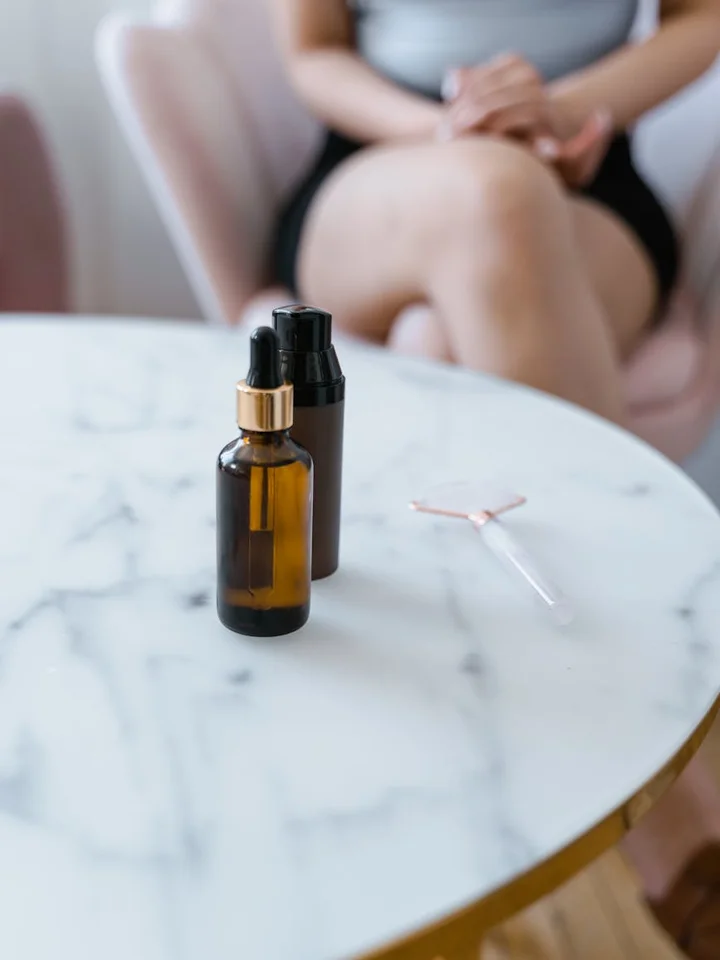
Choosing the right products is less about finding a magic bullet and more about smart ingredient sourcing. Think of it like building a toolkit: you want the right tools in the right sizes for your specific project. Here’s what to look for on the label to build your routine safely.
First, check the concentration. For mandelic acid, a range between 5% and 10% is an effective yet gentle starting point for most people. For retinol, begin low and slow. A concentration of 0.1% to 0.3% is an excellent starting strength that allows your skin to adapt. Understanding how retinol percentage influences efficacy helps you choose a product that delivers results without excessive irritation. The percentage you select can meaningfully impact tolerability and visible improvements over time.
Supporting ingredients are just as important as the actives themselves. Look for formulas that include skin-soothers like niacinamide, centella asiatica, or panthenol. These ingredients help calm potential irritation and support your skin barrier. For my client Noah, who has dry and reactive skin, fragrance-free formulas are non-negotiable to avoid unnecessary flare-ups.
You might see products marketed as a “mandelic acid retinol serum,” which combines both actives in one bottle. These pre-mixed blends exist and can be convenient, but they require extra caution. The formulation locks you into a specific ratio of ingredients, which might be too potent for a beginner.
I typically recommend these blends only for experienced users whose skin has already acclimated to both ingredients separately. Starting with two separate products gives you complete control. You can apply them on alternate nights or space them out in your routine, which is a much safer strategy for building tolerance.
If Your Skin Says “No”: Effective and Gentle Alternatives
If your skin falls into the “proceed with caution” or “avoid” categories we discussed earlier, this isn’t a setback. It’s a sign of intelligent skincare. Listening to your skin and choosing a gentler path is the ultimate act of good care. Here are powerful alternatives that deliver results without the high irritation risk.
For exfoliation, consider swapping mandelic acid for a PHA, or polyhydroxy acid. PHAs like gluconolactone are larger molecules that work primarily on the skin’s surface. They are humectants, meaning they attract water, so they exfoliate while simultaneously hydrating. This makes them a superb choice for sensitive, rosacea-prone, or severely dehydrated skin that finds even mild AHAs too much. If you’re exploring broader exfoliant options, AHAs, BHAs, and PHAs each offer different benefits. Understanding how each category works can help tailor exfoliation to your skin type.
To mimic the skin-renewing benefits of retinol, look to bakuchiol. This plant-derived ingredient has been shown in studies to support collagen production and improve skin texture and tone, similar to retinol, but through a different biological pathway. The best part? It’s generally non-irritating and safe for use during pregnancy.
You can use a PHA and bakuchiol together, even nightly, for a profoundly gentle yet effective resurfacing and renewing routine. For my client Lina, who has combination but sensitive skin, a routine like this smoothed her T-zone without provoking redness on her cheeks. Framing this as intelligent, skin-respecting care changes the narrative from missing out to tuning in. You’re giving your skin exactly what it needs to thrive.
Your Questions on Mandelic Acid and Retinol, Answered
Should I look for a combined mandelic acid retinol serum?
While convenient, combined serums offer less control over each ingredient’s strength and frequency. We typically recommend starting with separate products to safely build your skin’s tolerance on alternating nights.
What’s the real-world experience of using them together?
When alternated correctly, clients often report a faster improvement in overall skin clarity and texture. The key is a slow introduction and attentive listening to your skin’s signals to avoid overdoing it.
Are mandelic acid and retinol better together for wrinkles?
Absolutely. This pairing addresses wrinkles comprehensively: mandelic acid instantly refines the surface, while retinol rebuilds collagen beneath it. This dual-action approach smooths existing lines and helps prevent new ones.
Final Thoughts on Layering Actives
The most reliable path to combining mandelic acid and retinol is a slow, observant one. Treat your skin like a thoughtful conversation, not a race, and you’ll build a stronger, more radiant complexion over time.
- Begin by using each ingredient on alternate nights, never together.
- Always apply mandelic acid first if using in the same routine, and follow with a nourishing moisturizer.
- Sun protection every single morning is non-negotiable when using these ingredients.
- If your skin feels tight or stings, pause the actives and focus on barrier repair for a few days.
- Listen to your skin’s feedback more than any rigid schedule.
Have more questions about your unique routine? I’m here to help. Share your experiences or send your questions over on the LuciDerma blog. Remember, safe experimentation with kind, effective products is how we all learn what our skin loves best.
Sources and Additional Information
- Can I Use Retinol & Mandelic Acid Together? – Youth to the People
- Mandelic Acid Vs Retinol: Benefits, Side Effects, and How to Use
- Can I Use Mandelic Acid and Retinol at The Same Time? – Procoal
- Can Mandelic Acid Be Combined With Other Active Ingredients? – Typology
- How to Clear Acne with Mandelic Acid and Retinol | Sofie Pavitt Face
- Can Retin A and Mandelic Acid Be Used Together? – Procoal
- Mandelic Acid and Retinol Together? Most Definitely
Lucy Zimmerman
Lucy is an expert author and blogger when it comes to skin care and body care. She has first hand expertise acting as skin care consultant for over 5+ years helping her clients achieve smooth blemish free skin with natural and working remedies. She also has been an avid experimenter and tried out all the natural and artificial remedies and treatments so you can learn from her first hand experience. Additionally, she has traveled to many countries around the world and incorporated the skin care routines she has learnt into this blog. So, wait no more, reach out to Lucy if you have any specific needs and follow her blog, LuciDerma for expert skin care advice.