
Eczema-Prone Skin Relief: Your Chemistry Guide to Barrier Repair Ingredients
If your skin feels raw, itchy, and quick to react, I get it. Let’s move past the frustration and into the science of healing your skin barrier together.
This guide will empower you to:
- Identify the specific ingredient categories that actively rebuild and strengthen compromised skin.
- Learn how these ingredients work on a molecular level to calm inflammation and lock in moisture.
- Choose gentle, effective products that align with cruelty-free and sustainable values.
You already have everything you need to start soothing your skin for good.
Why Does My Eczema Feel Like a Cracked Brick Wall?
Think of your skin’s outermost layer, the stratum corneum, as a well-built wall. The bricks are your skin cells (corneocytes), and the mortar holding them together is a blend of fats, called lipids.
This lipid mortar is your skin barrier. Its job is to keep the good stuff (water) in and the bad stuff (irritants, allergens, microbes) out.
Eczema, or atopic dermatitis, weakens this mortar. The production of key lipids drops, the mortar mix becomes faulty, and gaps appear. This is why your skin feels dry, cracked, and lets everything irritate it-the protective wall is literally falling apart.
Here’s a simple way to picture it. Healthy, hydrated skin is like a firm, well-sealed water balloon. Eczema-prone skin is that same balloon, but with dozens of tiny, invisible leaks. No matter how much water you pour in (moisturizer), it seeps right back out.
The Repair Crew: Meet Your Skin’s Essential Fats
To fix the wall, you need to replace the missing mortar. That mortar is made of three key lipid groups that must work as a team: ceramides, cholesterol, and free fatty acids.
Applying them together topically, in ratios similar to what your skin makes naturally, is the gold standard for barrier repair. Using just one is like trying to rebuild a wall with only bricks and no mortar-it just won’t hold.
To understand what we’re looking for in an ingredient, let’s examine a common ceramide used in skincare.
| Typical Role in Formulations | Barrier repair, moisture retention, soothing |
| Effective Concentration Range | 0.1% to 2% (often part of a broader lipid complex) |
| Solubility | Lipid-soluble, requires specific emulsification |
| Typical pH Range for Efficacy | Skin’s natural pH (4.5-5.5) is ideal |
| Safety & Compatibility Profile | Excellent. Non-irritating, non-comedogenic, and well-tolerated even by reactive skin like Noah’s. |
Most ceramides in skincare are synthetic, created to be identical to those in human skin, which ensures purity and stability. You can also find plant-derived ceramide precursors (like those from wheat or rice) that your skin can use to build its own. Both paths are effective and cruelty-free. Different ceramide types and their concentrations can influence how well a product supports your skin’s moisture barrier. Understanding ceramide types and concentrations can help you tailor your skincare routine.
Ceramides: The Master Architects
Ceramides make up over 50% of your skin’s mortar. They are the structural backbone, the master architects that hold everything together in a tight, orderly way. Ceramides can be replenished by natural sources—from plant-derived ceramides to other skin-friendly ingredients. This helps your barrier stay resilient.
Research consistently shows that eczema-prone skin has a significant deficiency in ceramides, especially specific types. These ceramide types are key components of the skin’s barrier function, helping to trap moisture and shield against irritants. Understanding which ceramide classes are reduced in eczema can guide targeted skincare strategies. Applying ceramides topically is like delivering bricks and blueprints directly to a construction site to rebuild the wall correctly.
Look for products that list a “ceramide complex,” “3 essential ceramides,” or use naming like NP, AP, and EOP. A blend mimics your skin’s natural composition better than a single type and is often more effective for long-term repair, helping to repair the skin barrier and reduce wrinkles.
Fatty Acids: The Flexible Fillers
If ceramides are the bricks and architecture, fatty acids are the flexible putty or caulk. They fill in the smaller gaps, ensuring the barrier is seamless, supple, and can bend without cracking.
Two key players are linoleic acid (an omega-6) and oleic acid (an omega-9). Linoleic acid is particularly crucial for skin barrier integrity. An imbalance or deficiency can contribute to the scaling and roughness seen in eczema and other dermatitis conditions.
You’ll find these repairing fatty acids in many plant oils and butters. Excellent, non-irritating sources include:
- Sunflower oil (high in linoleic acid)
- Safflower oil (high in linoleic acid)
- Borage seed oil (exceptionally high in gamma-linolenic acid, or GLA)
- Shea butter (a rich blend of fatty acids and other soothing compounds)
The balance matters. A oil high in linoleic acid (like sunflower) often feels lighter and is excellent for barrier support. Oils higher in oleic acid can be richer and more emollient but may be less ideal for very congested skin types. For someone like Lina with combination skin, a light, linoleic-rich oil can be perfect for repairing dry cheeks without aggravating the T-zone.
Hydration Heroes vs. Protective Blankets: Humectants & Occlusives
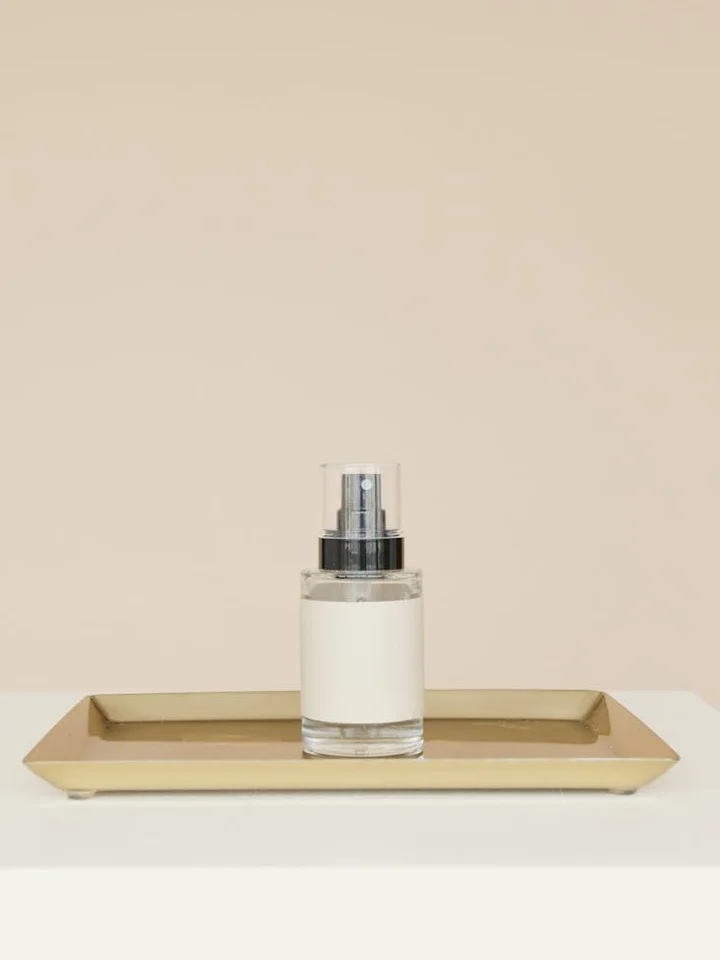
Think of your skin’s moisture barrier like a brick wall. With eczema, the bricks (your skin cells) are cracked and the mortar (the lipids holding them together) is crumbling. To fix it, you need two types of helpers: ones that bring in water and ones that lock it in. That’s the core difference between humectants and occlusives.
Eczema skin desperately needs both types of ingredients working together to heal. Using only a humectant is like pouring water into a leaky bucket. Using only an occlusive is like putting a lid on an empty one.
Gentle Humectants: Drawing Moisture In
Humectants are ingredients that attract water. They pull moisture from the air and from deeper layers of your skin up to the surface. For reactive, eczema-prone skin, you want humectants that are effective but incredibly gentle.
My client Noah, who has dry, reactive skin, found huge relief when we focused on these two:
- Glycerin: This is a classic for a reason. It’s a small molecule that draws in water like a magnet, feels non-sticky, and is well-tolerated by almost everyone. You’ll find it in many sensitive-skin formulations.
- Panthenol (Vitamin B5): This is a star for irritated skin. It attracts water and converts to pantothenic acid in the skin, which soothes redness and supports healing. It’s a hydrator and a calmative in one.
Here’s a critical tip: in very dry environments (think desert climates or heated indoor air in winter), the air has no moisture to give. In these conditions, a humectant with nothing over it can start pulling water from the deeper layers of your skin up to the surface, where it then evaporates, making you drier. The simple fix? Always, always layer an occlusive moisturizer or balm on top.
Smart Occlusives: Sealing the Deal
Occlusives are your sealants. They create a protective, breathable film on top of your skin that dramatically slows down water loss. Their job is to give your skin the time it needs to use that hydration for repair.
For severe flares and cracked, weeping skin, you can’t beat the classics:
- Petrolatum (Petroleum Jelly): It’s the gold standard. It’s inert, meaning it’s incredibly unlikely to cause a reaction, and it seals in moisture better than almost anything else. I recommend it for targeted treatment on ultra-dry patches.
- Mineral Oil: Highly purified mineral oil is another excellent, non-irritating occlusive. It’s often found in baby oils and lotions because it’s so gentle.
For daily, all-over maintenance, many prefer plant-based alternatives with different textures:
- Squalane: Derived from olives or sugarcane, squalane mimics your skin’s own oils. It’s a lightweight, fast-absorbing occlusive that doesn’t feel heavy or greasy. It’s perfect under clothing.
- Beeswax & Plant Waxes: These create a more substantial, protective barrier. They’re fantastic in hand creams or balms for areas like elbows and knees that need extra defense.
Remember the analogy: a humectant is your thirsty sponge, soaking up water. An occlusive is the sheet of plastic wrap you lay over the sponge to stop all that good moisture from vanishing into thin air. Apply your humectant-rich serum or lotion to damp skin, then immediately lock it in with your occlusive cream or balm.
When Good Ingredients Go Bad: What to Avoid with Eczema
Sometimes, building a strong barrier is less about what you add and more about what you temporarily remove. When your skin is in a reactive, eczema-prone state, its tolerance is low. Ingredients that might be fine for other skin types can trigger a major setback.
Think of your barrier like a scraped knee. You wouldn’t pour lemon juice on it to help it heal. You’d clean it gently and protect it. Your face and body need the same compassionate logic.
Here is your practical “Skip These” list when your eczema is active or your barrier feels compromised:
- High Concentrations of Actives: This includes glycolic or salicylic acid (AHA/BHA), retinoids, and potent forms of vitamin C (like L-ascorbic acid). These work by accelerating cell turnover or exfoliating, which is the last thing a fragile barrier needs. They can cause stinging, burning, and further damage.
- Denatured Alcohol (listed as Alcohol Denat. or SD Alcohol): This type of alcohol is used to make products feel weightless and absorb quickly, but it’s extremely drying and disruptive to your skin’s lipid layer.
- Potent Essential Oils & Strong Fragrances: Whether natural or synthetic, these are common triggers for neurogenic inflammation-a fancy term for your skin’s nerves overreacting and causing itchiness, redness, and stinging. Peppermint, citrus oils, and heavy perfumes are frequent culprits.
Why does this happen? An eczema-compromised barrier has gaps in it. Harsh actives and irritants slip through those gaps easily, reaching deeper skin layers and activating your immune system and nerve endings, leading to more inflammation and itch. Your goal during repair is to be boring and protective. You can revisit gentle actives much later, once your skin is strong and calm again.
Building Your Soothing Routine: A Step-by-Step Guide
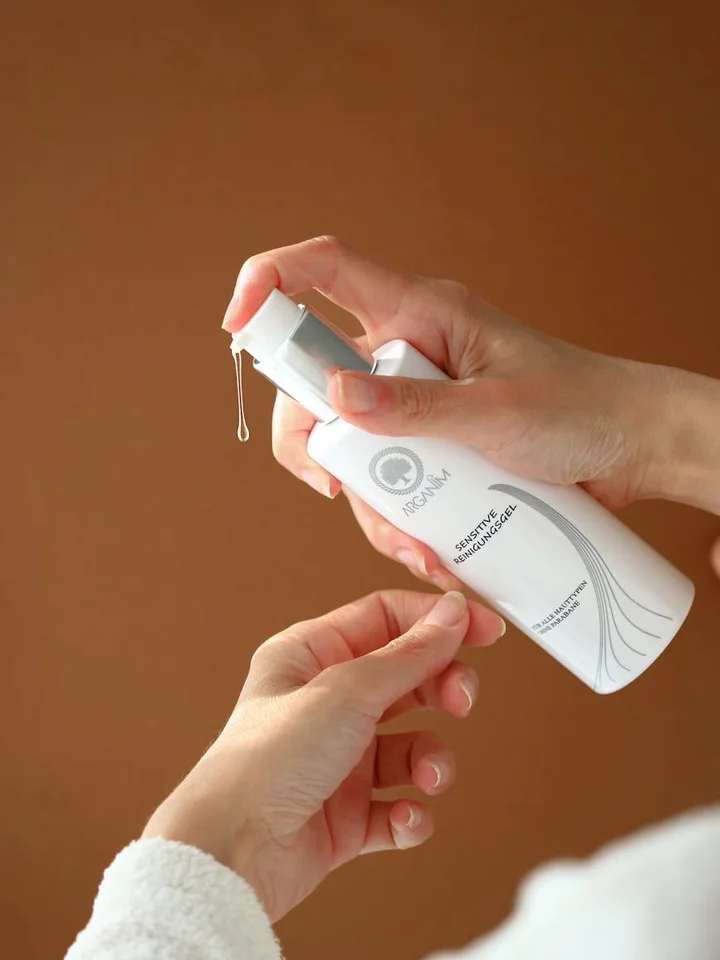
Think of your skin barrier like a brick wall that’s lost some mortar. The goal isn’t to scrub it down and start over. It’s to carefully patch the holes and reinforce what’s there. For this, I teach my clients a simple three-step framework: Clean, Treat/Repair, Protect. This works for both your face and body. We’ll also explore how tretinoin interacts with skin barrier function and how to use it safely during the Repair step.
Consistency with these gentle steps will do more for your skin’s long-term health than any aggressive treatment ever could. My client Noah, who has dry, reactive skin, saw his redness and tightness reduce significantly not by adding more products, but by sticking to this simple, non-irritating sequence for a full month. He learned that calm repetition is the true repair tool.
Step 1: The Reset Cleanse
This step is about removing impurities without stripping away your skin’s natural oils. Hot water and harsh foams can feel “clean” but they often leave the skin tight and compromised.
- Use lukewarm water. It’s effective without being shocking or inflammatory to sensitive skin.
- Choose non-foaming, surfactant-free cleansers or creamy cleansing balms. These lift away dirt without disrupting your lipid barrier. Noah switched to a fragrance-free cleansing milk and noted his skin no longer felt “squeaky” or raw after washing.
- Pat your skin dry gently with a clean towel. Rubbing creates friction that can further irritate eczema-prone areas.
Step 2: The Targeted Repair
This is where your barrier-repair ingredients go to work. Timing is everything.
Apply your barrier-repair moisturizer to damp skin within 60 seconds of cleansing. This captures the water on your skin’s surface and locks it in with emollients and occlusives. It’s like sealing a envelope before the moisture inside can evaporate.
For stubborn, extra-dry patches (like the eczema Noah gets on his cheeks), I recommend the “sandwich method”:
- Humectant Layer: Apply a serum with glycerin or hyaluronic acid to damp skin. This acts like a sponge, pulling hydration into the upper layers.
- Ceramide Layer: While the serum is still slightly damp, smooth on a ceramide-rich cream. This is the “mortar” that helps fill in the cracks between your skin cells.
- Occlusive Layer: Top it all with a very thin layer of a plain occlusive, like petroleum jelly or a plant-based balm. Think of this as a protective lid, preventing all the good hydration underneath from escaping.
Step 3: The Daily Shield
If you do nothing else in the morning, do this. Sun exposure is a major trigger for inflammation and barrier damage.
A broad-spectrum mineral sunscreen with zinc oxide and/or titanium dioxide is the ultimate, non-negotiable barrier repair ingredient for every single morning. Mineral filters sit on top of the skin, deflecting UV rays and environmental aggressors, giving your skin a stable environment to heal. Chemical sunscreens can sometimes sting on very reactive, broken skin, which is why I default to mineral formulas for my eczema-prone clients. That’s why I reach for zinc oxide and titanium dioxide sunscreen—the mineral option that protects without sting. A zinc oxide titanium dioxide sunscreen stays gentle on reactive skin, letting your barrier heal while you go about your day.
Contraindications & Safety Warnings: When to Pause
Even the gentlest ingredients need to be approached with care when your skin barrier is severely compromised. Understanding how pH-balanced skincare formulations affect barrier health can guide your choices. Use this checklist.
- If your skin is actively weeping, shows signs of infection (yellow crust, increased warmth, pus), or has deep, open cracks, stop all new products and consult your doctor or dermatologist immediately. Your barrier is not just damaged; it’s an open wound that needs medical attention first.
- Always patch test. For one full week, apply a small amount of any new product to a clear area like your inner forearm. Watch for redness, itching, or bumps. This simple step can prevent a full-face or full-body reaction.
- Remember, “generally safe” doesn’t mean “safe for everyone.” Individual allergies can occur with any natural or synthetic ingredient. If a product consistently causes stinging or worsening redness, discontinue use.
Your Barrier Repair Questions, Answered
How long until I see improvement from barrier repair ingredients?
With consistent daily use, you may notice a reduction in tightness and dryness within a week. Significant barrier repair and reduced reactivity, however, typically follow a dedicated 4-to-6-week skin renewal cycle.
Can I ever use exfoliants or retinoids again?
Yes, but only after your barrier is fully repaired and calm for several weeks. Reintroduce them very slowly, starting with a low-concentration product just once a week, and always monitor your skin’s tolerance.
What’s the most important thing to look for on a product label?
Prioritize products that list ceramides, cholesterol, and fatty acids together near the top. This indicates a complete lipid mixture that truly mimics and repairs your skin’s natural mortar. Especially the combination of ceramides and cholesterol which are crucial for barrier repair.
Final Thoughts on Building a Resilient Skin Barrier
Repairing your skin’s barrier with eczema is less about a magic bullet and more about consistent, gentle support. Think of your routine as a daily dose of reassurance for your skin, using proven ingredients that work together to soothe, hydrate, and reinforce. With the right approach, you can create a foundation of comfort that allows your skin to heal itself.
- Always prioritize fragrance-free, gentle formulas to avoid triggering flare-ups.
- Start with one key ingredient, like a ceramide moisturizer, and build from there.
- Patch test every new product on a small area of your inner arm for a few days.
- Give your skin time-barrier repair is a process measured in weeks, not days.
We’re here to help you navigate your skin’s needs. For more science-backed guidance and sustainable product choices, follow along right here on the blog. Soon, we’ll share a build skincare routine step guide to help you assemble a simple, effective regimen. It’s designed to be easy to follow as you tailor your routine. Your questions and experiences shape what we explore next, so never hesitate to reach out. Caring for eczema-prone skin is a journey, and you don’t have to take a single step of it alone.
Further Reading & Sources
- Amazon.com : CETAPHIL ECZEMA RESTORADERM FLARE-UP RELIEF CREAM, For Eczema Prone Skin, 8 oz, Barrier Repair, 48 Hour Hydration, 2% Skin Protectant Colloidal Oatmeal, Steroid Free : Health & Household
- Barrier-Restoring Therapies in Atopic Dermatitis: Current Approaches and Future Perspectives – PMC
- Barrier Therapy Skin Protectant Cream For The Face & Body – Prequel
- Skin Barrier Basics for People With Eczema | National Eczema Association
- Ultra Repair Cream Intense Hydration – First Aid Beauty
- Barrier Repair Cream
- Best and Worst Cosmetics Ingredients for Eczema: 6 to Love, 4 to Leave
- Emollients – National Eczema Society
- eczema 3® Petroleum-Free, Ceramide-Rich Skin Barrier Repair Cream – pediadermics
- 7 Best Skin Barrier Creams for Healthy Skin
Lucy Zimmerman
Lucy is an expert author and blogger when it comes to skin care and body care. She has first hand expertise acting as skin care consultant for over 5+ years helping her clients achieve smooth blemish free skin with natural and working remedies. She also has been an avid experimenter and tried out all the natural and artificial remedies and treatments so you can learn from her first hand experience. Additionally, she has traveled to many countries around the world and incorporated the skin care routines she has learnt into this blog. So, wait no more, reach out to Lucy if you have any specific needs and follow her blog, LuciDerma for expert skin care advice.