
Your Gentle Daily Shield: Non-Comedogenic Sunscreens for Acne-Prone and Sensitive Skin
If you’ve ever skipped sunscreen fearing a breakout or sting, you’re not alone. I’ve guided countless clients like Maya through finding formulas that protect without clogging pores.
By the end of this article, you’ll be equipped with:
- How to spot pore-friendly sunscreens by reading labels and understanding textures.
- My trusted product picks, tested in my practice for their lightweight, calming effects.
- Simple steps to layer sunscreen over acne treatments without causing pilling or redness.
Let’s find a sunscreen that feels like a relief, not a risk.
Let’s Bust the Biggest Sunscreen Myth for Acne-Prone Skin
Can sunscreen cause acne? The direct answer is yes, but only if it’s the wrong formula for your skin. The right one will protect you without a single new blemish.
Think of it this way: sunscreen doesn’t magically create acne. A pore gets clogged when a formula is too rich, heavy, or contains specific ingredients that your skin reacts to. There’s a big difference between a true acnegenic ingredient and your skin simply throwing a fit because it feels smothered under a thick, occlusive layer.
This leads us to a key question: can non comedogenic sunscreen cause acne? The term “non-comedogenic” is a manufacturer’s claim, not a government-regulated guarantee. It means the product was tested and didn’t clog pores in a majority of people. But “majority” isn’t “everyone.” Your unique skin with its individual sensitivities gets the final vote. Even with non-comedogenic products, some individuals might still experience breakouts.
I saw this with my client, Maya. She was terrified of sunscreen, convinced every formula would trigger the deep, painful cysts she was prone to. She tried a “non-comedogenic” lotion that felt heavy, and within days, her chin was a mess of tiny clogged pores. It wasn’t that the sunscreen was inherently bad, it was just a terrible match for her oily, reactive skin. We found her a winner-a feather-light, fluid formula-and her fear of sunscreen vanished along with the new congestion.
How to Truly Know If a Sunscreen Won’t Clog Your Pores
Since there’s no official rulebook for the term, you become the expert on your own skin. Asking how to know if a sunscreen is non comedogenic is really asking how to become a savvy ingredient detective.
Start with the label claims, but don’t stop there. Here is your practical checklist for the next time you’re shopping:
- Look for the words “oil-free” and “non-comedogenic” on the front. It’s a good first signal.
- Prioritize formulas labeled “fragrance-free.” Fragrance is a common, unnecessary irritant for sensitive and acne-prone skin.
- Most importantly, flip the bottle and read the ingredient list. A shorter list is often (but not always) better for reactive skin.
The final, most personal step is cross-referencing. Keep a simple note on your phone of ingredients that have broken you out in the past, even from moisturizers or makeup. For example, some people with acne find certain fatty alcohols like cetyl or stearyl alcohol can be problematic, while others tolerate them perfectly. If you know shea butter clogs you, you’ll know to avoid it in a sunscreen, too.
This detective work is how you move from hoping a product won’t clog your pores to knowing you’ve chosen the best possible option for you.
Your Ingredient Cheat Sheet: What to Embrace and What to Sidestep

Think of your sunscreen’s ingredient list as a team roster. You want players that protect without causing drama on your skin. This guide helps you spot the all-stars and the frequent troublemakers for acne-prone, sensitive skin.
Filters: Mineral vs. Chemical, Decoded for Sensitive Skin
Let’s settle the big question: are mineral sunscreens non comedogenic? The active minerals themselves, zinc oxide and titanium dioxide, are generally inert and sit on top of the skin, making them far less likely to trigger breakouts or irritation compared to other ingredients that can be comedogenic. They are physical blockers that reflect UV rays, which is why they’re often recommended for reactive skin like my client Noah’s.
But here’s the catch I see all the time: the vehicle formula matters. A mineral sunscreen can still be pore-clogging if it’s loaded with heavy oils or butters. You want a formula that feels lightweight.
Chemical filters (like avobenzone, octinoxate, or oxybenzone) absorb UV rays. They can be fantastic for achieving a sheer, invisible finish. The trade-off is that some of these filters generate heat as they work and can cause stinging or redness for sensitive, inflamed skin. Avobenzone, in particular, is a common sensitizer.
For my client Lina, who has combination skin that’s both oily and sensitive, a hybrid formula can be the perfect compromise. These use a blend of mineral and modern chemical filters to offer strong protection with a more elegant, less likely-to-clog texture.
The “Frequently Suspect” List: Ingredients That Often Cause Trouble
These ingredients aren’t universally “bad,” but they are common culprits in breakouts for skin like Maya’s. It’s wise to be cautious.
- Comedogenic Oils: Coconut oil, cocoa butter, and wheat germ oil are highly comedogenic. They’re wonderful for body lotions but can be too rich for acne-prone facial skin.
- Heavy Silicones: Ingredients like dimethicone are excellent for creating a smooth feel. In high concentrations, however, they can form an occlusive layer that traps sweat and sebum, potentially leading to congestion.
- Added Fragrance & Essential Oils: This is my non-negotiable advice for sensitive, acne-prone skin. Fragrance (parfum) and essential oils are top irritants that can disrupt your skin barrier, leading to increased redness, reactivity, and even more breakouts. A sunscreen should protect your skin, not perfume it.
The “Green Light” Ingredients: Soothing, Lightweight Allies
Look for these ingredients that protect and calm your skin without adding weight or clogging pores.
- Niacinamide (Vitamin B3): A superstar for oily and acne-prone skin. It helps regulate sebum, calms inflammation (reducing that angry, red look), and strengthens the skin barrier.
- Glycerin & Hyaluronic Acid: These are humectants, meaning they draw water into the skin. They provide essential hydration with a feather-light feel, proving that acne-prone skin needs water, not just oil control.
- Panthenol (Provitamin B5) & Ceramides: These are barrier-repair heroes. They soothe irritation and help fortify your skin’s natural protective layer, making it more resilient against daily stressors and other acne treatments.
Finding a sunscreen with these “green light” ingredients means you’re getting broad-spectrum protection while actively supporting calmer, clearer skin.
The Molecule Spec Sheet: Zinc Oxide
When my client Noah, with his dry, reactive skin, first tried a chemical sunscreen, it stung and turned his cheeks pink. We switched to a formula with zinc oxide, and his skin finally felt calm and protected. For acne-prone and sensitive skin, this mineral filter is a game-changer because it works like a reflective barrier on the skin’s surface, not inside your pores. However, it’s important to note that not all zinc formulations are the same.
| Property | Detail |
|---|---|
| Common Name | Zinc Oxide |
| Type (Filter) | Mineral (physical) sunscreen filter |
| pH | Typically neutral in formulation (around pH 7), which matches skin’s natural balance |
| Concentration in Formulas | Commonly between 5% and 25% in non-comedogenic sunscreens, depending on the SPF level |
| Solubility | Insoluble in water, so it forms a protective layer on top of the skin |
| Safety Profile for Acne-Prone/Sensitive Skin | Generally non-comedogenic, hypoallergenic, and well-tolerated. It rarely causes irritation or clogged pores. |
Zinc oxide’s insolubility is precisely why it’s so kind to fussy skin types. Imagine it as a thin, smart veil that sits on your skin, deflecting UV rays without dissolving into your pores where it could cause trouble. This makes it a superstar for my client Maya, who needs protection that won’t feed her acne. Paired with non-comedogenic makeup, it offers an ideal base for sensitive, acne-prone skin.
I see a lot of confusion about the white cast. Higher concentrations can leave a visible film, but many brands now use finely ground (micronized) particles to make it more sheer. If you have a deeper skin tone like Lina, look for labels that say “tinted” or “sheer” to avoid the chalky look.
For a safe test, apply a dime-sized amount of any new zinc oxide sunscreen to a small patch on your cheek or jawline for three consecutive days. This tells you how your unique skin will react before you commit to your whole face. Even with gentle ingredients, your skin might have its own preferences.
Finding Your Perfect Match: A Routine-Centric Selection Guide

Let’s stop thinking about sunscreen as just another product. Think of it as the final, non-negotiable step in your morning ritual. The best one for you depends entirely on what comes before it and how you want your skin to feel all day.
For a Lightweight, Invisible Finish Under Makeup
If your morning routine involves serums and foundation, you need a sunscreen that disappears. We’re talking about a texture so thin it feels like a hydrating primer or a runny serum.
Look for fluid lotions or gels labeled “dry-touch,” “matte,” or “invisible.” These are formulated to absorb quickly without leaving a sticky film. Layering matters here: when you combine physical (mineral) and chemical sunscreens, choose an order and formulation that preserves a sheer, weightless finish. Understanding how physical and chemical filters layer can help you build protection without piling on product. Chemical or hybrid (mineral + chemical) sunscreens often excel here because their filters are designed to be sheer and weightless.
My client Maya, with her oily, acne-prone skin, loves this category. She applies it after her vitamin C serum and finds it creates a perfect, smooth base for her makeup. A quick tip: always check the ingredient list. If you know certain chemical filters cause you to flush or sting, a matte-finish mineral formula might be your better bet.
For a Hydrating, Bare-Faced Glow
This is for the days you let your skin breathe or if your complexion leans dry. The texture here should feel like a light, comforting moisturizer-something that adds a soft, dewy luminosity without heaviness.
Mineral sunscreens or hydrating hybrid formulas are fantastic here. They often contain glycerin or hyaluronic acid and leave a healthy, fresh glow. This type is perfect for skin types like Noah’s, or for anyone who prefers to skip a separate morning moisturizer. The sunscreen does double duty, protecting and hydrating in one step. If you’re weighing options, a quick chemical vs. mineral sunscreen comparison can help you decide which formula fits your routine. It highlights differences in texture and absorption, helping you pick the right option for your skin.
Think of it as a drink of water and a protective blanket for your skin. It won’t soak up all your natural oils but will prevent that tight, parched feeling by midday.
For Maximum Calm on Reactive, Red Skin
When your skin is sensitive, reactive, or prone to redness, your sunscreen choice needs to be a peacekeeper. This is not the place for experimentation.
Your safest first stop is a fragrance-free, mineral-only (zinc oxide/titanium dioxide) formula. Zinc oxide is naturally soothing. Look for versions boosted with anti-redness ingredients like licorice root extract, niacinamide, or centella asiatica. A tinted mineral option can be a game-changer, as the subtle tint helps neutralize redness immediately, letting you feel comfortable without a stitch of makeup.
This category is my default recommendation for anyone with eczema, rosacea, or skin that stings easily. Always patch test a new sunscreen on your jawline or inner arm for a few days. If it calms a reactive patch, it’s likely a good fit for your whole face.
How to Apply Sunscreen Without Irritating Active Acne
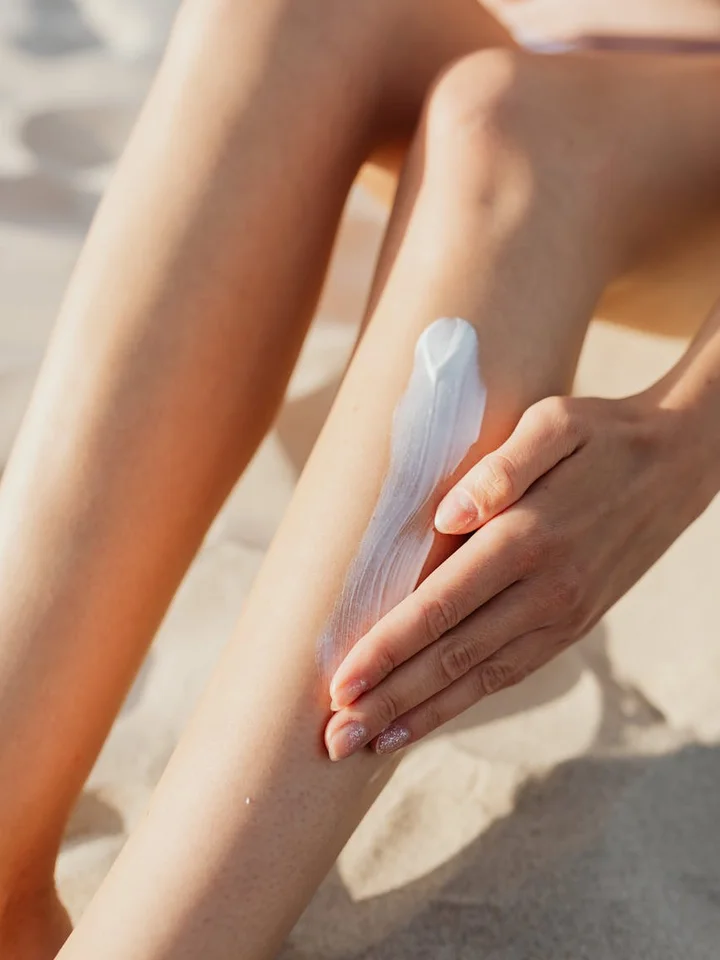
Applying sunscreen to angry, tender skin feels counterintuitive. I get it. Rubbing a lotion over a swollen pimple sounds like a recipe for more redness. The trick isn’t to avoid sunscreen, it’s to change your technique. Think of it like caring for a fresh scrape, you want to protect it without aggravating it.
Here’s a gentle method I use with clients like Maya, who often has active breakouts she needs to shield from the sun.
Your Gentle, Step-by-Step Application Method
- Start with clean, dry hands. This prevents transferring any bacteria from your fingers to your face.
- Dispense your sunscreen onto your fingertips. For your face and neck, you need about a teaspoon total, roughly the size of a large grape.
- Dot the sunscreen onto your forehead, cheeks, nose, and chin, avoiding direct dots on top of very active, swollen pimples.
- Using the pads of your fingers, gently spread and pat the sunscreen into your skin. Use flat, pressing motions instead of rubbing or dragging.
- Continue patting until the product is evenly distributed and no longer white or streaky. Let it dry completely before touching your face again.
Why Patting Beats Rubbing
Rubbing creates friction. Friction irritates inflamed skin and can disrupt the delicate surface of a pimple, potentially making it worse or causing post-inflammatory hyperpigmentation. Patting applies product with minimal disturbance. This is especially crucial over areas where you’ve applied a treatment like benzoyl peroxide or salicylic acid. You want the sunscreen to form a protective layer on top, not scrub the treatment off.
Patting sunscreen onto treated areas seals in your actives without neutralizing their effect or causing irritation.
The Correct Layering Order: A Simple Rule
Getting the order right prevents pilling and ensures each product can do its job. Follow this sequence:
- Treat: Your treatment serum or spot treatment (like benzoyl peroxide, salicylic acid, or azelaic acid). Apply this to clean skin so it can work directly on your pores.
- Moisturize (if needed): If your skin feels tight or dry, or if your sunscreen isn’t very hydrating, apply a lightweight, non-comedogenic moisturizer now. For many with oily or combination skin, a good sunscreen can be the final moisturizing step.
- Sunscreen: This is always your final skincare step. It creates the necessary shield over everything underneath.
Think of it like getting dressed: treatment and moisturizer are your base layers, and sunscreen is your essential outer coat.
Reapplying Sunscreen Over Makeup: Practical Solutions
We all know we should reapply sunscreen every two hours with sun exposure, but how do you do that over foundation and concealer meant to cover breakouts? You have two excellent, non-messy options.
SPF Powder: This is a game-changer. Use a fluffy brush to dust a mineral SPF powder lightly over your makeup. It won’t disturb your coverage, helps mattify shine, and adds protection. Just be sure to apply enough, a few swipes isn’t sufficient.
SPF Setting Mist: Look for a fine, continuous spray mist designed for face sunscreen. Hold it about 6 inches from your face, close your eyes, and mist evenly in a zig-zag pattern until your face glistens slightly, then let it air dry. Check the ingredient list for high alcohol content, which can be drying for sensitive skin types like Noah’s.
A quick tip: if you’re oily, gently blot your face with a single-ply tissue before reapplying any SPF product over makeup. This removes excess oil so the new layer adheres better to your skin, not the oil slick.
Contraindications & Safety Warnings

Choosing the right sunscreen is a smart skin decision, but introducing any new product requires a bit of care. Think of it like trying a new food; you want a small taste first to see how your body reacts.
Always perform a patch test before fully committing to a new sunscreen, especially if your skin is reactive. Apply a small amount behind your ear or on the inside of your forearm for three to five days. This helps you spot any delayed redness or itching.
When to Proceed with Extra Caution
There are specific times when your skin’s defenses are down, and a patch test is not just a suggestion-it’s a must. Slow down and listen to your skin if you’re in one of these situations.
- On actively broken skin: Do not apply a new sunscreen directly over open cysts, picked spots, or wounds. The compromised barrier can let ingredients in more deeply, increasing the risk of irritation or infection. Protect these areas with a healing ointment first.
- During extreme barrier compromise: If your skin is red, stinging, or peeling from a strong treatment like a retinoid or acid peel, pause. Your skin’s primary job is to heal, not to test new products. Wait until that sensitivity fully calms down.
- With a known filter allergy: If you’ve reacted to oxybenzone or avobenzone in the past, meticulously check ingredient lists for those specific chemical filters. Mineral options with zinc oxide and titanium dioxide are often a safer starting point for you.
When to Seek Professional Guidance
My client Noah, who has reactive skin, taught me the value of a team approach. If you have a diagnosed skin condition, your dermatologist is your co-pilot.
Schedule a quick chat with your dermatologist before introducing a new sunscreen if you manage rosacea, severe cystic acne, or eczema. They understand the nuances of your condition and can recommend filters or formulas that align with your treatment plan. They might even have samples for you to try.
Your daily sunscreen should feel like a protective ally, not a source of worry. A cautious start is the fastest path to finding a formula you can trust completely, like our reef-safe sunscreen.
What to Do If a Sunscreen Still Breaks You Out
So you followed all the advice, picked a beautiful non-comedogenic, fragrance-free formula, and… you’re breaking out. I feel your frustration. This happens to my client Noah all the time. His skin is so reactive that even “safe” products can sometimes cause a flare. First, don’t panic-this is a solvable puzzle, not a permanent setback.
Step 1: Hit Pause and Reset
As soon as you suspect the sunscreen is the culprit, stop using it. Your immediate goal is to calm your skin down. Go back to your most basic, known-safe routine for a few days. For almost everyone, that means:
- A gentle, pH-balanced cleanser.
- A simple moisturizer you’ve used for months without issue.
- That’s it. Let your skin barrier recover and the irritation subside before you try anything new.
Step 2: Play Detective with a Simple Log
Once the breakout calms, grab a notebook or a note on your phone. We’re going to figure out your personal trigger. Think about the product that caused the issue and note these three things:
- The Finish: Was it a rich cream, a light lotion, or a fluid? My client Maya, who is acne-prone, often finds that creams, even oil-free ones, feel too heavy for her skin in humid weather.
- The Filter Type: Was it a mineral (zinc/titanium dioxide) or chemical (avobenzone, octinoxate, etc.) sunscreen? Or a hybrid? Skin can react to either.
- New-to-You Ingredients: Look beyond “non-comedogenic.” Did it have a new type of hyaluronic acid, a specific emulsifier, or a botanical extract? Sometimes the active filters are fine, but another ingredient is the irritant.
This log turns a frustrating experience into useful data. Tracking these details helps you spot patterns, so your next choice isn’t a shot in the dark.
Step 3: Remember This is a Process
Finding your perfect sunscreen is like finding a good pair of jeans-it might take a few tries to get the right fit. A reaction doesn’t mean all sunscreens are bad for you; it means that specific formula wasn’t a match. Protecting your skin from UV damage is one of the most important things you can do to prevent post-acne dark spots, premature aging, and inflammation. The search is absolutely worth it, especially when you find a sunscreen that offers anti-aging UV protection.
If reactions are frequent or severe, bring your notes to a dermatologist or esthetician. They can help you decipher the clues and may recommend specific medical-grade or ultra-minimalist options. You’ve got this.
Your Sunscreen Questions, Answered
How do I safely patch test a new sunscreen on my acne-prone skin?
Apply a dime-sized amount to a small area on your cheek or jawline for three consecutive days. This allows you to observe for any delayed clogging or irritation before committing to a full-face application.
What’s the best way to reapply sunscreen when I have active, tender breakouts?
Gently blot away oil with a tissue first, then use a patting motion with a lightweight SPF mist or a mineral SPF powder. This adds protection without the rubbing friction that can aggravate inflammation.
If I’m breakout-prone, is it ever okay to just skip sunscreen?
No. UV exposure directly increases inflammation and can worsen post-acne dark spots. The right non-comedogenic formula protects your skin’s health and supports your clarity goals.
Finding Your Perfect Sunscreen Match
Your skin deserves a sunscreen that protects without causing problems. I advise everyone, especially my acne-prone clients, to make a broad-spectrum, non-comedogenic formula a non-negotiable part of their morning routine. Consistency with the right product is what keeps your skin clear and shielded from damage.
- Always perform a patch test on a small area of your jaw or neck for three days before applying a new sunscreen to your entire face.
- Apply a generous, nickel-sized amount to your face and neck every single morning, regardless of the weather or your indoor plans.
- Reapply every two hours when you are outdoors, and immediately after swimming or sweating heavily.
- For sensitive skin, mineral filters like zinc oxide are often the gentlest, most reliable choice to avoid redness and stinging.
- Prioritize brands that are certified cruelty-free and use recyclable packaging to align your skin health with your values.
If you’re still unsure where to start or have a specific skin concern, bring your questions to the LuciDerma blog. I’m here to help you sort through the options with the same careful, evidence-based approach I use with every client in my chair.
Lucy Zimmerman
Lucy is an expert author and blogger when it comes to skin care and body care. She has first hand expertise acting as skin care consultant for over 5+ years helping her clients achieve smooth blemish free skin with natural and working remedies. She also has been an avid experimenter and tried out all the natural and artificial remedies and treatments so you can learn from her first hand experience. Additionally, she has traveled to many countries around the world and incorporated the skin care routines she has learnt into this blog. So, wait no more, reach out to Lucy if you have any specific needs and follow her blog, LuciDerma for expert skin care advice.