
Vitamin C Serum and Adapalene: A Simple Routine for Acne and Anti-Aging
You’re smart to ask about pairing vitamin C serum with adapalene (like Differin)-it’s a common question in my treatment room from clients eager to fight acne and aging at once.
This guide will help you build a safe, effective routine. You’ll walk away knowing:
- How vitamin C protects your skin during the day while adapalene works overnight, so they can team up without conflict.
- The exact order to apply these products to avoid irritation and see real results.
- How to spot signs your skin is happy with the combo or needs a gentler approach.
Let’s get your skin glowing and clear, one simple step at a time.
What Adapalene and Vitamin C Actually Do for Your Skin
Let’s break down what each of these powerful ingredients does on its own. Think of this as understanding each player’s position on a team before putting them in a game together.
Adapalene (like the brand Differin) is a type of retinoid, a vitamin A derivative you can get without a prescription. Its main jobs are deep in your skin. First, it helps keep your pores clear by preventing them from getting clogged with dead skin cells and oil. Second, it encourages your skin cells to turn over at a faster, healthier rate. This means it helps fade post-acne marks, smooth texture, and reduce fine lines over time.
Vitamin C, particularly in the form of L-ascorbic acid, is a powerhouse antioxidant. Its primary role is to defend your skin. It neutralizes free radicals from things like UV rays and pollution that break down collagen and lead to premature aging. It also helps brighten your complexion by interfering with melanin production, which can fade dark spots. Coupled with vitamin E, another key antioxidant, these nutrients help support the skin barrier and lock in moisture. The vitamin C and E synergy strengthens the barrier against environmental stressors and helps maintain overall skin resilience.
Here’s a simple way to think about it: Adapalene works like a meticulous, deep-cleaning crew that comes in at night. It’s doing the heavy lifting of unclogging and renewing. Vitamin C is your daytime security guard, on patrol against environmental damage that causes aging and dullness.
So, can they work on the same team? Absolutely. They aren’t enemies. Using them together requires a smart plan to get the renewal benefits of adapalene and the protective benefits of vitamin C without overwhelming your skin.
The Smart Way to Layer: Your Step-by-Step Routine Guide
The short answer is yes, you can use adapalene and vitamin C together. The key is in the timing.
The most effective and gentle strategy is the “Separate & Conquer” method: apply your vitamin C serum in the morning and your adapalene at night. This separates their jobs perfectly and minimizes any potential for irritation. Timing matters: applying adapalene at the right time can boost its efficacy while minimizing irritation. We’ll explore this topic further with a linked guide in the next steps.
Your Morning Routine (The Vitamin C Shift)
- Cleanse your face with a gentle, low-pH cleanser.
- Pat your skin dry. On slightly damp skin, apply 4-5 drops of your vitamin C serum. Gently press and pat it into your face and neck.
- Wait 60-90 seconds. This lets the vitamin C absorb fully and its pH level stabilize.
- Apply your moisturizer. This is a must, even for oily skin like Maya’s. A light, non-comedogenic gel cream works well.
- Finish with a broad-spectrum sunscreen (SPF 30 or higher). The vitamin C boosts your sunscreen’s protection, making this a powerful anti-aging duo.
Your Evening Routine (The Adapalene Shift)
If you have sensitive or dry skin like Noah, I highly recommend the “sandwich method” to ease into adapalene.
- Cleanse your face gently. Avoid harsh scrubs or cleansing brushes.
- Apply a thin layer of a basic, fragrance-free moisturizer to damp skin. This is your first “bread” of the sandwich, creating a buffer.
- Wait 10-15 minutes for your skin to dry completely. Applying adapalene to damp skin can increase irritation.
- Take a pea-sized amount of adapalene gel for your entire face. Dot it on your forehead, cheeks, nose, and chin, then spread it evenly. Avoid the sensitive skin around your eyes and lips.
- Wait another 5-10 minutes.
- Apply a second layer of your moisturizer. This is the top “bread” of the sandwich, sealing in hydration and further calming your skin.
Start slow and let your skin guide your frequency. If you’re new to adapalene, begin by using it just 2 or 3 nights a week, like every Monday and Thursday. On your nights off, focus on hydration and barrier repair with a simple routine of cleanser, moisturizer, and maybe a calming serum. You can use your vitamin C serum every morning, as it’s generally well-tolerated. As you progress, you may discover what schedule your skin tolerates best, including whether daily use is appropriate. We’ll explore adapalene daily use frequency in the next steps.
After 2-4 weeks, if your skin isn’t red, flaky, or stinging, you can try increasing adapalene to every other night. The goal is to work up to nightly use comfortably, but for many people, every other night is a perfect, sustainable routine that delivers great results without irritation.
Your Ingredient Interaction Matrix: What to Mix & What to Avoid

Think of your skincare routine like a team. You want players that work well together, not ones that fight for attention or overwhelm the field (your skin). Here’s your quick-reference guide.
| Combination | Verdict | How to Use |
| Adapalene + Simple Moisturizer | Safe & Synergistic | Apply moisturizer after Adapalene to soothe and protect your barrier. |
| Adapalene + Hyaluronic Acid | Safe & Synergistic | Apply hyaluronic acid serum on damp skin, let it absorb, then follow with Adapalene. |
| Adapalene + Niacinamide | Safe & Synergistic | These are a powerhouse pair for calming retinoid irritation and regulating oil. Use together in your PM routine. |
| Adapalene + Other Acids (AHA/BHA) | Proceed with Caution | Do not apply them at the same time. Use acids in the morning and Adapalene at night, or use them on alternate nights. |
| Adapalene + Benzoyl Peroxide | Proceed with Caution | This combo can be very drying. If prescribed together, space them out (BP in AM, Adapalene in PM) and buffer with moisturizer. |
| Adapalene + Pure Vitamin C Serum | Avoid Together | Do not layer these two potent actives in the same routine session. It’s a shortcut to redness and stinging. |
Navigating the Vitamin C and Adapalene Question
So, do adapalene and vitamin C interact? They don’t cancel each other out chemically, but they can overwhelm your skin’s peacekeeping forces.
Vitamin C (especially L-ascorbic acid) is acidic and works best at a low pH. Adapalene needs a stable pH to remain effective. Layering them can cause unnecessary irritation, making your skin feel raw and sensitive. The goal is to get the benefits of both without the drama, which is easily done by splitting your shifts: Vitamin C in the morning, Adapalene at night. Should irritation arise, there are practical steps to manage adapalene irritation that we’ll outline in the next steps. These tips help you keep the benefits without discomfort.
Using adapalene with niacinamide and vitamin C is a classic, effective strategy. Your routine could look like this:
- AM: Vitamin C Serum, followed by moisturizer and sunscreen.
- PM: Niacinamide serum, Adapalene, then a soothing moisturizer.
This gives your skin the antioxidant protection of vitamin C by day and the cell-renewing, acne-fighting power of Adapalene by night, with niacinamide there to keep everything calm.
Who Should Pause Before Trying This Combo? (Contraindications & Safety)
Some skin situations call for a strategic retreat before advancing. If you’re like my client Noah, who has a dry, reactive barrier, your first mission is repair.
If your skin stings with gentle products, feels tight, or looks flaky and red, you need to fix your barrier first. Focus on a simple routine with a gentle cleanser, ceramides, and cholesterol-rich moisturizers for at least 2-4 weeks before considering either of these actives.
Pregnancy and breastfeeding are times to avoid retinoids like Adapalene altogether. Always consult your doctor about what’s safe for you and your baby.
Never apply Vitamin C or Adapalene onto broken skin, active rashes like eczema, or in the days immediately following a professional chemical peel or laser treatment. You’ll only slow healing and increase pain.
The Adapalene “Purge” and Adding Vitamin C
When you first start Adapalene, a “purge” is common. This is when deep, pre-existing clogs rise to the surface, which can look like a flare of small whiteheads or papules. It usually happens in the first 4-6 weeks.
Adding a strong vitamin C serum during this initial purge phase can confuse the issue. Is that new redness from the purge or from the new acid? Is the stinging normal or a sign of over-exfoliation? It becomes impossible to tell. Start with Adapalene alone, let your skin fully adjust and get through the purge, then consider introducing vitamin C in the morning once your skin tolerates the retinoid without irritation at night.
Choosing Your Vitamin C Serum for This Specific Routine
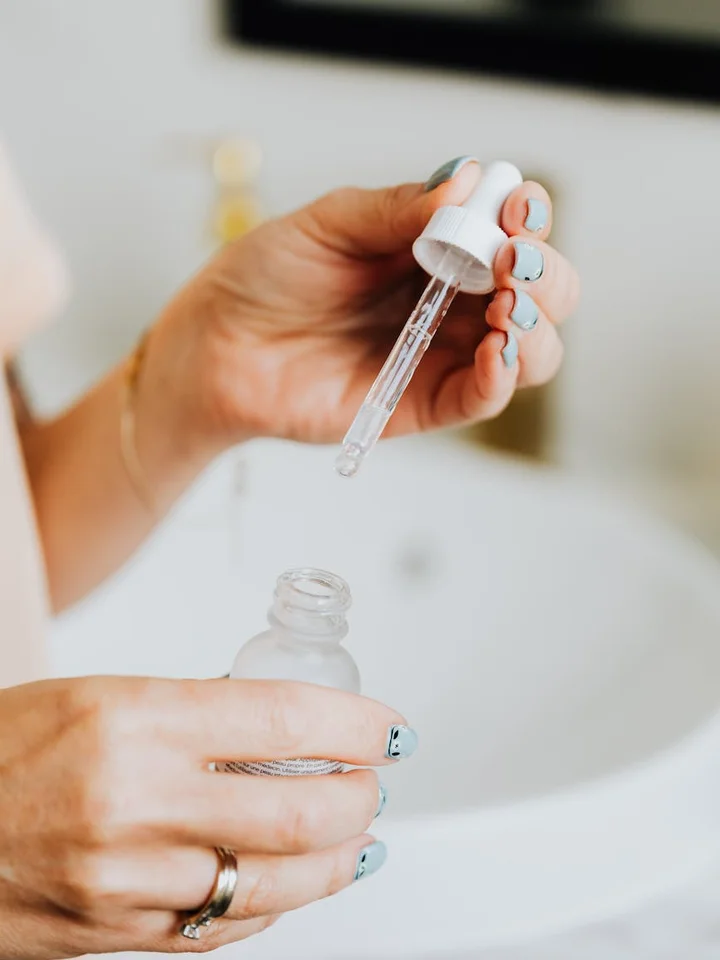
When you’re pairing a product with a powerful retinoid like Adapalene, your Vitamin C serum needs to be a calming teammate, not another source of potential irritation. You’re looking for a formula that supports your skin’s barrier while it works.
Forget unstable, highly acidic L-ascorbic acid for now. Look for gentler, more stable derivatives. My top recommendations are Sodium Ascorbyl Phosphate and Tetrahexyldecyl Ascorbate (often listed as THD Ascorbate or Ascorbyl Tetraisopalmitate). For a quick L-ascorbic acid properties comparison, these alternatives typically show better stability and gentler pH. That contrast explains why they’re favored in modern skincare formulations.
These derivatives are effective antioxidants that fight free radicals and help fade dark spots, but they are far less likely to sting or irritate skin that’s adapting to a retinoid.
Packaging matters just as much as the ingredient list. Always choose a serum in an opaque, airtight, or airless pump bottle. Light and air destroy Vitamin C’s potency. If your serum turns a deep yellow or brown, it’s oxidized and won’t benefit your skin.
For anyone, but especially for sensitive types like my client Noah, fragrance-free is non-negotiable. You want to minimize all potential irritants.
I typically suggest starting with a lower concentration, around 10-15%. This gives your skin the antioxidant boost without overwhelming it. Think of it like sipping water throughout the day instead of gulping a gallon at once-it’s a gentler, more sustainable approach for skin on Adapalene.
Here’s a simple way to think about pH. Some Vitamin C forms, like classic L-ascorbic acid, need a very low pH (very acidic) to penetrate the skin. Adapalene gel also has a specific pH range where it’s most stable and effective. Using a low-pH Vitamin C serum right before Adapalene can alter your skin’s surface pH and potentially reduce the retinoid’s efficacy or increase irritation. The stable derivatives I recommend work at a skin-friendly pH that plays much nicer with other actives in your routine.
You might search for a “vitamin c adapalene gel” all-in-one product. They don’t really exist for a good reason. Vitamin C and retinoids have different ideal stability conditions, and mixing them in one bottle often compromises both, leading to products that are less effective. It’s safer and smarter to use two separate, well-formulated products.
Realistic Expectations: What “Before and After” Actually Looks Like
Combining these powerhouses is a marathon, not a sprint. Patience is your most important product.
In the first 4 to 6 weeks, focus on the texture. You might notice your skin starting to feel smoother as Adapalene helps clear pores and speed up cell turnover. Any brightening from Vitamin C will be subtle at this stage.
The significant anti-aging and brightening benefits-like visibly faded dark spots, improved firmness, and that celebrated “glow”-take a minimum of 3 months of consistent use. This is when collagen remodeling and sustained antioxidant protection really show up.
If you’re using Adapalene for acne, you may experience a “purge.” This is when existing, lurking clogs come to the surface faster, often in the first few weeks. It can feel like it’s getting worse before it gets better. This is where your Vitamin C serum becomes a hero. As those purge-related spots heal, Vitamin C works diligently in the background to minimize the post-inflammatory dark spots (hyperpigmentation) they can leave behind.
Without this next step, you are undoing all your hard work. Sunscreen is non-negotiable. Adapalene and Vitamin C both make your skin more photosensitive. Daily, broad-spectrum SPF 30 or higher is mandatory to protect your skin, prevent new dark spots, and allow these ingredients to work effectively.
I think of my client Maya. She started Adapalene for persistent breakouts and added a gentle Vitamin C serum in the mornings. The first month was tough with some peeling and purging, but she stuck with her gentle routine and never skipped sunscreen. By month three, she wasn’t just acne-free. Her skin tone was more even, and those stubborn brown marks from old pimples had faded dramatically. The payoff came from balance and consistency in her skincare routine.
Listen to your skin. While some redness or dryness is normal when starting Adapalene, certain signs mean you need to pause and reassess. Stop and consult a dermatologist or your doctor if you experience:
- Persistent, severe redness or swelling that doesn’t improve with a break.
- A burning or stinging sensation that lasts long after application.
- Eczema-like patches, crusting, or intense itching.
Your skin should feel like it’s adapting, not under attack. It’s always okay to take a night off, focus on barrier repair, and try again more slowly.
Your Quick Guide to Pairing Vitamin C and Adapalene
Can I use a vitamin C serum with adapalene gel?
Absolutely. The key is to separate them by time: apply your vitamin C serum in your morning routine and use adapalene as part of your evening routine. This allows you to get the unique benefits of each without over-sensitizing your skin.
Should I look for a combined vitamin C and adapalene product?
No, you should avoid all-in-one products. Vitamin C and retinoids like adapalene have different stability needs, and combining them in one formula often makes both less effective. For the best results, use two separate, high-quality products.
Will this combo help with post-acne dark spots?
Yes, this is where they shine as a team. Adapalene speeds up skin cell renewal to help clear acne, while vitamin C works in the background to inhibit melanin production and fade the dark spots left behind. Consistency with both is key for visible brightening.
Building a Safe and Effective Routine with Actives
Combining vitamin C serum with your adapalene treatment is absolutely possible for brighter, clearer skin. The most important rule is to separate them by using vitamin C in your morning routine and adapalene at night, which prevents irritation while letting each ingredient work its best. This simple timing strategy lets you confidently tackle acne and signs of aging without overwhelming your skin’s barrier.
- Always apply your vitamin C serum in the morning, followed by a moisturizer and a generous amount of sunscreen.
- Use your adapalene gel as the final step in your evening routine, after cleansing and applying any treatment serums.
- Start by introducing one product at a time, waiting at least two weeks before adding the next to see how your skin reacts.
- If you experience stinging or redness, pause the vitamin C and focus on a gentle, soothing moisturizer until your skin calms down.
- Never apply vitamin C and adapalene directly on top of each other in the same routine.
Navigating active ingredients can feel tricky, but you’re not doing it alone. My clients, like cautious Noah, have found great success by following this exact plan. If you have more questions as you build your routine, I’m here to help. Share your experiences or send your questions-we can figure out the best path for your skin together.
Research and Related Sources
- Does Vitamin C Serum Help With Acne – Consensus Academic Search Engine
- vitamin c + adapalene
- r/SkincareAddiction on Reddit: [Routine help] Adapalene, Azelaic acid & Vitamin C in the same routine?
- Adapalene topical and Vitamin C Interactions – Drugs.com
- r/SkincareAddiction on Reddit: [Skin Concern] Can I use Adapalene and Vitamin C serum together?
- r/AsianBeauty on Reddit: Differin and Vitamin C
- r/SkincareAddiction on Reddit: [Product Question] Has anyone had their acne clear up from using Vitamin C Serum?
Written by Lucy Zimmerman. Lucy is an expert author and blogger when it comes to skin care and body care. She has first hand expertise acting as skin care consultant for over 5+ years helping her clients achieve smooth blemish free skin with natural and working remedies. She also has been an avid experimenter and tried out all the natural and artificial remedies and treatments so you can learn from her first hand experience. Additionally, she has traveled to many countries around the world and incorporated the skin care routines she has learnt into this blog. So, wait no more, reach out to Lucy if you have any specific needs and follow her blog, LuciDerma for expert skin care advice.