
Bare Minerals Makeup: An Ingredient Deep Dive for Acne-Prone Skin
Worrying that your makeup might be secretly clogging your pores is exhausting. Let’s cut through the noise and examine Bare Minerals together, like I do with every client who sits in my treatment chair.
- Break down the actual ingredients in Bare Minerals to see what could help or hinder your clear skin goals.
- Learn how to patch-test any new product confidently so you can avoid major breakouts before they start.
- Get my straightforward advice on which formulas to try first based on years of seeing what works for skin like yours.
You’ll have the knowledge to choose makeup that supports your skin, not sabotages it.
What “Non-Comedogenic” Really Means for Your Skin
Think of “non-comedogenic” as a product’s promise to you. It means the formula is designed not to clog your pores. I tell my clients, like Maya who is acne-prone, to treat this label as a helpful hint, not an ironclad guarantee. Your unique skin chemistry gets the final say.
Pore-clogging, or comedogenesis, happens when a mix of sticky sebum (your skin’s oil) and dead skin cells creates a plug. Some cosmetic ingredients can feel like glue in this process, helping that plug form and leading to blackheads or closed comedones. These are comedogenic ingredients—substances that tend to clog pores. By avoiding these and opting for non-comedogenic formulas, you can reduce the risk of blockage. A non-comedogenic product aims to use ingredients less likely to act as that glue.
This term is not interchangeable with others you see on bottles. “Oil-free” means no traditional oils, but a product can still contain other pore-clogging ingredients. “Hypoallergenic” suggests a lower chance of causing an allergic reaction, which is different from clogging a pore. A product can be all three, or just one.
Here’s the critical part for your detective work: the FDA does not regulate the term “non-comedogenic.” Any brand can use it. This means the most reliable tool you have is learning to spot potential pore-cloggers in the ingredient list yourself. Getting familiar with comedogenic ratings for common skincare ingredients can help you gauge risk more quickly. That way you can spot pore-cloggers before they end up in your routine.
How Bare Minerals Formulas Work: Powders, Liquids, and Creams
Bare Minerals built its name on loose powder foundation. It’s a simple concept: finely ground minerals buffed onto the skin. They’ve since expanded into liquids like the long-wear BarePro and hydrating balms like Complexion Rescue, which has a dewy, tinted moisturizer feel.
For acne-prone skin, texture choice matters. A loose powder, like the original, can feel light and mattifying. This is often a comfort for someone like Maya, who fears heavy, slick textures. Liquid or cream formulas, however, can provide smoother coverage for dry patches, which my client Noah appreciates. The format you choose should align with your skin’s need for coverage and your personal comfort with texture.
The core “mineral” part typically refers to two ingredients: titanium dioxide and zinc oxide. These are mineral UV filters and pigments. They sit on top of the skin and are generally inert, meaning they don’t react with it. This is why they are often recommended for sensitive or reactive skin types.
Don’t assume a powder is automatically safer for pores than a liquid. A powder can contain other ingredients, like silicones or fillers, that might be problematic. A well-formulated liquid might be perfectly non-comedogenic. The texture alone doesn’t tell the whole story.
Molecule Spec Sheet: Zinc Oxide & Titanium Dioxide
| pH | Generally neutral (varies in final formulation) |
| Concentration | Often high (5-25%) as they are primary pigments and sunscreens |
| Solubility | Insoluble in water and oil |
| Safety | Excellent; soothing, anti-inflammatory, and non-irritating for most |
These minerals are workhorses. Because they are insoluble, they don’t penetrate and interact with your pore lining in the same way an oil-soluble ingredient might. Their safety profile is outstanding, offering gentle sun protection and a calming effect on skin that’s red or irritated, which is a bonus for anyone managing breakouts.
The Ingredient Deep Dive: Heroes and Potential Troublemakers
Let’s look at what’s actually in the jar. The original Bare Minerals foundation is famously built on just five ingredients. That simplicity is part of its appeal, but each one plays a role for your skin.
The Safe, Shielding Base
The main players are titanium dioxide and zinc oxide. These are mineral sunscreens, and they’re generally excellent for acne prone skin. They sit on top of your skin, reflecting light. They don’t sink into pores. Think of them like a shield, not a sponge. Because they are inert and non irritating, titanium dioxide and zinc oxide form a physically protective layer that rarely causes breakouts on their own, making them ideal for non-comedogenic sunscreen.
The Texture Enhancer: Bismuth Oxychloride
Now, let’s talk about the ingredient that causes the most questions: bismuth oxychloride. This is a pearlescent mineral that gives the foundation its luminous, soft focus finish. It’s not a classic “pore clogger” in the comedogenic sense. The issue is potential irritation. Bismuth oxychloride can have a slightly gritty, crystalline texture that, for some skin types, causes mild itching or a flushing sensation. This irritation can lead to inflammation, which might look like small bumps or red patches a day later. It’s not a true acne pustule, but it can feel just as frustrating. If your skin is sensitive or prone to redness, bismuth oxychloride might be the culprit behind any reaction you experience.
Other Common Players Across the Line
Bare Minerals has expanded into liquids, compacts, and creams. These formulas introduce more ingredients to achieve different textures.
- Dimethicone: This is a silicone. It gives a smooth, slip feel and helps makeup last. For most people, dimethicone is non comedogenic and forms a breathable barrier. If you know your skin hates all silicones, you’ll want to check labels.
- Caprylic/Capric Triglyceride: This is an emollient usually derived from coconut oil. It’s highly refined and considered low on the comedogenic scale, but I’ve seen clients with very oily, congestion prone skin react to it. It’s a “proceed with caution” ingredient if you’re ultra oily.
- Various Waxes (e.g., Carnauba, Beeswax): These help bind powder formulas or give cream products structure. They are occlusive, meaning they can form a seal. For dry skin, this is great for locking in moisture. For oily skin already producing plenty of its own sebum, that seal could potentially trap it.
This is where knowing your specific product matters. My client Noah, with his dry, reactive skin, thrives with the simple, original powder formula. It doesn’t flake on his dry patches and the bismuth doesn’t bother him. My client Maya, with oily, acne prone skin, had to be more detective like. She loved the idea of the liquid foundation, but we checked the label and found it contained an ester (like isopropyl myristate) that’s known to be comedogenic for many. She stuck with the original powder instead. For oily, acne-prone skin, non-comedogenic setting powders are often a better fit. They set makeup without clogging pores and help control shine.
Contraindications & Safety Warnings: When to Be Extra Cautious
Even the most skin friendly makeup requires a smart approach. Here is when to pause and protect your skin first.
Always, always do a patch test if you have reactive skin. Apply a small amount along your jawline or behind your ear for a few days. “Natural” minerals can still cause physical irritation or allergic reactions in some individuals.
This is my non negotiable rule: do not apply any makeup, including mineral powder, directly onto actively inflamed, weeping, or broken acne lesions. You risk introducing bacteria and creating a physical barrier that traps infection. Let those areas heal uncovered.
Remember, while the base minerals are inherently non comedogenic, your unique skin can react to the fillers, texture enhancers, or even the process of brushing on powder. A reaction is always possible, so it’s essential to patch test skincare products before fully incorporating them into your routine.
If your skin barrier is compromised from over exfoliation, recent procedures like microneedling, or a bad reaction to another product, your number one job is healing, not covering up. Introduce any new product, even makeup, only after your skin has fully calmed and your protective moisture barrier is restored.
Is Bare Minerals Foundation Non-Comedogenic? Product-by-Product Notes
Searching for is bare minerals foundation non comedogenic brings up a lot of product claims. The short answer is that many of their products are formulated to be non-pore-clogging, but your skin’s individual reaction is the ultimate test. Let’s break down a few fan favorites.
Original Loose Powder Foundation
This is the product most people think of with bare minerals non comedogenic powder foundation searches. Its short, simple ingredient list is a major plus. It uses minerals like titanium dioxide and zinc oxide, which are generally inert and safe for reactive skin. The powder format means there are no emulsifiers or oils that could feed breakouts. This aligns with the idea of a face powder non comedogenic option, often recommended for sensitive or acne-prone skin. When shopping, look for products labeled non comedogenic to help prevent clogged pores. For someone like Maya, who needs light coverage that won’t layer over her acne treatments, this can be a reliable choice. A potential downside? Some find pure powder can be drying or emphasize flaky skin, which is something my client Noah, with his dry skin, sometimes experiences.
BarePro Liquid Foundation
Yes, you’ll see bare minerals bare pro non comedogenic in descriptions. As a liquid, it needs a different evaluation. While it’s oil-free, I look at the emulsifiers and texture. It’s designed to be long-wearing, which sometimes requires film-forming ingredients that can be troublesome for very congested skin. The liquid format isn’t inherently bad-a well-made liquid can be less drying than a powder-but it requires a more careful ingredient check and a mandatory patch test. If your skin clogs easily, watch for any new small bumps along the jawline after use.
Complexion Rescue Tinted Gel Cream
This is a hydrating hybrid. It’s a gel-cream with sheer coverage, and it lists several moisturizing ingredients. For someone with combination or dry skin that isn’t typically acne-prone, this can be a gorgeous, dewy product. However, if you are truly acne-prone, the richer, emollient base might be too much for your pores, especially in the T-zone. Lina, my client with combination skin, uses this successfully only on her drier cheeks, avoiding her oilier forehead.
Remember, a powder may *feel* lighter, but a well-formulated liquid can be less drying and just as safe. The texture is less important than the specific ingredient cocktail for your unique skin.
How to Test Any Makeup When You’re Prone to Breakouts
Finding a foundation that doesn’t cause breakouts is a science experiment where your face is the lab. You need a method. Throwing a new foundation into your full routine and hoping for the best is how you end up with a mystery breakout and no clue what caused it.
Here is my clinic-tested, 3-step method for introducing any new makeup safely.
Step 1: The Strategic Patch Test
Don’t test on your hand or wrist. The skin there is different from your face. Instead, choose a high-risk area:
- Along your jawline
- On the side of your forehead near your hairline
Apply a small amount of the foundation to that area for 3-5 consecutive days. Wash it off gently each night. This spot-testing method isolates the product on a patch of facial skin that is prone to breakouts, giving you a clear signal without risking your whole face.
Step 2: The Solo Introduction
If the patch test is clear, you can try the foundation on your full face. This is the critical rule: do not change anything else in your skincare routine for at least two weeks. Use your usual, trusted cleanser, moisturizer, and sunscreen. This way, if a breakout occurs, you know the new foundation is the likely culprit and not a combination of new products.
Step 3: The Gentle, Complete Removal
Leftover makeup residue is a prime cause of clogged pores. A gentle, double-cleanse method at night is non-negotiable. First, use a cleansing balm or oil to dissolve the makeup and sunscreen. Follow immediately with a gentle, water-based facial cleanser to wash away any remaining residue. This two-step process ensures you’re starting each night with a truly clean slate, preventing pore-clogging buildup.
One final tip: keep a simple note in your phone’s notes app. Jot down the product name and date you started testing it, and make a quick note of your skin’s condition every few days. It’s easy to forget what you tried a month ago when a new pimple appears. Tracking creates a personal database of what works and what doesn’t for your skin.
Building a Safe Makeup Routine for Acne-Prone Skin
Think of your makeup as the finishing touch, not the foundation. A flawless application starts with skin that’s clean, calm, and cared for. Your makeup can only look as good as the skin you prep it on, which is why a solid, non-comedogenic skincare routine is non-negotiable. This isn’t about using ten products; it’s about consistency with a few effective ones: a gentle cleanser, a balanced moisturizer, and a daily sunscreen. When your skin barrier is strong, it’s less likely to react to anything you layer on top.
Pairing Your Makeup with Skincare
Even the cleanest mineral makeup can pill or feel heavy if layered over the wrong products. The goal is to create a smooth, breathable canvas.
Start with a lightweight, oil-free moisturizer. My client Noah, who has dry but reactive skin, finds that a simple gel-cream with ceramides gives him the hydration he needs without any greasy residue that could interfere with his foundation.
Sunscreen is your essential next step. Look for fluid, mineral-based options (with zinc oxide and/or titanium dioxide) that dry to a natural finish. Zinc oxide and titanium dioxide filters offer lightweight, reliable broad-spectrum protection that won’t feel heavy on the skin. This type of sunscreen helps create a smooth, makeup-ready base. Avoid thick, occlusive sunscreens with heavy oils or butters underneath your makeup, as they can create a pore-clogging sandwich. A well-formulated mineral sunscreen often works in harmony with mineral makeup, providing an extra layer of protection without the congestion.
The Hidden Culprit: Your Tools
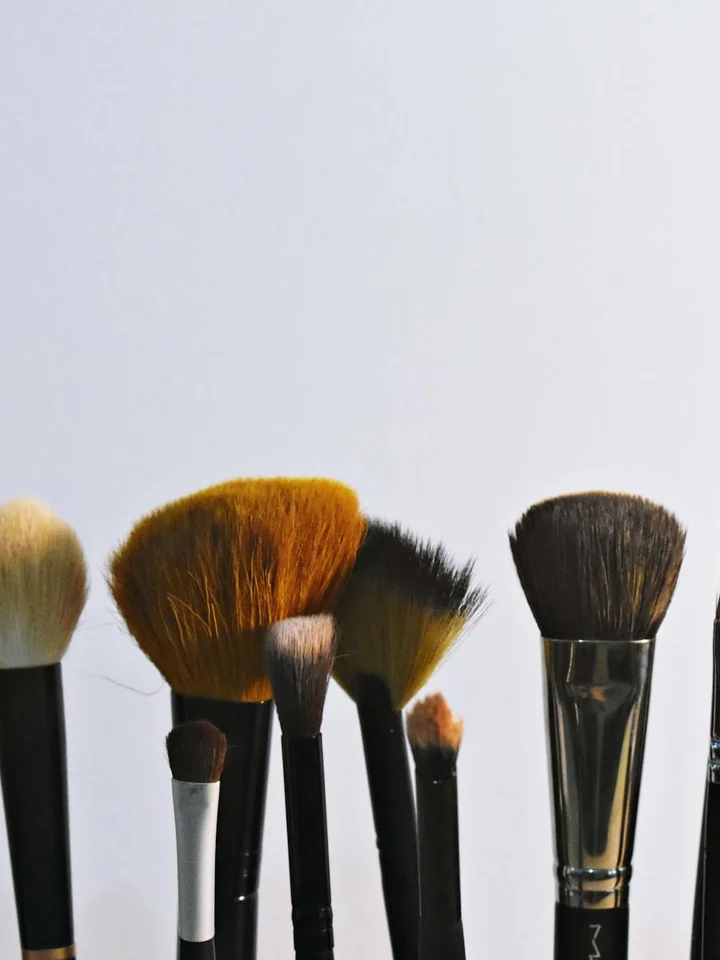
You could have the perfect foundation and skincare, but dirty brushes and sponges will undo all that good work. Brush and sponge hygiene is a critical, often overlooked, factor in preventing makeup-induced breakouts. Every time you use a tool, it collects makeup, oil, and dead skin cells. The next time you use it, you’re painting all that old debris, plus bacteria, back onto your face.
Clean your tools at least once a week. Here’s a simple method:
- Wet bristles with lukewarm water.
- Work a mild, fragrance-free soap or brush cleanser into a lather in your palm.
- Gently swirl the brush until the water runs clear.
- Reshape the bristles and lay flat to dry.
My client Maya, who is acne-prone, noticed a significant drop in small, random blemishes along her cheeks and jawline once she started washing her foundation brush every five days. It was a simple fix with a big payoff.
Finding Your Formula is a Process
If you try a mineral foundation and experience irritation or new breakouts, don’t write off the entire category. Sensitivity to one formula doesn’t mean all mineral makeup is off the table. Just like skincare, it’s about finding the right formulation for your unique skin.
Perhaps the specific silica particle size in one brand doesn’t agree with you, or a botanical extract is the irritant. Take notes on what you tried and how your skin reacted. Patch test new products on a small area of your jawline for a few days. Finding your perfect match might take a couple of tries, and that’s a normal part of learning what your skin loves.
Your Top Bare Minerals & Acne Questions, Answered
Are all Bare Minerals powder products (like blushes) safe for acne-prone skin?
Not automatically. While the base minerals are inert, additional colorants and texture enhancers vary by product. Always check the ingredient list of each individual powder, just as you would a foundation, for potential irritants like bismuth oxychloride.
Can I wear Bare Minerals makeup over my prescription acne treatments?
Yes, but timing is key. Always apply your treatment first and let it absorb fully into clean, dry skin. A light dusting of mineral powder can then sit on top without disrupting the medication’s efficacy, as it doesn’t typically penetrate the skin barrier.
Is the “Bare Minerals Matte” foundation less likely to clog pores than the “Original”?
Not necessarily. “Matte” refers to finish, not formula safety. A matte formula may contain more oil-absorbing ingredients, which could be drying or irritating for some. Your best choice depends on your skin’s sensitivity and oil levels, not the finish name.
Smart Makeup Decisions for Clear Skin
When it comes to makeup for acne-prone skin, the best choice is one you make with confidence and care. Bare Minerals uses generally non-comedogenic ingredients, but your skin’s unique response will always have the final say. In my practice, I guide clients like Maya to see makeup as a partner in their routine, not a gamble.
- Always patch-test a new product on your jawline for three to five days before full application.
- Prioritize loose mineral powders over liquid foundations if you have oily or combination skin.
- Clean your makeup brushes weekly to prevent pore-clogging bacteria and residue buildup.
- Keep a simple skin journal to track any products that cause flare-ups.
Navigating ingredients can feel complex, but you’re not doing it alone. I welcome your thoughts and questions on this topic right here on the blog. Hearing what works for you, much like Lina’s careful approach to new products, helps build a community of shared, trustworthy advice for healthier skin.
Citations and Authoritative Sources
- Bare Escentuals : Bare Minerals – Acne.org
- Acne-Safe & Acne-Scary Makeup Spotlight: Bare Minerals – Skin MPLS
- bare-minerals-acne-education-sheet. …
- RE: Bare minerals or two faced foundation for acne skin?
Lucy Zimmerman
Lucy is an expert author and blogger when it comes to skin care and body care. She has first hand expertise acting as skin care consultant for over 5+ years helping her clients achieve smooth blemish free skin with natural and working remedies. She also has been an avid experimenter and tried out all the natural and artificial remedies and treatments so you can learn from her first hand experience. Additionally, she has traveled to many countries around the world and incorporated the skin care routines she has learnt into this blog. So, wait no more, reach out to Lucy if you have any specific needs and follow her blog, LuciDerma for expert skin care advice.