
Your Guide to Buying Sodium Benzoate for Safe Cosmetic Formulations
You’re searching for sodium benzoate to preserve your homemade skin care creations, and you want a source you can trust. I hear this often from clients like Noah, who value knowing exactly what goes into their products.
Here’s what we’ll cover together so you can purchase with clarity and care:
- Identify reliable suppliers known for high-purity, cosmetic-grade sodium benzoate.
- Learn why sourcing from ethical, sustainable vendors matters for your skin’s safety.
- Gain the confidence to choose ingredients that support effective, gentle formulations.
Let’s find the right sodium benzoate for your next skin-friendly project.
Sodium Benzoate: Your Skin’s Gentle Guardian Explained
Think of sodium benzoate like a friendly security guard for your skincare. You’ve probably seen it on a jar of pickles or a bottle of soda. Its job there is the same as in your serum: it keeps unwanted guests out. In skincare, those guests are mold, yeast, and bacteria that love to grow in water.
To get technical for a moment, it’s a simple salt derived from benzoic acid. It’s considered a mild, broad-spectrum preservative. It works best in products that aren’t too acidic or too alkaline.
Here’s a quick “spec sheet” to understand its profile:
| Property | Detail |
| Effective pH Range | 2.5 – 4.5 (Acidic to slightly acidic) |
| Typical Use Concentration | 0.1% – 0.5% |
| Solubility | Highly soluble in water |
| EWG Rating | 3 (Moderate Hazard) |
| ICSC Classification | Generally recognized as safe at low concentrations for cosmetics. |
Its primary job is to prevent microbial growth in water-based formulas, which keeps your products safe and stable on the shelf and in your bathroom cabinet. You’ll commonly find it doing this quiet work in products like facial toners, lightweight serums, gel moisturizers, and leave-on creams.
Finding the Right Source: A Practical Buyer’s Guide
Let’s say my client Noah, who is very cautious about what goes on his reactive skin, wanted to source this for a DIY project. My first piece of advice would always be about purity. Not all sodium benzoate is created equal for cosmetic use.
You’ll see different grades:
- Cosmetic-Grade: This is what you want. It meets specific purity standards for safety and application on skin.
- Food-Grade: High purity, but it’s certified for ingestion, not necessarily for topical use regarding certain trace contaminants.
- Industrial-Grade: Used for manufacturing and cleaning. Never, ever use this on your skin.
The non-negotiable document is the Certificate of Analysis, or CoA. A reputable supplier will provide this. It’s a lab report that proves what you’re buying is indeed cosmetic-grade sodium benzoate at the stated purity. If a seller can’t or won’t provide a CoA, walk away.
Your buying options depend on scale. For small DIY batches (think making a single toner), you’ll want to buy from a retailer selling in small quantities, often 30g to 100g. For larger formulating quantities, you’d look at wholesale chemical suppliers. A common search like sodium benzoate buy online or sodium benzoate buy in usa will lead you to both types, so filtering for trustworthiness is key.
Navigating Online Marketplaces and Specialty Retailers
Online shopping is convenient, but you must be a detective. Follow these steps to vet a seller:
- Look for “Cosmetic Grade” clearly stated in the product description.
- Check if the supplier offers a CoA, either linked on the product page or available on request.
- Read reviews focusing on product consistency and purity, not just shipping speed.
Be extra cautious on large general marketplaces where third-party sellers abound. A search for sodium benzoate buy amazon or sodium benzoate buy walmart can yield results, but the burden is on you to verify the seller is a known, reputable supplier of cosmetic ingredients. These platforms can be a minefield of mislabeled or low-grade products if you don’t do your homework—especially when sourcing specialized ingredients like salicylic acid.
I often prefer dedicated cosmetic ingredient retailers or scientific suppliers. They specialize in this, and their reputation hinges on providing accurate, high-quality materials.
How to Search for Sodium Benzoate Locally
For those typing where can i buy sodium benzoate near me, local sourcing is possible but requires some legwork. Don’t expect to find it at your average grocery store.
Start by checking:
- Specialty food ingredient or brewing supply stores (they often carry food-grade).
- Local pharmacy compounding counters (they might sell to the public or point you to a supplier).
- Regional chemical or lab supply companies.
When you call or visit, have a script ready. Ask: “Do you carry cosmetic-grade sodium benzoate suitable for making skincare products? Can I see the Certificate of Analysis?” This shows you’re informed and ensures you get the right thing.
To address specific FAQs: does walmart carry sodium benzoate? It’s very unlikely in the form you need. You might find it as a food preservative in the canning aisle, but this is not guaranteed to be the correct grade for cosmetics. For sodium benzoate buy in pharmacy, a major chain pharmacy won’t have it, but an independent compounding pharmacy might be your best local bet. Understanding sodium benzoate solubility water ethanol can help determine which grade is appropriate for your needs.
Assessing Quality: What to Look for Before You Buy
Think of sodium benzoate like an ingredient in your kitchen. You wouldn’t buy lumpy, discolored flour, and the same care applies here. A high-quality batch should be a fine, white, odorless powder. The texture reminds me of confectioners’ sugar; it should flow freely without feeling gritty.
Your first tool for assessment is your eyes and fingers. Clumping is a major red flag. It usually means moisture got into the container, which can kickstart degradation or allow microbial growth you’re trying to prevent.
Shelf Life & Oxidation Signs
Properly stored in a cool, dry place in its original airtight container, sodium benzoate can last for years. But it doesn’t last forever. You must inspect it before each use for any yellowing or beige discoloration, which signals oxidation and means it’s time to replace it. A fresh, active powder will have a bright, clean, white appearance.
I learned this lesson alongside a client, Maya. She was experimenting with a homemade toner and used a bargain-bin sodium benzoate. Despite her careful recipe, the formula caused stinging. We traced it back to the preservative; the supplier couldn’t provide a Certificate of Analysis (CoA). A CoA is a document from the manufacturer that confirms the purity, identity, and safety of the chemical. Now, Maya won’t buy a single gram without one.
Choosing a supplier based on price alone is a common mistake that can lead to contaminated or ineffective ingredients, turning your careful formulation into a skin irritant. Investing in a verified, pure product from a reputable seller is non-negotiable for safety.
Using It Safely in Your Formulations
Adding a preservative is a responsible step in DIY skincare, but precision is everything. This isn’t a “pinch of this, dash of that” situation. For home formulations, a digital scale that measures to 0.01 grams is your best friend.
The typical usage rate for sodium benzoate is between 0.1% and 0.5% of your total formula weight. For example, in 100 grams of a facial mist, you’d use between 0.1 and 0.5 grams of sodium benzoate. Weighing your ingredients ensures you use enough to be effective but not so much that it becomes a potential irritant, unlike excessive glycolic acid percentages which can cause irritation.
This ingredient has a sweet spot. It is most effective as a preservative in acidic environments, specifically formulations with a pH below 4.5. This makes it excellent for things like vitamin C serums (at a stabilized, diluted pH), exfoliating toners with AHAs, or simple rosewater mists you’ve acidified with citric acid.
Here is a basic, safe method to incorporate it:
- Weigh your required amount of sodium benzoate powder.
- Add it to the water phase of your recipe (like distilled water or a floral hydrosol) before mixing with oils.
- Gently warm the mixture while stirring until the powder is fully dissolved and clear. Do not boil.
- Let it cool, then combine with the rest of your formula’s ingredients.
A critical safety note: sodium benzoate must be used with knowledge. Under certain high-heat and highly acidic conditions, it can potentially react to form benzene, a known carcinogen. This is why you should never experiment with adding it directly to pure, powdered ascorbic acid (Vitamin C) or very strong acid solutions without advanced formulating knowledge and proper pH testing and adjustment. Especially when layering acids over Vitamin C.
Finally, treat your beautiful homemade creation like any new product. Always perform a patch test on a small area of your inner arm for 24-48 hours before applying it to your face. This helps ensure your unique skin tolerates the entire formulation, preserving your skin barrier as intended.
Considering Other Options: When to Choose an Alternative
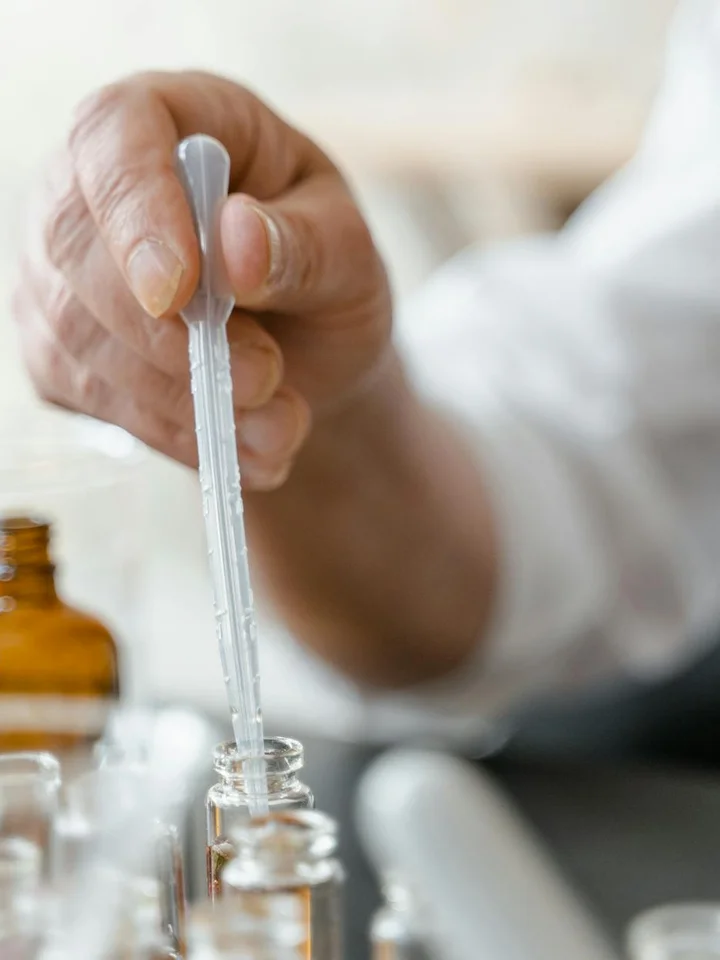
Choosing a preservative is a personal decision in formulation. If you’ve read about sodium benzoate and feel it’s not the right fit for your project, that’s perfectly valid. My client Noah, who has dry and reactive skin, often asks me about “cleaner” preservative options for the simple balms he likes to make. Exploring alternatives is a sign of a thoughtful formulator, especially when looking for safe skincare preservatives.
Think of preservation like building a security system. Sometimes one guard (a single preservative) is enough, but for a more complex formula, you might need a team. Here’s how some other common preservatives compare.
- Potassium Sorbate: This is sodium benzoate’s frequent partner. It’s excellent against molds and yeasts, while sodium benzoate tackles bacteria well. They’re often used together in a broad-spectrum preservation “duo,” especially in water-based products below pH 6.5.
- Leucidal Liquid (and other ferment-derived options): These are popular “natural” preservatives derived from lactic acid bacteria. They work well in certain formulas but have specific pH and usage rate requirements. They often need to be combined with another preservative, like a mild acid or a different ferment, for full broad-spectrum coverage.
- Optiphen (Phenoxyethanol-based Blends): These are robust, broad-spectrum preservatives effective across a wider pH range. They are a common choice for formulators wanting a single, reliable preservative system, though some people prefer to avoid phenoxyethanol.
So when should you definitely look beyond sodium benzoate? The main factor is your product’s permanent pH. If your finished formula will always sit above pH 5.5, sodium benzoate loses most of its effectiveness, and an alternative like an optiphen blend is a smarter choice. When you’re choosing brightening serum ingredients, prioritize options that stay stable across your target pH and preservative system. That way, the actives you highlight next stay effective in your formulation framework. Also, if you’re creating a product with high protein content or lots of natural botanicals that might interact, a more robust or specifically compatible system may be necessary.
When you search to buy sodium benzoate preservative, remember you’re shopping for one specific tool. The best formulators have a few reliable options in their toolbox to match the exact needs of each recipe they create.
A Note for International Formulators
If you’re reading this from outside the United States, sourcing ingredients adds an extra layer of planning. The core advice remains: prioritize suppliers that provide a Certificate of Analysis (CoA) for purity, no matter your location.
Your best first step is to search for “cosmetic chemical distributor” or “laboratory supplier” along with your country or major city name. Many global suppliers like MakingCosmetics or similar companies ship worldwide, though you must account for shipping costs and potential import duties.
For a specific query like “buy sodium benzoate in Kathmandu Nepal,” I’d advise broadening your search terms. Try “cosmetic ingredients Nepal” or “pharmaceutical suppliers Kathmandu.” A local pharmacy or chemical supply company for labs might be able to source it for you or point you to a regional distributor. Always verify your country’s import regulations for cosmetic-grade chemicals to ensure smooth customs clearance. Connecting with local DIY cosmetic or soap-making communities online can also yield invaluable, on-the-ground supplier recommendations.
Quick Answers on Sourcing Sodium Benzoate
Is buying sodium benzoate on Amazon or Walmart safe for my skincare formulas?
It can be, but requires extra diligence. Always verify the seller is a dedicated cosmetic ingredient supplier and can provide a current Certificate of Analysis (CoA) before purchasing to ensure pharmaceutical-grade purity.
Can I just buy sodium benzoate from my local pharmacy?
Major chain pharmacies typically do not stock it, but an independent compounding pharmacy might. Your most reliable local options are specialty chemical suppliers or lab supply companies that can guarantee the cosmetic grade.
How do I find a reliable supplier if I’m outside the US, like in Kathmandu?
Search for “cosmetic ingredient distributor” or “laboratory supplier” paired with your country or major city. Connecting with local DIY skincare communities online is also an excellent way to get trusted, on-the-ground supplier recommendations, especially when looking for ingredients with low comedogenic ratings to avoid clogged pores.
Final Thoughts on Sourcing Preservatives Safely
The most reliable way to bring sodium benzoate into your cosmetic routine is to choose a ready-made, professionally formulated product from a brand you trust. This approach removes the guesswork and potential safety risks of DIY formulation, ensuring your skin gets the precise, balanced care it deserves. Proper pH-balanced formulations support barrier health. It’s the method I recommend to all my clients, from practical Maya to cautious Noah.
- Source it safely by purchasing from reputable cosmetic ingredient suppliers with clear documentation.
- Always follow usage guidelines meticulously; more is not better with preservatives.
- Perform a patch test with any new product, even if you formulate it yourself.
- Prioritize brands that disclose their preservative systems and commitment to stability testing.
If you have more questions about preservatives or any other ingredient label, you’re always welcome to ask. Our blog is here to help you navigate your skin care choices with clarity and confidence, focusing on effective, ethical solutions. Whether you’re curious about natural versus synthetic preservatives in skincare, we can help you understand how these ingredients influence safety and shelf life. Your journey to healthier skin is a conversation we’re happy to be part of.
References & External Links
- Sodium Benzoate Is It Safe? Uses & Risks in Skincare
- EWG Skin Deep® | What is SODIUM BENZOATE
- Is Sodium Benzoate Safe in Cosmetics?
- Sodium Benzoate – Cosmetics Info
- SCCP/0891/05 EUROPEAN COMMISSION
- Sodium Benzoate: Uses, Dangers, and Safety
- Sodium Benzoate | Skin Care Ingredient Dictionary | Paula’s Choice
- Sodium Benzoate (Preservative): Cosmetic Ingredient INCI
- Sodium Benzoate: Safety and Side Effects
- Sodium benzoate | Cosmetic Ingredient Review
Lucy Zimmerman
Lucy is an expert author and blogger when it comes to skin care and body care. She has first hand expertise acting as skin care consultant for over 5+ years helping her clients achieve smooth blemish free skin with natural and working remedies. She also has been an avid experimenter and tried out all the natural and artificial remedies and treatments so you can learn from her first hand experience. Additionally, she has traveled to many countries around the world and incorporated the skin care routines she has learnt into this blog. So, wait no more, reach out to Lucy if you have any specific needs and follow her blog, LuciDerma for expert skin care advice.