
How Cosmetic Chemists Test for Comedogenicity: Your Guide to Non-Clogging Skin Care
If you’ve ever paused before buying a new moisturizer, worried it might lead to breakouts, your caution is completely valid. I review these tests regularly to help clients like you find products that truly respect your skin.
By the end of this article, you will be equipped to:
- See the difference between older animal tests and modern, cruelty-free methods.
- Identify which ingredient combinations are often flagged in comedogenic testing.
- Read product labels with a clearer eye for what ‘non-comedogenic’ really means for your routine.
Knowing how products are vetted puts the power back in your hands for a healthier complexion.
What Is Comedogenicity, and Why Should Your Skin Care Routine Care?
Think of a pore on your skin as a tiny tunnel. Comedogenicity simply describes how likely an ingredient is to clog the opening of that tunnel, leading to a bump called a comedone (that’s the official term for a blackhead or whitehead).
The “non-comedogenic” label on a bottle is a helpful starting point, but it’s not a personal guarantee for your skin. Your unique pore size, oil production, and even your skincare routine play a huge role. An ingredient that clogs Maya’s pores might be perfectly fine for Noah’s drier skin.
It’s more useful to think of pore-clogging potential as a sliding scale from “very unlikely” to “very likely,” rather than a simple yes or no. This explains why an ingredient like coconut oil, which scores high on comedogenic scales, might be fine as a rinse-off cleanser but problematic as an overnight moisturizer for someone prone to clogs.
This is a common concern with sunscreens. Some chemical filters and even the particle size in mineral options can be flagged. The key isn’t to fear them, but to understand how they’re formulated and tested.
Inside the Chemist’s Lab: How They Test for Pore-Clogging Potential
Before a product ever reaches a shelf, it goes through a detective process. Chemists generally use three main testing “lanes” to assess comedogenicity.
- Lane 1: Ingredient Analysis – The critical first step, done entirely on paper and with databases before anything is mixed.
- Lane 2: Lab (In Vitro) Tests – A modern, cell-based approach that simulates skin reactions without involving people or animals.
- Lane 3: Human Clinical Trials – The final, real-world check on actual living skin.
Smart formulation is a layered safety net, starting with the smartest choices at the ingredient level.
Lane 1: The Ingredient Detective Work
This is where the chemistry begins. Formulators use published research and databases, like the classic comedogenic scale, to predict how an individual molecule might behave. Think of it like checking a chef’s ingredients for common allergens before cooking a meal.
Formulation context is everything, which is why asking “is mica comedogenic?” doesn’t have a simple answer. A large, coated mica particle in a rinse-off cleanser poses little risk. That same ingredient, finely milled and suspended in a heavy, occlusive cream, has a different potential. A chemist’s job is to weigh this risk in the final recipe.
A potentially problematic ingredient in a formula that washes off in 60 seconds is far less of a concern than if it’s designed to sit on your skin for 12 hours. This is why reading the full ingredient list matters more than fixating on one item.
Lane 2: Modern Lab (In Vitro) Testing
Here, science gets creative. Researchers might use lab-grown human skin cells or even synthetic pore models. They apply the ingredient or formula to these systems to see if it triggers the cellular events that lead to a clog.
The major advantage of these tests is that they are cruelty-free, providing valuable data without animal testing. They’re also faster and allow scientists to control every variable perfectly.
The limitation is that a model, no matter how advanced, isn’t your living skin. It can’t replicate your hormones, your unique microbiome, or how you might layer products. It’s a fantastic prediction tool, but not the final verdict.
Lane 3: The Human Reality Check: Clinical Patch Tests
This is the gold standard. In a controlled study, a product is applied under occlusion (with a patch) to the backs or upper arms of volunteer panelists. This area has many hair follicles similar to the face. They use this for several weeks.
A dermatologist then uses a special magnifying tool to examine each test site, grading any micro-comedones (tiny clogs you can’t see with the naked eye) on a scale from 0 to 5. For a product to earn a “non-comedogenic” claim credibly, it must produce a very low average score across the entire panel.
So, when you wonder “is my product comedogenic?”, look for brands that transparently state their products have been “clinically tested for comedogenicity” or are “non-comedogenic per clinical studies.” That specific language points to this type of human patch testing. It’s the closest assurance you can get before trying it on your own face.
Allantoin is a perfect example of an ingredient that clears the detective work with flying colors. Its safety and non-comedogenic profile are so well-established that it’s a go-to for chemists formulating for reactive or breakout-prone skin, like Lina’s. It shows how a single, gentle ingredient can be confidently selected from the very first lane of formulation.
The Outdated Standard: The Rabbit Ear Assay and Its Legacy

For decades, the go-to test involved rabbits. In what’s called the Rabbit Ear Assay, cosmetic chemists would apply a concentrated ingredient to the inner surface of a rabbit’s ear. This skin is far thinner and more reactive than human facial skin. After several weeks, they would examine the tissue under a microscope for microcomedones, the tiny beginnings of clogged pores.
This method is now largely obsolete and banned in many places, including the entire European Union. We moved away from it for two big reasons: ethics and accuracy. Testing on animals for cosmetics is now widely seen as unnecessary cruelty. More importantly for your skin, a rabbit’s ear reacts very differently than your cheek or forehead. An ingredient that clogged a rabbit’s pore might be perfectly fine for human skin, and vice versa.
This poor correlation is why old “comedogenic” lists can steer you wrong. You might see cocoa butter or certain red dyes labeled as highly comedogenic based on these old tests. On human skin, especially when formulated well in a product (not applied pure), these ingredients often don’t cause issues. My client Noah, with his dry skin, uses a cream with a touch of cocoa butter beautifully. For him, it’s a nourishing emollient, not a pore-clogger.
Formulation Pro-Tip
If you want a product that truly feels non-comedogenic, look at the texture and ingredient synergy. I look for formulas that pair lightweight, low molecular weight humectants like glycerin with non-occlusive emollients like squalane. Think of it like this: the glycerin is a thin layer of water that hydrates, and the squalane is a silky sheet that locks it in without feeling like a heavy wax seal over your pores. The final feel on your skin-lightweight, breathable, fast-absorbing-is a better clue than any single ingredient’s chemical property.
How to Read Between the Lines of a “Non-Comedogenic” Label
Let’s decode that term you see on so many bottles. “Non-comedogenic” is not a regulated guarantee. It simply means that when the manufacturer tested the final product formula, it did not clog pores in their specific test group (which could have been human volunteers or a lab model).
Your skin is your own unique ecosystem. What’s non-comedogenic for the test panel might not be for you. Your other products, your hormones, your climate, and even your stress levels change the equation. My client Maya has oily, acne-prone skin. A rich “non-comedogenic” night cream might be fine for someone with dry skin but could feel too heavy for her, leading to congestion.
Consider the texture. A thick zinc oxide ointment and a feather-light silica-based primer could both technically earn a “non-comedogenic” label in testing. But for someone with Maya’s skin type, that thick ointment might trap too much oil and heat if used all over, while the primer would feel like nothing. The label tells you it passed a test, but the texture tells you how it will behave in your personal routine.
Treat “non-comedogenic” as a helpful starting clue, not a final promise. It suggests the brand formulated with pore-clogging in mind. Your job is to patch test it and see how your skin responds over a few weeks, especially when using it on skin that’s recently undergone treatment. It’s one piece of the puzzle, alongside your knowledge of your skin’s needs and preferences.
Your At-Home Detective Kit: Spotting a Pore-Clogger
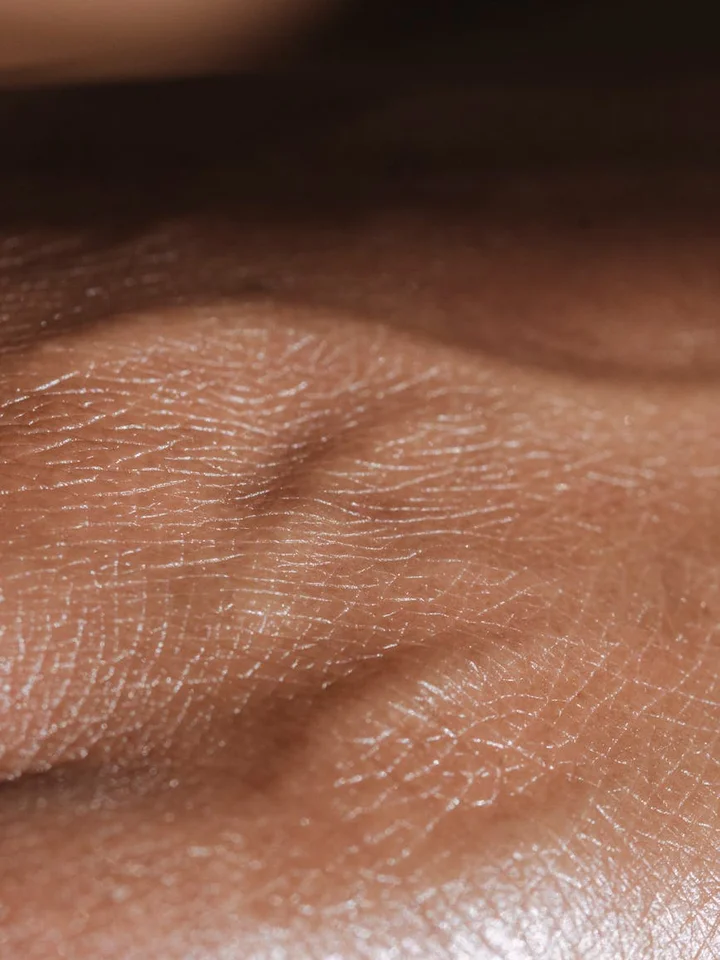
Lab tests are one thing, but your skin is the ultimate judge. You can run your own investigation with a careful, methodical approach. Think of it like being a skin scientist, with your face as the lab.
The single most important tool you have is a proper patch test. Skipping this is like guessing the answer on a test. Here is how to do it right.
- Pick your spot. Test on a small, discreet area that is prone to clogging, like the side of your chin or your forehead, not the inside of your arm.
- Apply a small amount. Use about a pea-sized dab of the product, once in the morning and once at night.
- Commit to two weeks. You need a full 14 days to see if a product triggers a slow-forming clogged pore. A one-day test tells you nothing about comedogenicity.
- Observe. Watch for new small bumps, blackheads, or general texture you didn’t have before. Redness or itching might mean irritation, which is a different issue.
While testing, know what to look for on the ingredient list and in the texture. Some common red flags for acne-prone skin include formulas heavy in certain oils and waxes.
- Heavy, occlusive oils: Coconut oil, cocoa butter, and wheat germ oil are famous for being highly comedogenic for many people.
- Certain esters: Ingredients like isopropyl myristate, myristyl myristate, and ethylhexyl palmitate can be pore-cloggers. They are often used to make textures feel silky.
- The feel of the product: If a moisturizer or sunscreen feels like it’s sitting on top of your skin, forming a heavy film that never seems to absorb, take note. My client Maya calls this the “plastic wrap effect,” and she avoids anything that gives her that sensation.
This process is useless if you don’t keep notes. Grab a simple notebook or use your phone. Write down the date you started a new product and any changes you see, good or bad. Tracking your reactions in a journal turns random breakouts into solvable clues. You might see that tiny bumps appear exactly 10 days after trying a new serum, which is powerful information.
Finally, stop asking about individual pigments or minerals. Searching “is bismuth comedogenic?” or “is red 7 comedogenic?” is a distraction. A single ingredient’s potential is heavily modified by the formula around it. Your skin reacts to the finished product, not to one ingredient in isolation. Focus on how the complete formula behaves during your two-week test.
Building a Truly Clog-Free Routine: A Chemist’s Mindset

Cosmetic chemists think about stability, delivery, and synergy. You should think about simplicity, vehicle, and personal fit. The most elegant formula is the one that works without causing problems.
Your first principle should be simplicity. Every new product is a new variable. Fewer products in your routine mean fewer chances for a clog and a clearer understanding of what each one does. Start with a gentle cleanser, a non-comedogenic moisturizer, and a sunscreen. Only add active treatments (like a salicylic acid or retinoid) once that stable base is confirmed to not break you out.
Pay close attention to the vehicle-the base formula that carries the active ingredients. For acne-prone areas, proven, lightweight vehicles are your safest bet.
- Gels and gel-creams: These are often water-based and absorb quickly, leaving little residue behind.
- Thin lotions or serums: Look for terms like “milky lotion” or “fluid.” These sink in more easily than rich butters.
What “non-comedogenic” looks like is different for different skin types. My client Noah, with his dry, reactive skin, needs a richer cream to support his skin barrier. The same cream would likely suffocate Maya’s oily, acne-prone skin. For Maya, a gel-cream is a perfect match; for Noah, it might not be moisturizing enough. Lina, with her combination skin, often uses a light lotion all over and reserves a richer formula only for her dry cheeks.
This is the chemist’s mindset: you are formulating a routine for your unique skin environment. A non-comedogenic label is a helpful starting filter, but it is not a guarantee. Trust is built patiently, through your skin’s positive response over time, not printed on a bottle. When you find formulas that make your skin look and feel clear and healthy, you have done the most important test of all.
Questions About Comedogenicity Testing
How do cosmetic chemists interpret test results to formulate non-comedogenic products?
Test results provide a risk profile, not a final verdict. A chemist uses this data to balance efficacy with safety, often reformulating to reduce clogging potential while maintaining performance. They prioritize ingredient combinations and textures proven to be low-risk in the final formula.
What are the ethical considerations in comedogenicity testing today?
Modern ethics demand cruelty-free methods. This is why outdated animal tests like the Rabbit Ear Assay have been replaced by advanced in-vitro models and controlled human trials. At LuciDerma, we believe in evidence-minded science that never compromises on compassion.
What is the biggest misconception about “non-comedogenic” labeling?
The biggest misconception is that it’s a universal guarantee. “Non-comedogenic” means the formula passed a specific test protocol; it cannot predict how your unique skin will react. Always consider the label a helpful starting point, and let your own patch test be the final confirmation. Just remember, it’s not a guarantee against breakouts.
Navigating Comedogenicity in Your Skin Care Routine
Comedogenicity testing gives us a helpful map, but your skin is the territory you actually live in. Trust the science behind non-comedogenic labels, but trust your own observations of how your skin feels and behaves even more.
- Always patch test a new product on a small area, like your jawline, for at least a week before applying it to your entire face.
- Look for cruelty-free brands that are transparent about their testing methods and ingredient sourcing.
- Keep a basic skin diary: jot down the products you use and any changes like new bumps or increased dryness.
- If a product clogs your pores, switch it out gently-your skin’s needs can shift with seasons, stress, or hormones.
I’m always here to help you decode your skin’s signals. If you have a question about an ingredient or your routine, feel free to share it on the LuciDerma blog. We’re building a space for practical, evidence-based skin care that honors your skin and our planet.
Relevant Resources for Further Exploration
- INCIDecoder – Decode your skincare ingredients
- Safety assessment on comedogenicity of dermatological products containing d-alpha tocopheryl acetate in Asian subjects: A double-blind randomized controlled trial – PMC
- Comedogenicity testing of cosmetics – PubMed
- Comedogenicity in cosmeceuticals: A review of clinical relevance, regulatory gaps, and future directions – JAAD Reviews
- Comedogenicity of a Cosmetic: How is it Assessed? – Typology
- Comedogenicity-A Complicated Conversation | Skin Inc.
- Comedogenicity Scale: Understanding Its Accuracy
- Comedogenicity of current therapeutic products, cosmetics, and ingredients in the rabbit ear – PubMed
- [Cosmetic acne and a test of comedogenicity] – PubMed
Written by Lucy Zimmerman. Lucy is an expert author and blogger when it comes to skin care and body care. She has first hand expertise acting as skin care consultant for over 5+ years helping her clients achieve smooth blemish free skin with natural and working remedies. She also has been an avid experimenter and tried out all the natural and artificial remedies and treatments so you can learn from her first hand experience. Additionally, she has traveled to many countries around the world and incorporated the skin care routines she has learnt into this blog. So, wait no more, reach out to Lucy if you have any specific needs and follow her blog, LuciDerma for expert skin care advice.