
Emulsifiers in Skincare: Your Guide to Smoother, Stable Creams
If you’ve ever been confused by why some lotions blend perfectly while others separate, I’ve been there too-both in my clinic and when reading labels at home.
This article will clear things up so you can:
- See exactly how emulsifiers mix oil and water to create the textures you love.
- Spot common emulsifier types on any ingredient list and know what they do for your skin.
- Use simple formulation insights to choose or craft better face and body products.
Consider this your backstage pass to the science that keeps your skincare reliably smooth.
Emulsifiers Explained: The Peacekeepers in Your Bottle
Think of an emulsifier as the ultimate party host for your skincare ingredients. It’s the diplomatic friend who convinces the water-based team and the oil-based team to mingle seamlessly in the same bottle. Without it, they’d quickly separate into distinct, useless layers.
Nearly every lotion, cream, and many serums you use are emulsions. These are stable, uniform blends of a water phase (which holds ingredients like hyaluronic acid or green tea extract) and an oil phase (which carries things like ceramides or vitamin E).
An emulsifier is the non-negotiable ingredient that creates the smooth, consistent texture you expect from a product. Without it, your moisturizer would look like a badly shaken vinaigrette, with a layer of oil floating on top of watery liquid. This isn’t just about looks; a separated product won’t deliver a balanced dose of its active ingredients to your skin.
The Science of Stability: How Emulsifiers Actually Work
At a microscopic level, an emulsifier molecule is a tiny peacekeeper with a split personality. One end is hydrophilic, meaning it’s attracted to water. The other end is lipophilic, meaning it’s attracted to oil. I like to think of it as a social connector with one arm extended to each group.
When you mix everything together, these molecules get to work. They surround tiny droplets of oil with their oil-loving tails pointing inward and their water-loving heads pointing outward into the water phase. This forms a protective shield around each oil droplet, preventing them from coalescing and separating. The same process works in reverse for water droplets suspended in oil.
This molecular arrangement is what creates a stable, homogenous mixture you can rely on with every pump.
The direction of this emulsion changes how a product feels. An oil-in-water (O/W) emulsion has tiny oil droplets suspended in a continuous water base. These feel lightweight, fast-absorbing, and are often found in lotions and fluid milks. They’re typically best for normal to oily skin types, like my client Maya, who needs hydration without heaviness.
A water-in-oil (W/O) emulsion suspends tiny water droplets within a continuous oil phase. These feel richer, more occlusive, and are famously found in heavy creams and many sunscreen formulations. This type is a champion for dry or compromised skin barriers, like my client Noah’s, because the outer oil layer helps lock in moisture and assists with the solubility of water and oil-based actives.
While most emulsifiers are well-tolerated, some synthetic types (like certain PEG compounds) can be sensitizing for reactive skin. If you have skin like Lina’s, which is curious but sensitive, you might look for products emulsified with gentler options like plant-derived lecithin or cetearyl alcohol (which is a fatty alcohol, not a drying alcohol). A simple patch test behind your ear is always a wise move when trying a new formulation.
Molecule Specheet: A Quick Reference
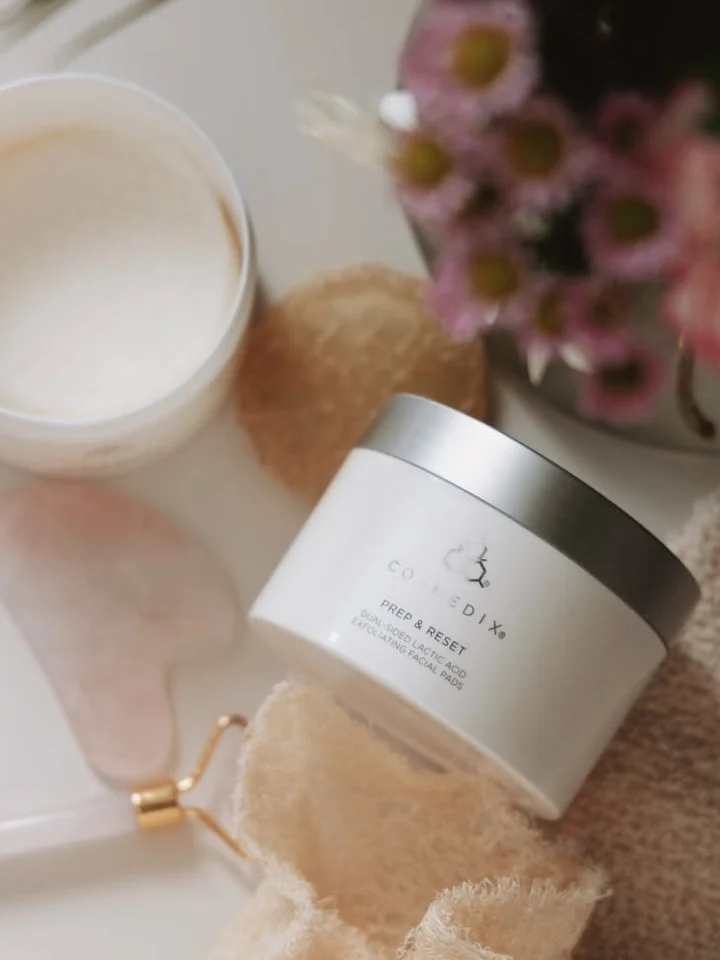
Think of this as the ID card for an emulsifier. It tells you how it behaves in a formula and what that means for your skin. I keep a chart like this handy when I review products for clients like Lina, who needs to know exactly what she’s putting on her sensitive skin.
| Property | Why It Matters for Your Skin |
|---|---|
| pH Range | Most emulsifiers work best within a pH of 4.5 to 7, which matches your skin’s natural, slightly acidic environment. This helps maintain your skin’s health and prevents stinging. |
| Typical Use Concentration | Formulators typically use only 1-5% in a product. This tiny amount is enough to do the job without overloading your skin. |
| Solubility | This decides if the ingredient gets mixed into the oil or water part first. It’s a behind-the-scenes detail that ensures your lotion stays smooth and doesn’t separate in the jar. |
| Safety Profile | At the levels used in cosmetics, emulsifiers are generally recognized as safe. The key is how they are formulated with other ingredients to support your skin barrier. |
The takeaway here is that emulsifiers are precision tools, used in small amounts to create stable, skin-friendly products. A well-made formula considers all these factors so you get a cream that feels right and works without hassle.
Are Emulsifiers Safe? Benefits and Side Effects Explored
Let’s tackle the big question head on. I hear concerns from clients, especially Noah with his dry, reactive skin, about whether emulsifiers cause harm. The truth has two sides.
On one side, there’s the theory about side effects. Some emulsifiers, particularly harsh surfactants used in strong cleansers, can disrupt your skin’s lipid barrier if overused or if your barrier is already compromised. This can lead to dryness, tightness, or irritation. Think of your skin barrier like a brick wall; harsh cleansers can act like a power washer, stripping away the essential mortar between the bricks.
Now, contrast that with their primary benefit. Without emulsifiers, your skincare would be a mess of separated oil and water. They are the reason your moisturizer is a uniform, spreadable cream that delivers both hydration and nourishment in one step. In a layered routine, this smoothness helps serums and moisturizers pair seamlessly without pilling. They make products effective, stable, and a pleasure to use.
So, what’s the practical advice? For most people with healthy skin, emulsifiers in rinse-off products and well-formulated leave-on creams are perfectly fine and necessary. Your daily moisturizer is a testament to the benefit of gentle emulsifiers creating a stable, effective formula. For individuals with extremely damaged, eczematous, or reactive skin like Noah, opting for simpler, emulsifier-free formulations for a period-like using a plain oil or a pure gel-can be a prudent step while the barrier heals. Always listen to your skin; if a product consistently causes redness or discomfort, it might be worth trying a more minimal routine.
A Guide to Common Emulsifiers: From Kitchen to Lab
Think of emulsifiers like the skilled peacemakers in your skincare formula. They get ingredients that normally repel each other to work together smoothly. The type of emulsifier used shapes everything from the product’s texture to how it feels on your skin.
Here’s a look at some common players, grouped by their origin and the experience they create.
Natural & Skin-Loving Emulsifiers
These ingredients often come from plants or fatty acids and are known for being gentle and supportive to the skin barrier, such as ceramides.
Lecithin (from soy or sunflower) is a multitasker. It acts as a gentle emulsifier and also has emollient properties, meaning it helps soften and smooth the skin. You’ll often find it in sensitive skin formulas because it stabilizes blends without being harsh. It’s a great choice for adding light stabilization to facial oils or rich serums meant for reactive skin.
Cetearyl Alcohol sounds intimidating, but it’s not the drying alcohol you find in toners. This is a fatty alcohol, derived from coconut or palm oils. Its main job is to thicken and stabilize emulsions, giving lotions and creams their creamy, luxurious body. Cetearyl Alcohol is a foundational ingredient that helps prevent your favorite moisturizer from separating into oil and water. While this fatty alcohol is gentle, other alcohols used in skincare—such as denatured alcohol—can have drying effects. Understanding these differences helps you choose products that balance moisture with stability.
Synthetic & Highly Effective Emulsifiers
These lab-created ingredients are powerhouses for creating specific, stable textures and clear formulas.
Polysorbates (like Polysorbate 20 or 80) are brilliant for creating light, clear products. They’re often used to solubilize essential oils or fragrance into water-based toners and serums, preventing a cloudy look or oil droplets. If you have a clear, lightweight serum that still contains oils, a polysorbate is likely doing the mixing work behind the scenes.
Ceteareth-20 is a workhorse often used alongside Cetearyl Alcohol. On its own, it’s a good emulsifier, but its real magic happens in a duo. It helps form incredibly stable emulsions that can hold a high percentage of oils and butters without feeling greasy.
Formulation Pro-Tip: The Emulsifying Wax Duo
Many rich, stable creams you love use a classic combination. When you blend a fatty alcohol like Cetearyl Alcohol with a polyethylene glycol derivative like Ceteareth-20, you create a complete emulsifying wax.
This pair is the backbone of countless lotions and creams. The combination creates a robust, non-ionic emulsifying system that delivers a stable formula with a luxurious, non-greasy skin feel that absorbs beautifully. It’s a formulator’s reliable tool for a reason.
Formulation Tips for Different Skin Types & Textures
The emulsifier you choose doesn’t just hold the formula together; it dictates the final texture and who will benefit from it most. Here’s how to think about it for different skin needs.
Crafting a Light, Oily-Skin Lotion (For Maya)
For my client Maya, who has oily, acne-prone skin, the goal is hydration without heaviness. An oil-in-water emulsion is ideal, where tiny oil droplets are suspended in a water base.
Use lighter emulsifiers like Polysorbate 80 or gentle, plant-derived blends. Keep the total oil phase percentage low (often between 10-20%). This creates a fluid lotion that absorbs quickly, provides hydration, and leaves a matte or natural finish that won’t clog pores or feel slick.
Building a Barrier-Repair Cream (For Noah)
For Noah, who has dry, reactive skin, we need to support and repair the skin’s moisture barrier. A stable oil-in-water emulsion with a rich emulsifying wax (like the Cetearyl Alcohol/Ceteareth-20 duo) works well. For even more protection, a water-in-oil emulsion can be great, as it leaves a more occlusive film.
The key is pairing these effective emulsifiers with barrier-repairing occlusives and lipids. Look for formulas where emulsifiers work alongside ingredients like ceramides, cholesterol, and fatty acids to mimic and reinforce the skin’s natural protective layer. This combo locks in hydration and creates the resilient finish Noah’s skin craves.
Creating a Balanced, Sensory-Rich Formula (For Lina)
Lina has combination skin and appreciates how a product feels. Emulsifier choice directly controls “skin feel” – the initial slip, the speed of absorption, and the final finish.
To achieve a balance for skin like Lina’s, formulators often combine emulsifiers. For example, using one for quick absorption (so her T-zone doesn’t feel oily) and another that leaves a subtle, soft film (to comfort her drier cheeks). The right emulsifier blend can create a sensory profile of quick absorption with a lingering, velvety softness, satisfying both skin’s needs and the user’s experience.
How to Read Your Labels and Choose Wisely
Knowing the science is one thing, but applying it in the skincare aisle is where the magic happens. Let’s translate that knowledge into practical label-reading skills.
Spotting Emulsifiers on an INCI List
Ingredient lists use International Nomenclature of Cosmetic Ingredients (INCI) names, which can look like complex chemistry homework. Emulsifiers often have telltale suffixes or prefixes.
- Look for “-ate,” “-eth,” or “-ox-” in the name. Common ones include Cetearyl Alcohol (often a co-emulsifier), Stearic Acid, Glyceryl Stearate, Ceteareth-20, and Polysorbate 20.
- Many plant-derived emulsifiers start with the source, like “Cetearyl Olivate” (from olive oil) or “Glyceryl Stearate Citrate.”
- Phospholipids like “Lecithin” are also classic emulsifiers and great for sensitive skin.
Think of INCI names as the ingredient’s official passport name it uses to travel the globe; spotting the common suffixes is your key to identifying its job in the formula.
Location on the List Matters
Ingredients are listed in order of concentration, from highest to lowest. Emulsifiers are the structural backbone of a lotion or cream, so they need to be present in an effective amount.
- You’ll typically find the primary emulsifiers in the early to middle part of the ingredient list, often after water and before the bulk of the preservatives and fragrance.
- If an emulsifier is one of the very last ingredients, it’s likely present at a trace amount, perhaps as a secondary stabilizer, and isn’t doing the heavy lifting of holding your product together.
A well-structured emulsion relies on its emulsifiers being present in the right proportion, which is reflected in their prominent placement on the label.
Always, Always Patch Test
For my clients with reactive skin like Noah, this step is non-negotiable. While we often patch test for active ingredients like retinols or acids, the emulsifier system itself can sometimes be the culprit for irritation.
An emulsifier’s job is to reduce surface tension, and for a very small number of people, that can temporarily disrupt their skin’s own barrier if the formula isn’t a perfect match. Applying a new product to a small area behind your ear or on your inner forearm for a few days tells you if your skin agrees with the entire formulation, emulsifiers and all.
Patch testing is the most reliable way to see if your skin harmonizes with a product’s complete formulation, including its emulsifying base. This approach also helps gauge a product’s comedogenicity, helping you avoid pore-blocking ingredients.
The Symphony of Formulation
I remind clients like Lina that a single ingredient never tells the whole story. A well-formulated product is a harmonious system. An emulsifier might have a slight drying potential on paper, but in the formula, it’s perfectly balanced by humectants like glycerin and emollients like squalane.
The goal is to judge the final product on your skin, not to individually fear every chemical name. A gentle, non-ionic emulsifier in a calming, fragrance-free base can be a godsend for sensitive skin, while the same emulsifier in a formula with a high concentration of essential oils might be problematic.
Look at the ingredient list as a complete team working together; a good emulsifier is a team player that ensures all the other beneficial ingredients are delivered effectively and stably to your skin.
Your Emulsifier Questions, Answered
Are emulsifiers always necessary in a skincare product?
Not always. While essential for stable lotions and creams, many effective products like toners, pure serums, and facial oils are emulsifier-free. Emulsifiers are only needed when a formula intentionally combines water-based and oil-based ingredients into a single, homogenous phase.
Can the type of emulsifier affect how a product feels on my skin?
Absolutely. The emulsifier is a key driver of a product’s sensory profile, influencing its initial slip, absorption speed, and final finish. Choosing the right one allows formulators to craft textures ranging from weightless fluids to rich, velvety creams.
I have sensitive skin. What should I look for in an emulsifier?
Prioritize gentle, non-ionic types like cetearyl alcohol or plant-derived lecithin, which are less likely to disrupt your barrier. Always patch test a new product, as your skin’s reaction depends on the entire formulation, not just the emulsifier alone.
Your Emulsifier Cheat Sheet for Happy Skin
Emulsifiers quietly ensure your lotions and creams work as intended, blending oil and water into a formula your skin can use. Focusing on gentle, effective emulsifiers in your products supports a stable skin barrier and consistent hydration.
- Scan ingredient lists for common, skin-compatible emulsifiers like cetearyl alcohol or lecithin.
- Always patch test a new moisturizer on your inner arm before applying it to your face.
- Match your product’s texture to your skin type-lighter lotions for oilier skin, richer creams for drier skin.
- Choose brands committed to cruelty-free and sustainably sourced ingredients.
I read every comment and question shared on the LuciDerma blog, and your experiences, like Maya’s with finding a non-greasy moisturizer, help everyone learn. If you’re unsure about a product’s formulation, share your thoughts—I’m here to offer evidence-based guidance for your routine, especially when it comes to non-comedogenic branded moisturizers.
Industry References
- Emulsifier for Cosmetic – Types, Uses , Benefits & Limitations
- What Are the Types of Emulsifiers in Skincare? | Kraft Chemical
- Emulsifiers in Skin Care: Purposes, Properties and Disadvantages
- What is an Emulsifier in Skin Care? – Sönd
Lucy Zimmerman
Lucy is an expert author and blogger when it comes to skin care and body care. She has first hand expertise acting as skin care consultant for over 5+ years helping her clients achieve smooth blemish free skin with natural and working remedies. She also has been an avid experimenter and tried out all the natural and artificial remedies and treatments so you can learn from her first hand experience. Additionally, she has traveled to many countries around the world and incorporated the skin care routines she has learnt into this blog. So, wait no more, reach out to Lucy if you have any specific needs and follow her blog, LuciDerma for expert skin care advice.